Energy Department Puts $1.9 Billion Into Squeezing 23 Gigawatts Out of the Old Grid
Energy Secretary Chris Wright says 31 projects in 26 states will use sensors and new hardware to push more power through existing lines, as AI data centers strain supply and drive up bills.
The Energy Department said Thursday it will spend almost $2 billion to get more electricity out of the country's aging and overloaded power grid, as the Trump administration tries to head off blackouts while artificial intelligence data centers drive demand to record levels.
The money will go to 31 projects in 26 states. The department says they will add more than 23 gigawatts of capacity, which it says is enough to power 16 million homes, without building a single new power plant. Instead, the projects use technology such as sensors that measure the weather along a transmission line in real time. That lets utilities safely send more power through the line when conditions allow, or steer it away from congested routes. Officials said the upgrades could improve reliability and lower bills for about 100 million Americans.
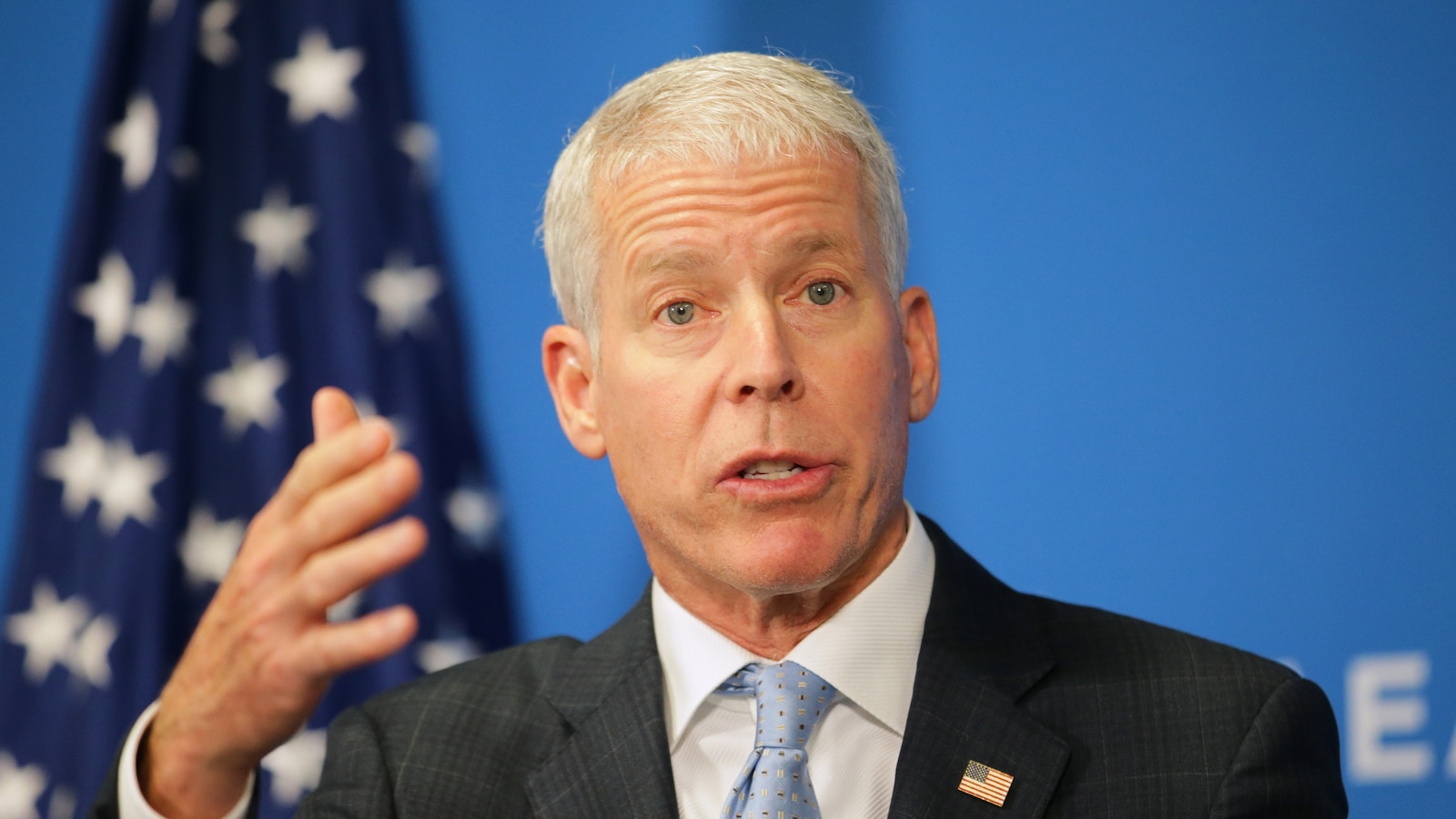
"This is a quick way to lower electricity prices and increase reliability," Energy Secretary Chris Wright said at a news conference at a PPL Corp. facility in Allentown, Pennsylvania. He said the fibers already inside transmission lines can be used to read the temperature and wind and work out "how can we use this transmission line to distribute more power, but safely and only in the right conditions."
PPL shows why the money is going out now. The eastern Pennsylvania utility says two data centers in its territory came online this year and six more are under construction, and enough others are in planning that its peak demand could grow fivefold by 2032. PPL is getting $71.5 million to modernize a high-voltage line that runs about 30 miles across northern Pennsylvania. The biggest winners were four state agencies in Colorado, Indiana, Ohio and Oklahoma, which together drew $810 million. The projects will upgrade parts on more than 1,500 miles of transmission lines and add new technology across nearly 21,000 miles.
The government's $1.9 billion will be matched by $3.35 billion from the utilities, cooperatives and agencies that won the grants. The money itself comes from the bipartisan infrastructure law passed under President Joe Biden. Wright said work should start right away and that he hopes some of the gains will be in place before winter, when extreme cold can send demand and prices soaring. He said he did not know whether the projects would have happened without federal money, because many recipients had been considering them but hadn't "quite pulled the trigger."
The grants land in the middle of a political fight over data centers. Electricity bills are rising faster than inflation in much of the country, and local opposition to new data centers has become an issue in the midterm elections, with politicians in both parties criticizing them. President Donald Trump has continued to back the industry. Julia Selker, who runs the WATT Coalition, a trade group for grid-enhancing technology, called the size of the investment significant and said U.S. utilities have lagged Europe in using these tools. Drew Maloney, CEO of the Edison Electric Institute, which represents investor-owned utilities, said the industry already makes a "significant investment" in new technology every year.
The announcement also cuts against much of the administration's energy agenda. Trump has pledged to "unleash" oil and gas production, roll back pollution rules on power plants and keep aging coal plants running past their planned retirement dates. His administration has also committed nearly $4 billion to buy back offshore wind leases.