Senate Rejects Iran War Powers Limits 49-50 as Tillis Joins Three Other Republicans
The vote was likely Congress's last chance to weigh in on the six-month war before the midterms. Fetterman was again the only Democrat to vote no.
The Senate on Thursday rejected a resolution that would have ordered President Trump to pull U.S. forces out of hostilities with Iran, falling one vote short in a 49-50 tally that nonetheless drew a new Republican to the Democrats' side.
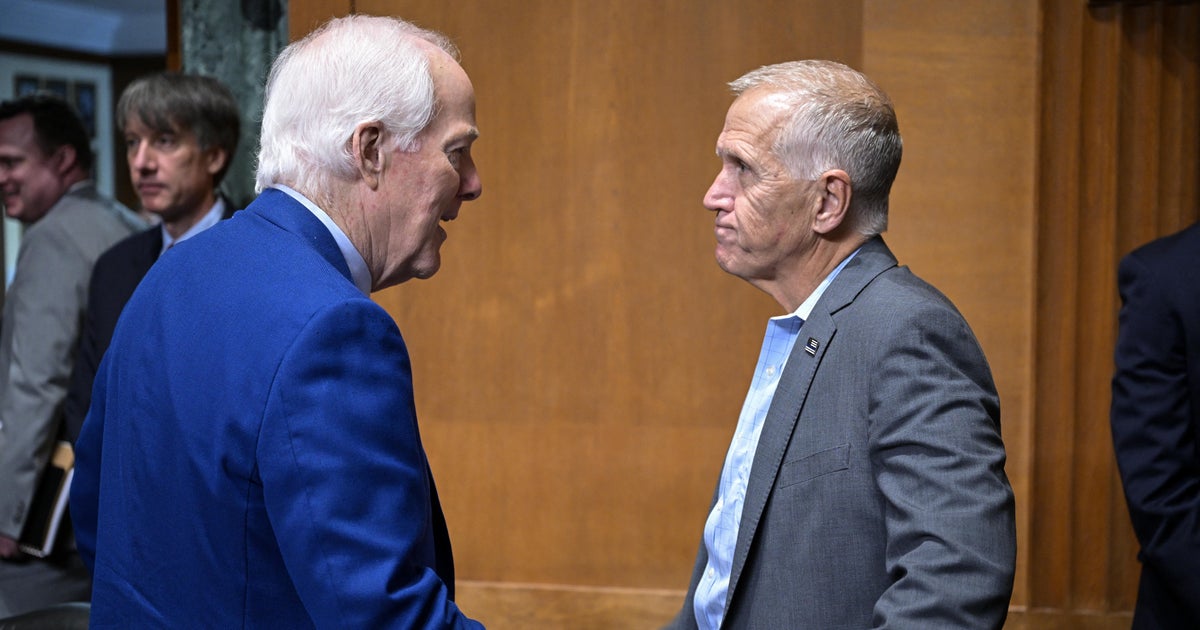
Four Republicans voted to advance the measure: Sens. Susan Collins of Maine, Lisa Murkowski of Alaska, Rand Paul of Kentucky and, for the first time, Thom Tillis of North Carolina. Sen. John Fetterman of Pennsylvania was the only Democrat to vote against it.
The concurrent resolution would have directed the president to "remove the use of United States Armed Forces from hostilities against the Islamic Republic of Iran or any part of its government or military, including potential ground forces in a combat role or used for occupation, unless explicitly authorized by a declaration of war or specific authorization for use of military force against Iran." The House adopted it 214 to 208 in July. Because it was a concurrent resolution, it would never have gone to the president for a signature and could not have been vetoed, though administrations of both parties have argued for decades that such resolutions are unconstitutional and cannot bind the commander in chief.
Tillis, who is leaving the Senate early next year, told reporters he changed his vote because 60 days had passed since the administration notified Congress in July that "military action" against Iran had restarted. The War Powers Resolution of 1973 requires the president to notify Congress within 48 hours of starting hostilities and caps unauthorized engagement at 60 days, with a 30-day grace period to withdraw troops safely.
The vote was expected to be the final chance for senators to weigh in on the war before the November midterm elections. The conflict, which began in late February, has passed the six-month mark with no end in sight, and gasoline and diesel prices keep climbing. Democrats have forced more than a dozen votes since the war began. In May the Senate advanced a measure from Sen. Tim Kaine of Virginia amid Republican absences, and in June the same four Republicans helped adopt a House-passed resolution as a symbolic rebuke, before key Republicans reversed course the next day after a tense meeting with Trump. The Senate last voted on the issue in July, when a similar measure also failed 49-50.
Pressure is building inside the GOP. Earlier this week Republican Senate candidates in Michigan and Iowa called for a swift end to the war. Senate Majority Leader John Thune said there is "voter fatigue" over fuel prices and that he has encouraged candidates to run their own campaigns even when they disagree with the president. "It's an economic frustration," Thune said. "That's why again I hope that the administration is laser-focused on trying to get the strait open, get the shipping lanes opened up, and help out with that global energy supply."
The war's human toll also continues to surface. The Army on Wednesday identified the 19th U.S. service member to die while deployed in support of the war, and a letter from Acting Navy Secretary Hung Cao to Sen. Kirsten Gillibrand disclosed that eight sailors in the USS Abraham Lincoln strike group attempted suicide during its long deployment.