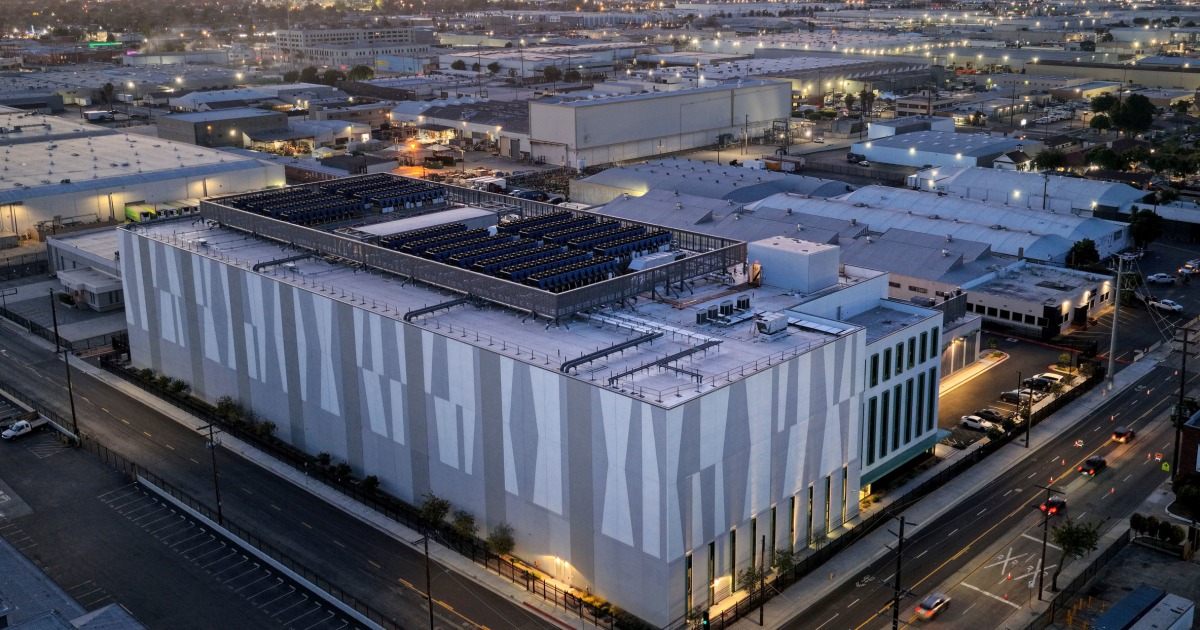
Sixty-Nine Percent of Voters Don't Want a Data Center Near Them. So Do 57% of Republicans
An NBC News Decision Desk poll taken from Aug. 20 to Sept. 1 found opposition to local AI data centers in every party. Forty-five percent said they strongly oppose one.
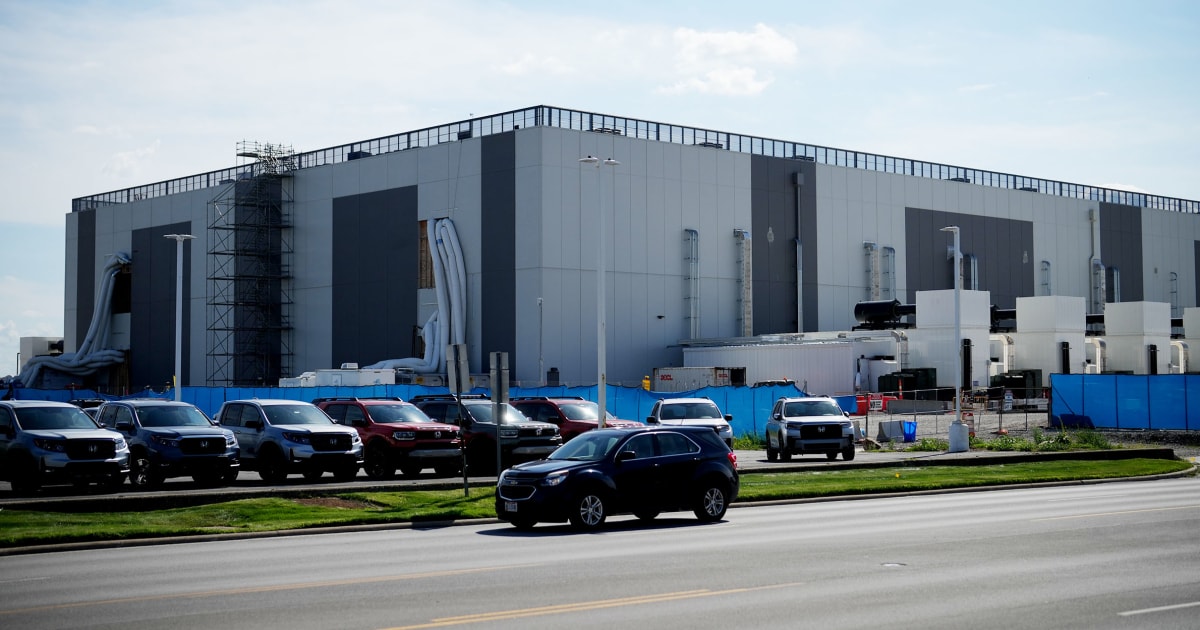
The one thing American voters agree on two months before the midterms is that they do not want an artificial-intelligence data center built near their house. An NBC News Decision Desk Poll powered by SurveyMonkey, taken from Aug. 20 through Sept. 1, found 69% of respondents opposed to the construction of AI data centers in their local area. Forty-five percent said they strongly oppose it.
The number holds across the party line, which is what makes it a problem for both campaigns. Eighty-one percent of Democrats, 71% of independents and 57% of Republicans said they do not want the facilities in their communities. There is no version of the electorate in that poll where data centers are popular.
President Trump has argued the opposite case in public, telling communities they should welcome the buildings for the economic benefits and promising that they bring lower taxes and jobs. Some of his own party's officials have moved the other way. Sen. Jon Husted, an Ohio Republican, introduced legislation in July that would require utilities to charge data center operators for the additional electricity and water they consume, a reversal from his earlier position as an advocate for the industry.
The two complaints that come up locally are water and utility bills. Data centers consume enormous quantities of both electricity and cooling water, and in a number of markets residential ratepayers have watched their bills climb as utilities build out generation and transmission to serve a single new customer. NBC reported from a route running along Interstate 80 from Nebraska to New Jersey, which takes in eight competitive House districts and two Senate races that will help decide control of both chambers. An Iowa electrician interviewed along that route framed the water question bluntly, describing the industry's draw on local supply and asking whether residents ever got to use any of it.
The politics are already showing up in advertising and in campaign attacks. Rep. Marcy Kaptur, the Ohio Democrat who has survived a string of close races, is using her opponent Derek Merrin's 2017 vote to extend tax breaks to data center companies against him.
The counterargument comes mostly from labor. Union construction workers on the sites cited pay as high as $5,000 a week at entry level with overtime, wages that are difficult to find elsewhere in the trades and that arrive in counties with little other large-scale construction. That is a real constituency, but it is a small one relative to the ratepayers, and it is concentrated on job sites that finish and go away while the electric bill does not.