Knitted 'Plant Armor' Fabric Boosts Strawberry Yields Up to 3.56 Times in NC State Trials
The 3-D textile lets sun, rain and air through while keeping insects off the fruit, which could cut the pesticides strawberry growers spray.
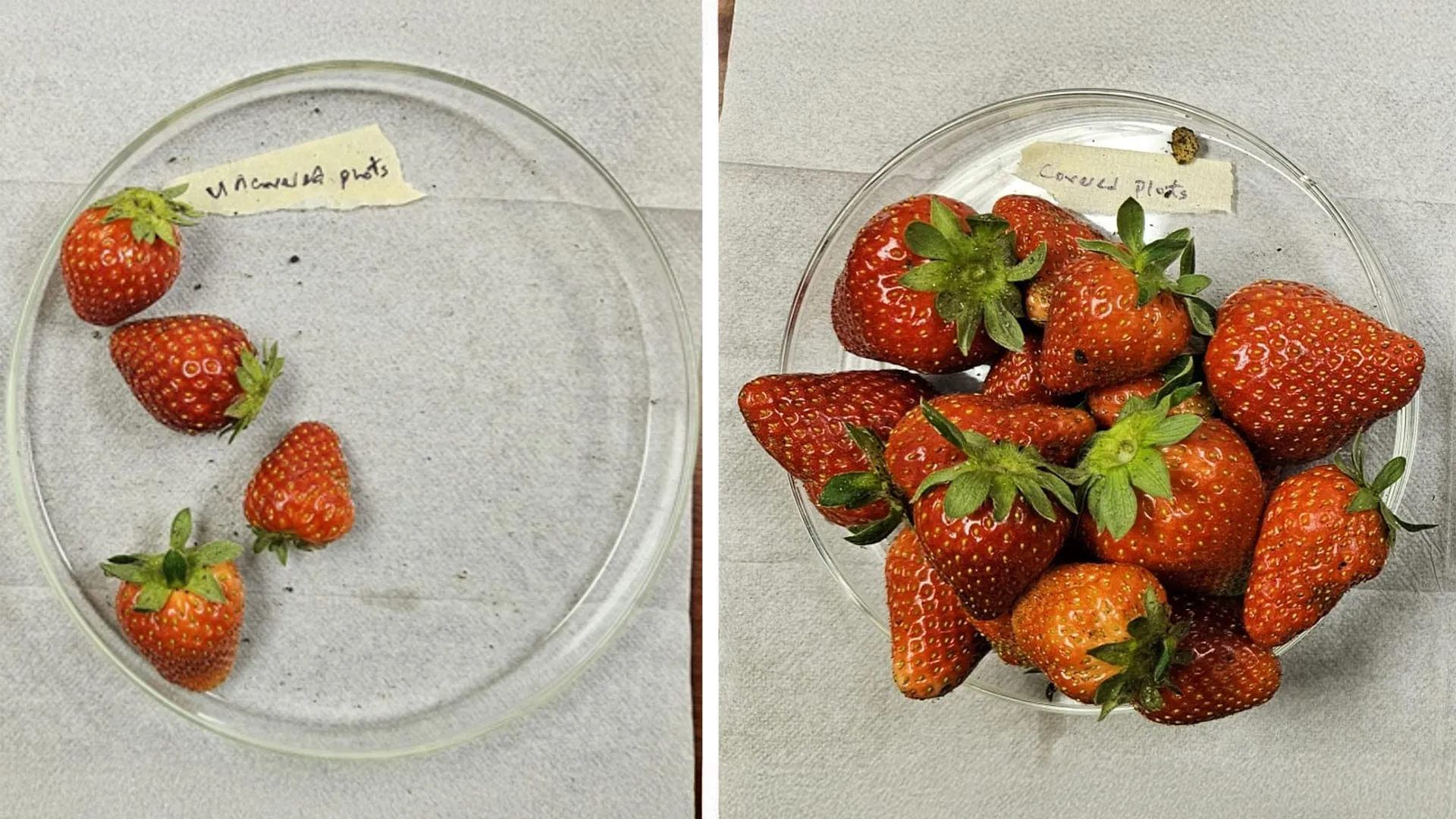
A knitted fabric cover has raised strawberry yields by as much as 3.56 times in field trials at North Carolina State University, researchers report. The textile, called Plant Armor, is a three-dimensional porous cover that physically blocks insects while still letting in sunlight, rain and airflow.
The study, published in the journal Agriculture, is titled "Knitted 3-D, Porous Textile Cover to Enhance Strawberry Fruit Production and Prevent Insect Feeding." Gabriel Olawuyi is the lead author. The team included James Clothier, Matthew Bertone and Grayson Cave, with researchers from NC State's College of Natural Resources, Wilson College of Textiles and College of Agriculture and Life Sciences.
The result surprised even the team. The fabric looks fairly opaque, and the researchers expected it might cut the light plants need. Instead, they found that it "did not impede access to light at all," and that fruit production rose significantly. Plants under the cover showed no negative effects on their health.
Insects are a major reason. By keeping pests from reaching the plants, the cover prevents the feeding damage that ruins fruit. The researchers say that could reduce how much conventional pesticide growers need, since the barrier does the work that sprays otherwise do.
The textile also warmed the plants. It created consistent warming through the growing season, which let strawberries accumulate the heat they need to reach the fruiting stage earlier. Earlier fruit can give growers an advantage in a market where timing affects price.
The study says the barrier could also reduce water use in strawberry farming, though the headline figure is the yield gain. The 3.56 times figure is the top of the range in the trials compared with uncovered plants, so growers should not expect that boost in every field or season.
The material is not new to the lab. Plant Armor Gen 2 received U.S. Patent No. 11,582,968 B2 on February 21, 2023, so the work published now is the evidence that it can raise fruit production, not the invention of the fabric itself.
Strawberries are a demanding crop. They are delicate, attract many pests and are often sprayed repeatedly to keep fruit marketable. A cover that cuts insect damage and speeds ripening addresses two of a grower's biggest costs at once. The open questions are practical ones the trials do not fully answer: how much the fabric costs per acre, how long it lasts, how much labor it takes to lay and remove, and whether it works as well in climates and on varieties different from those tested. Those answers will decide whether a promising lab-and-field result turns into something farms actually buy.