The Houthis Took Perim Island on Friday
Every Inch of Yemen's Red Sea Coast Is Now Theirs, and Trump Told MBS No Twice.
Government forces withdrew from the island that splits the Bab el-Mandeb into two shipping lanes, ending an 18-hour blitz that also took Zuqar, Dhubab and Murad. Oil is above $100 and U.S. diesel hit a record $6.05.

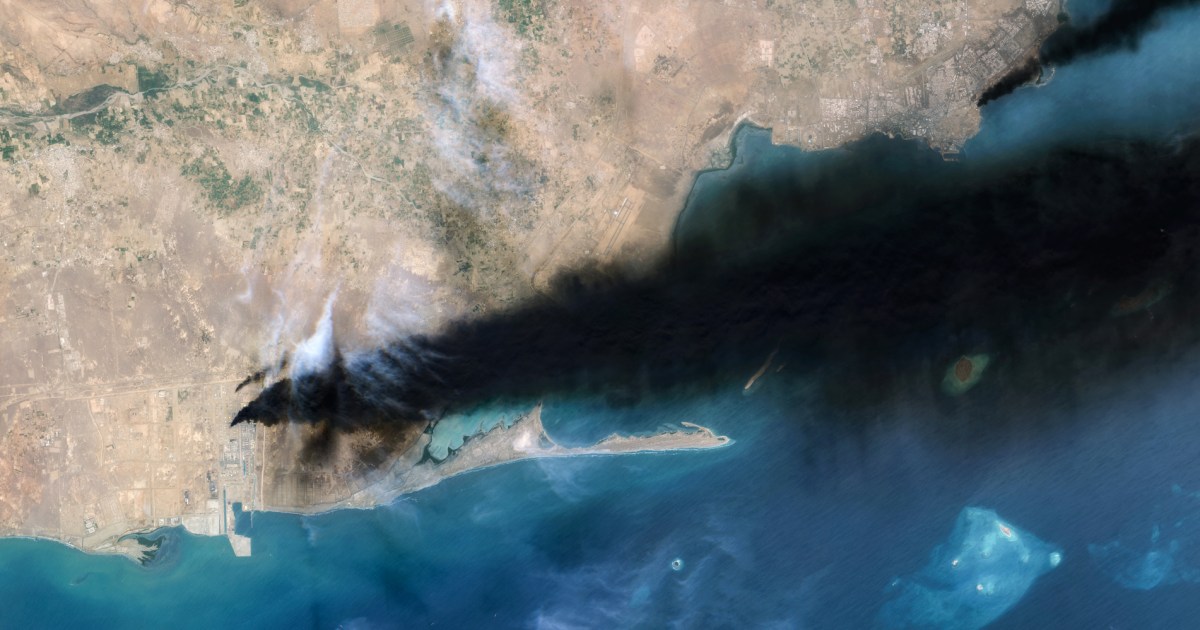
Houthi fighters landed by boat on Perim Island on Friday after Saudi-backed Yemeni government forces pulled out, handing the Iran-aligned group the rock that sits in the middle of the Bab el-Mandeb Strait and divides its narrowest stretch into two shipping lanes. The island, also called Mayun, covers about 13 square kilometers and lies roughly two miles off Yemen's southwestern tip. A senior Yemeni military official and a Houthi official both confirmed the capture, and Reuters said four government sources corroborated it. "Everything that was under our control on the western coast has fallen," a local Yemeni official said.
The seizure capped an 18-hour push that began Thursday with the fall of the port city of Mokha and the capture of Zuqar, the largest of the three main islands north of the strait, by rocket fire and boat-borne assault. On Friday the Houthis also took the town of Dhubab and the coastal village of Murad, and by evening Yemeni officials said they had the Greater and Lesser Hanish islands as well, the last two in the strait that had been outside their control. Euronews reported that more than 2,000 government troops had been besieged on the Hanish group and ordered to surrender. Videos circulating Friday showed Houthi fighters celebrating in Mokha and hauling away weapons and vehicles the retreating forces left behind.
The week-long offensive has killed more than 500 people, and the United Nations migration agency said Friday that 46,000 people had been displaced, a figure that quadrupled in a week. The UN said "entire families" were "on the move, often at night" with "nowhere safe to go." Saudi Arabia answered with daily airstrikes, hitting Mokha's airport twice on Friday and its seaport, and ordered reinforcements up from Aden. The Houthis, who already hold the capital Sanaa and the Red Sea port of Hodeidah, have also claimed they freed 210 prisoners from Saudi-backed detention.
In Washington, the response has been to stay out. CBS News reported that Crown Prince Mohammed bin Salman personally pressed President Trump for U.S. strikes, calling him twice on Thursday and being turned down both times. Saudi officials had hoped that if the kingdom struck Mokha, the United States would follow, and wanted to assemble a coalition. Instead the U.S. offered "intelligence and targeting support," with more than 200 American personnel already in Saudi Arabia providing what officials described as non-kinetic help. CENTCOM commander Admiral Bradley Cooper flew to the kingdom Friday for coordination talks. Trump, asked about the Houthis, said, "They don't want to fight with us," adding that "they don't want us to go after them." Secretary of State Marco Rubio said the U.S. was watching Yemen "very closely." One source described Riyadh's dilemma bluntly: "If the Houthis are attacked, how will Iran respond?"
The market answer came fast. Oil hovered around $100 a barrel, its highest since July, with some analysts warning of $120. The U.S. national average for diesel reached $6.05 a gallon on Friday, a record, and 60 percent above the $3.71 of a year ago. Taken together with the war-choked Strait of Hormuz, the two chokepoints account for more than a quarter of the world's seaborne crude and petroleum trade, and nearly a third of container traffic passes through the Red Sea. "Now the Iranians don't only control Hormuz," said Farea Al-Muslimi of Chatham House, "but they control the other most strategic chokepoint." Caroline Rose of the Soufan Center said shippers would be forced around the Cape of Good Hope, adding weeks to voyages and pushing up insurance and fuel costs.
The Houthis insist there is nothing to fear. Politburo member Hazem al-Assad said there was "no cause for international concern" and that navigation remained safe, while military spokesman Yahya Saree said the strait was open to all ships except Saudi ones, which the group banned in July after a Saudi strike on Sanaa's airport. Tehran did not hide its satisfaction. Mohammad Mokhber, an adviser to Supreme Leader Mojtaba Khamenei, congratulated the Houthis on a "resounding victory," and Iran's Foreign Ministry called for an end to the Saudi blockade of Yemen and an immediate return to talks. Pakistan, which signed a mutual-defense pact with Saudi Arabia and Turkey in Mecca earlier this month, first said it would honor the agreement "in case there is a need," then walked that back within 24 hours, with a Foreign Ministry spokesman calling the pact "defensive, focused on deterrence." The UN Security Council met Friday, and envoy Hans Grundberg urged members to contain the fighting.