Polymarket Says It Probed 'Dozens' of Midterm Bets and Referred at Least Two to the CFTC
The prediction market's new intelligence chief says a 16-person team and an election surveillance system are hunting insider trading before the Nov. 3 vote.
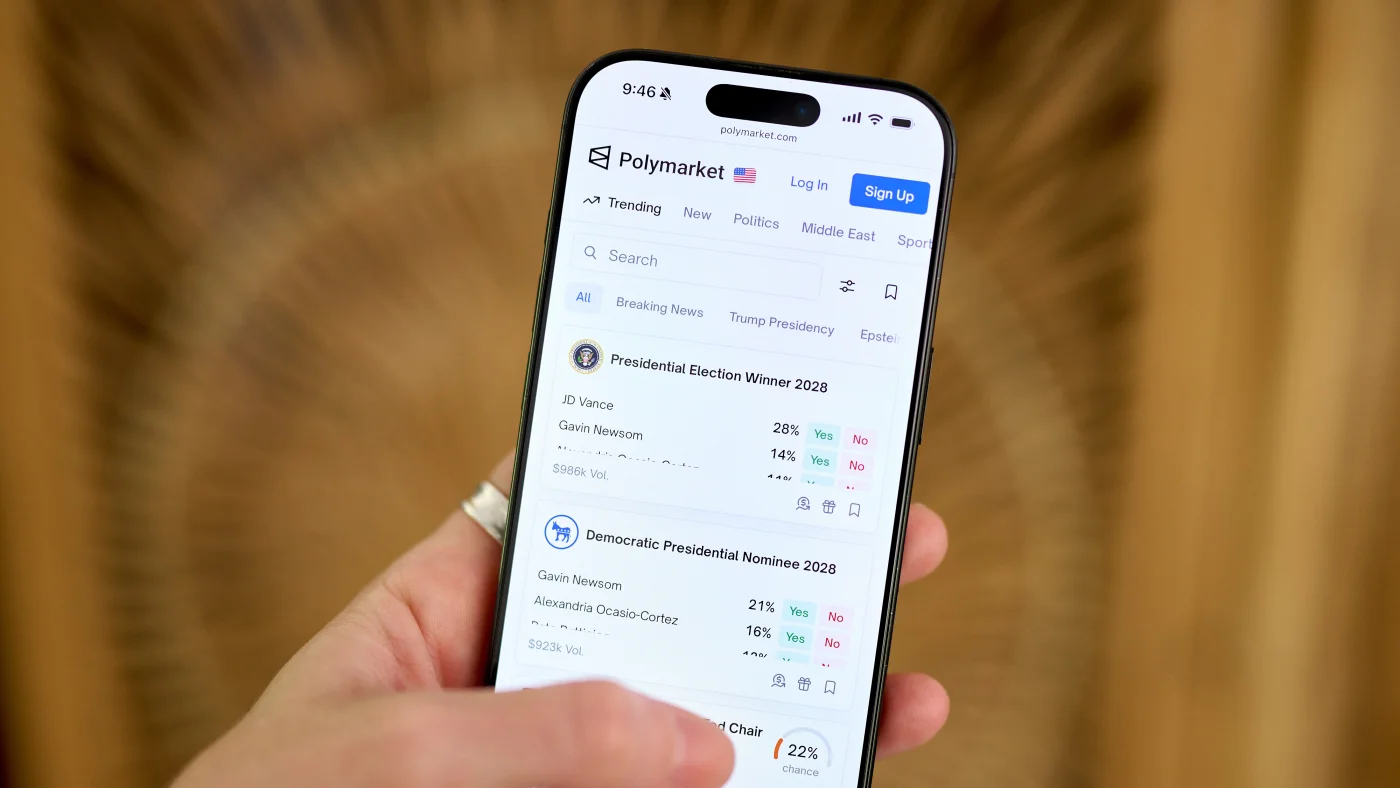
WASHINGTON — Polymarket has investigated "dozens" of bets on its prediction markets related to the midterm elections, according to Shana Bautista, the company's head of global intelligence and investigations. At least two of those probes have been referred to the U.S. Commodity Futures Trading Commission, according to a person familiar with the matter who was not authorized to speak publicly.
The disclosure comes as Polymarket and its main rival, Kalshi, have exploded in popularity over the past year. The fast-growing industry faces legal challenges from states and pushback from lawmakers who argue that betting on election outcomes poses serious risks to democracy. Bautista, a former FBI official and cryptocurrency analyst who joined Polymarket in June, said her team of 16 and a new election surveillance system are actively policing bets ahead of the Nov. 3 midterms.
"If you have information that you have a duty to protect, don't trade on it," Bautista told NPR. "It's explicitly against our terms of use on both platforms, but also is against the law. If you decide that you are smarter and can do it, we will find you." She oversees data from both the U.S.-regulated version of Polymarket, which requires users to provide their real identities, and Polymarket International, which is essentially unregulated and allows anonymous trading in cryptocurrency. Even so, she said, crypto trades are rarely completely anonymous. "There's never been a case that we work where we haven't been able to identify, potentially, who these people are," Bautista said.
The surveillance system pulls "gigabytes" of data on each user from social media, Federal Election Commission data, crypto companies, banking partners, statistical models and other public sources. When a user trips a certain number of internally defined red flags, Bautista gets an alert on her phone. "We're getting hundreds of alerts a day," she said. She declined to describe the detection thresholds, citing system security.
She offered one example of what the team looks for in manipulation cases: someone opening several accounts, trading in short bursts, with consistent device IDs across trades and new crypto wallets across four or five accounts, all aimed at making one outcome look more likely than another. Findings from each case, she said, feed back into new detection rules.
The problem is not hypothetical. In April, Kalshi banned and fined a handful of political candidates for betting on themselves. A month later, NPR reported that campaign staffers had made "thousands" of dollars using insider polling information to bet on their own candidates on platforms such as Polymarket and PredictIt. Kalshi announced its own election surveillance system in May that uses FEC data and purportedly blocks any campaign staffer listed by the FEC from betting on an election. In July, Kalshi said it had blocked "dozens" of staffers, though at least one staffer told NPR they got around the block and shared records of recent trades to show it. That staffer spoke anonymously for fear of consequences for their future employment.
Rajiv Sethi, an economics professor at Barnard College at Columbia University who has studied prediction markets for decades, said election markets are uniquely vulnerable. "[Election prediction markets] have the possibility of being a self-fulfilling prophecy," he said, because what people believe will happen can itself shape the outcome if a candidate appears to be losing momentum.
Bautista said insider trading and manipulation look the same in any financial market. "We recognize, too, that when it comes to prediction markets, we're seeing some of the old tried and known tactics, but being applied to a new vector," she said. The industry's federal regulator, the CFTC, has done little to police these markets, largely leaving that work to the companies themselves.