Saudi Arabia Says It Shot Down a Houthi Drone Heading for Mecca and Declared the Holy City a 'Red Line.' The Houthis Say It's a Lie, and Turkey and Pakistan Say Riyadh Hasn't Asked Them for Help.
Air-raid alerts sounded in Islam's holiest city for the first time in the war. Brent crude is above $100, a key Saudi pipeline has reportedly been shut for weeks, and the U.S. told Americans to reconsider travel to the kingdom.
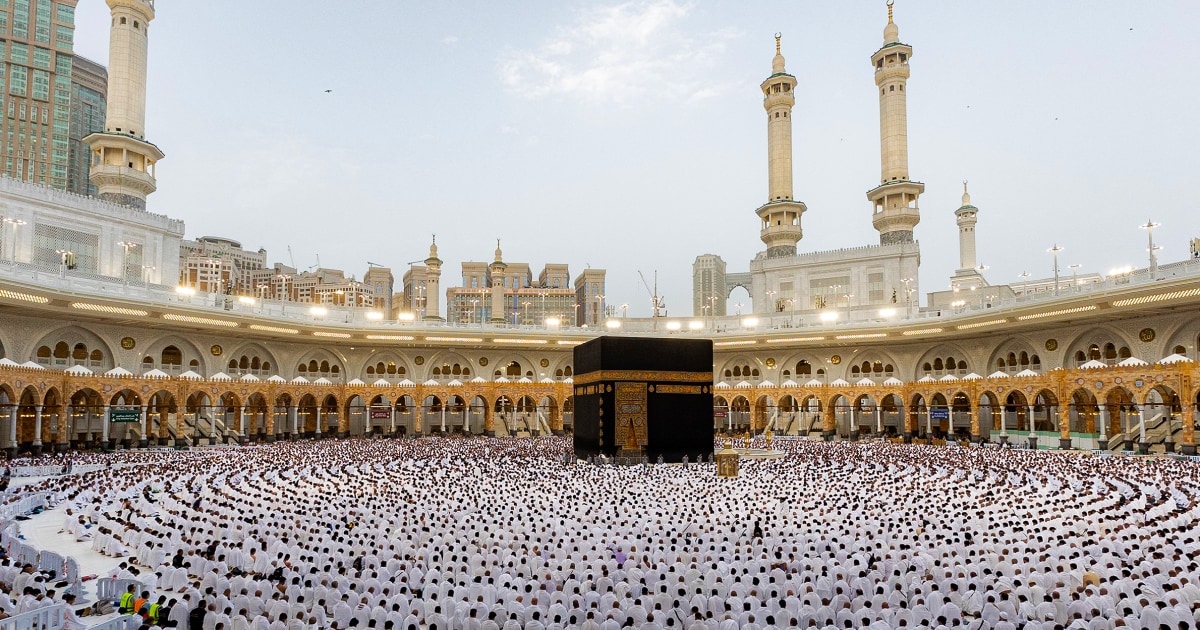
Saudi Arabia accused Yemen's Iran-backed Houthi rebels of trying to attack Mecca on Tuesday night, saying its air defenses intercepted and destroyed a drone south of the city before it entered the airspace over the birthplace of the Prophet Muhammad. The kingdom declared the holy city a "red line" and warned of "necessary and deterrent measures" against the rebels, who have been hitting Saudi oil infrastructure and Red Sea shipping for weeks.
The interception happened around 7 p.m. local time, according to Maj. Gen. Turki al-Malki, spokesman for the Saudi-led coalition fighting the Houthis. It was the first time in the current war that emergency alerts had been issued for Mecca, which sits about 680 miles from the Yemeni border. Al-Malki said it was the second attempted Houthi attack on the city, after the rebels fired a ballistic missile toward it in 2017.
The Houthis, who follow the Zaydi branch of Shiite Islam and also revere Mecca, flatly denied the claim. Military spokesman Brig. Gen. Yahya Saree said early Wednesday that the group's operations "targeted Saudi oil facilities and military bases, far removed" from the holy sites, and accused Riyadh of spreading "fabrications and lies." Later Wednesday the rebels claimed, without evidence, to have shot down a coalition F-15 over Marib province. The Associated Press could not verify the claim, and Saudi spokespeople did not respond.
Condemnation came quickly from the region, but military help did not. Pakistani Prime Minister Shehbaz Sharif called the attempt "dastardly and heinous" and said his country stands "unwaveringly, shoulder to shoulder" with the Saudis. The Organization of Islamic Cooperation, which represents 57 Muslim states, said the attempt violated the "sanctity of holy sites." Yet the mutual defense pact Saudi Arabia signed with Turkey and Pakistan last month remains untapped. Officials from both countries told the AP they have received no Saudi request for support, and a Turkish official said the alliance still has to be "institutionalized" before it can function.
Washington is also staying out. "The Houthis called us, and they don't want to fight with us," President Donald Trump said Saturday, adding that the rebels appear focused on the Saudis. Vice President J.D. Vance said Monday that the administration had been in "constant contact" with Riyadh and "engaged in direct conversations with the Houthis themselves," describing the situation as "very fluid and dynamic." On Wednesday the State Department raised its travel advisory for Saudi Arabia to Level 3, urging Americans to "reconsider travel."
The economic pressure is mounting. A crucial Saudi export pipeline has reportedly been shut down for weeks under Houthi attack, Iran is still targeting ships in the Strait of Hormuz, and the rebels' capture of a Red Sea port city has put the Bab el-Mandeb strait within reach. Brent crude traded near $108 a barrel Wednesday, and the U.S. average for diesel hit an all-time high of $6.31 a gallon. The United Nations says more than 125,000 people have been displaced in Yemen and Saudi Arabia since early September.
Iran's foreign minister, Abbas Araghchi, was in China on Wednesday, where the talks were expected to focus on the conflict and on Hormuz shipping. Chinese President Xi Jinping again offered Beijing's help in ending the war at the BRICS summit in New Delhi over the weekend.
Originally reported by NBC News.