Divers Find Chain Mail on 500-Year-Old Danish Royal Warship Wreck
Fragments of high-quality copper-alloy mail turned up beside an ammunition tool chest on the Griffin, which sank off Sweden in 1495.
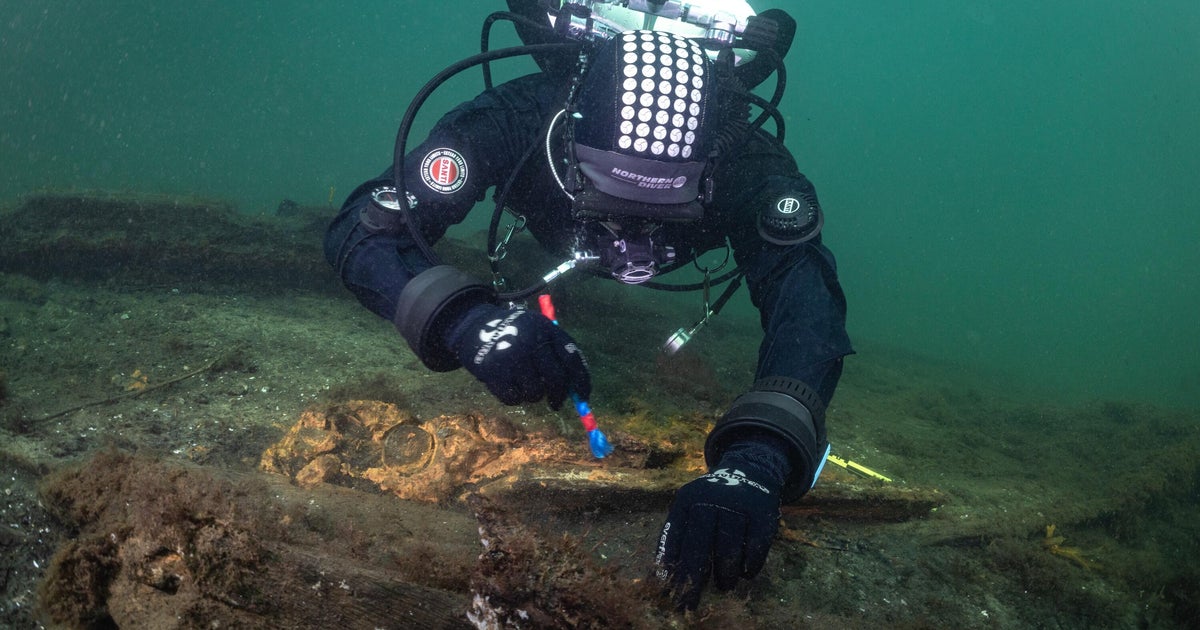
Maritime archaeologists have found well-preserved fragments of chain mail armor on the wreck of the Griffin, a Danish royal warship that caught fire and sank off the coast of Sweden more than 500 years ago.
An international team from the University of Southampton in Britain and Södertörn University and Stockholm University in Sweden announced the discovery on Nov. 24. The mail is made of copper alloy and is described by the researchers as exceptionally high in quality.
The ship, also known as Gribshunden, served King Hans of Denmark as both a warship and a tool of diplomacy. It carried royal representatives to England in 1493. In 1495, while anchored north of the island of Stora Ekö, it suffered an explosion, burned and went down. Hans, who was traveling to Kalmar to negotiate a political alliance with Sweden, was ashore at the time. The wreck was rediscovered in the 1970s and formally identified in 2013.
The divers came upon the armor while documenting an ammunition tool chest just below the forecastle, the raised fighting platform at the front of the vessel. "The remains of the armour were just below the forecastle, in a section that may have served as a storage area for military gear on the ship. It was a truly amazing find!" said Rodrigo Pacheco-Ruiz, a visiting fellow at Southampton's Centre for Maritime Archaeology and co-investigator on the project.
Historical sources show that German mercenaries known as Landsknechts were aboard when the ship sank, and the space may have held their equipment. Pacheco-Ruiz stressed that the area's precise function has not been established. Project leader Rolf Fabricius Warming, a doctoral researcher at Stockholm University, told Live Science it is probable the mail belonged to the mercenaries, but it could have been someone else's.
Warming also cautioned against assuming the owner was an elite knight. "This kind of armour could remain in use for extended periods, often undergoing repairs or being reused, so these fragments may represent older military equipment that was still active," he said. Specialist analysis of how the pieces were made and what they contain may reveal where they came from.
The chest is drawing interest as well. Researchers took samples from it in hopes of identifying its contents, possibly including traces of gunpowder. Lead objects recovered during earlier fieldwork may be linked to molds used to make ammunition, although their purpose is not yet certain. Chemical analysis could help show whether the mercenaries brought their own ammunition and tools or were supplied by the royal fleet.
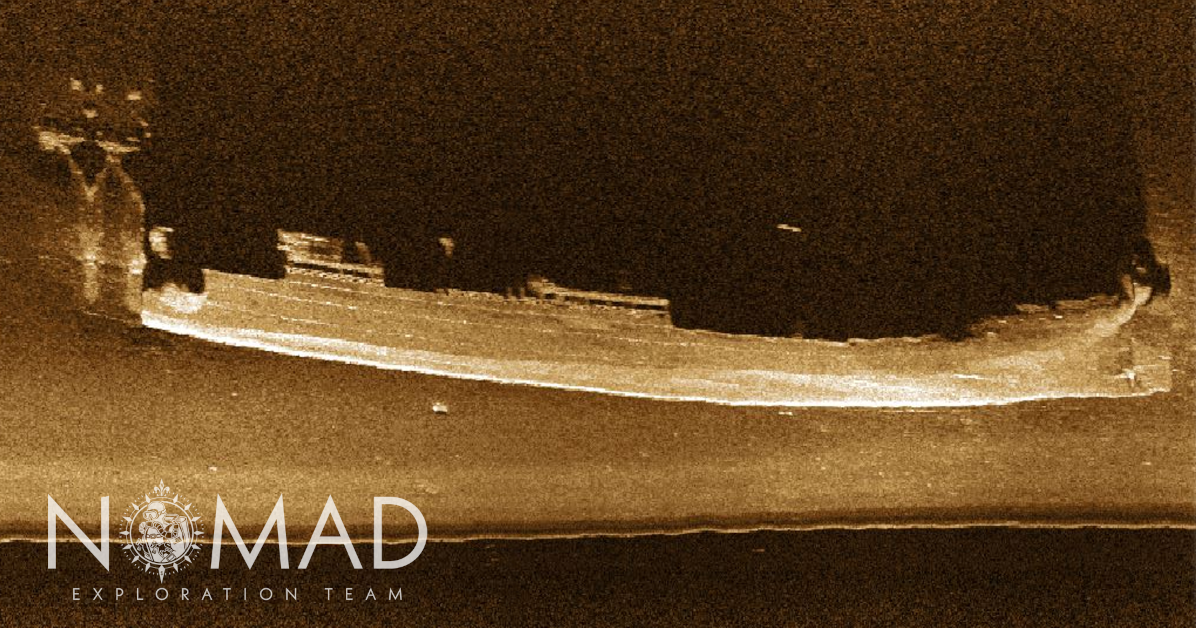
The latest fieldwork combined divers working directly on the wreck, an uncrewed surface vessel mapping the seabed and photogrammetry, which builds detailed three-dimensional records from photographs. Joint investigations have been under way since 2019.
The Baltic's low salinity and absence of shipworms have helped keep the wreck in unusually good condition. Scholars regard it as a rare window into a period when naval warfare was shifting from hand-to-hand fighting toward heavy artillery fire.