Democrats' Midterm Wave Flips Texas House and Wins Full Control in Five States
The party took the Texas chamber for the first time since 2002, flipped both Wisconsin chambers and added governorships in Georgia, Iowa, Ohio and Texas, the biggest single-election shift in state power since 2010.

Democrats took control of the Texas House of Representatives in last week's midterm elections, ending a Republican hold on the chamber that began after the 2002 vote, in the most visible piece of a sweep that reshaped state governments across the country.
The party won full control of both legislative chambers and the governor's office in at least five states where it previously shared power. In Wisconsin, Democrats flipped both chambers of the Legislature, breaking a 16-year Republican majority, and kept the governor's office. Democrats also won or kept full control in Michigan, Minnesota and Pennsylvania, giving them trifectas in all three. In Nevada, they gained control by winning the governor's seat and keeping the Legislature.
Democrats will hold at least 28 governorships in 2027, with pickups in Georgia, Iowa, Ohio and Texas, states long held by Republicans, the Associated Press reported. The party also broke or prevented Republican supermajorities in nine legislative chambers in eight states: Florida, South Carolina, Indiana, Missouri, Iowa, Ohio, Kansas and North Carolina. That means Republicans in Iowa, Ohio and North Carolina would need help from Democratic lawmakers to override a Democratic governor's veto. The AP had not called the governor's race in Kansas.
"It's the biggest single-election change of partisan power in state governments since 2010," said Katie Owens Hubler, director of elections and redistricting at the National Conference of State Legislatures. Heather Williams, president of the Democratic Legislative Campaign Committee, said the party had not flipped this many seats nationwide since the 1980s. The gains also help reverse a slide in which Democrats lost nearly 1,000 state legislative seats during Barack Obama's presidency, a decline the party has been trying to undo for several election cycles.
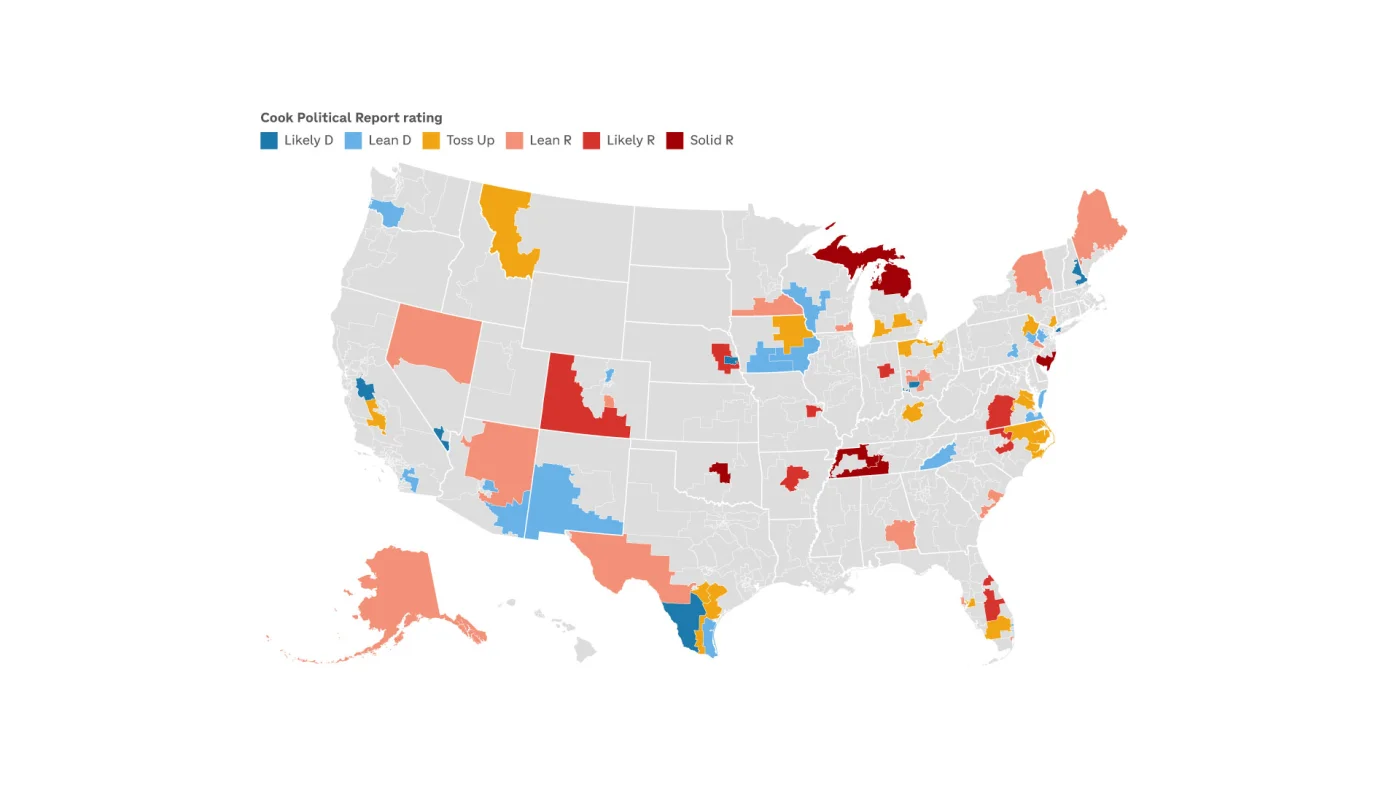
Republicans' own map-drawing may have backfired. President Donald Trump successfully urged eight Republican-led states to redraw congressional districts ahead of this election, but Republicans lost most of the Democratic-held seats they had targeted and others they had counted on winning. Mark Jones, a political science professor at Rice University in Houston, said the Texas redistricting may have mobilized additional Democratic voters who helped drive statehouse gains. But he put the main reason plainly: "It's one man in the White House and his policies — Donald Trump." Even under maps that favored Republicans in Wisconsin, Democrats picked up two congressional seats, leaving the state's House delegation evenly divided in 2027.
The wins come with pressure to deliver. Voters angry about the cost of groceries, housing, health care, gas and utility bills powered the Democratic campaigns, and state governments control tax rates, abortion rights, school choice, education funding, data center development, and the use of artificial intelligence and surveillance cameras. "Now it's time to deliver," said Wisconsin Democratic Party Chairman Devin Remiker. Williams said the party will focus on issues that matter to middle-class voters, such as education and health care access, particularly in rural areas.
There is also pressure on Democrats in Wisconsin and other battleground states to redraw congressional maps, mirroring the Republican push that Trump drove before the election. The coming legislative sessions are expected to include major efforts to lighten the tax burden on the middle class and relax housing regulations. The first signs of the shift have already appeared: days after the vote, Houston Mayor John Whitmire cited the results when he sharply limited his city's police cooperation with federal immigration agents.