Democrats Won Congress on the Economy, but Trump's Veto and the Filibuster Await
Party leaders promise relief on health care and prices, yet they lack the votes to override a veto and face Senate Republicans who can block bills. Analysts warn voters could be disappointed.
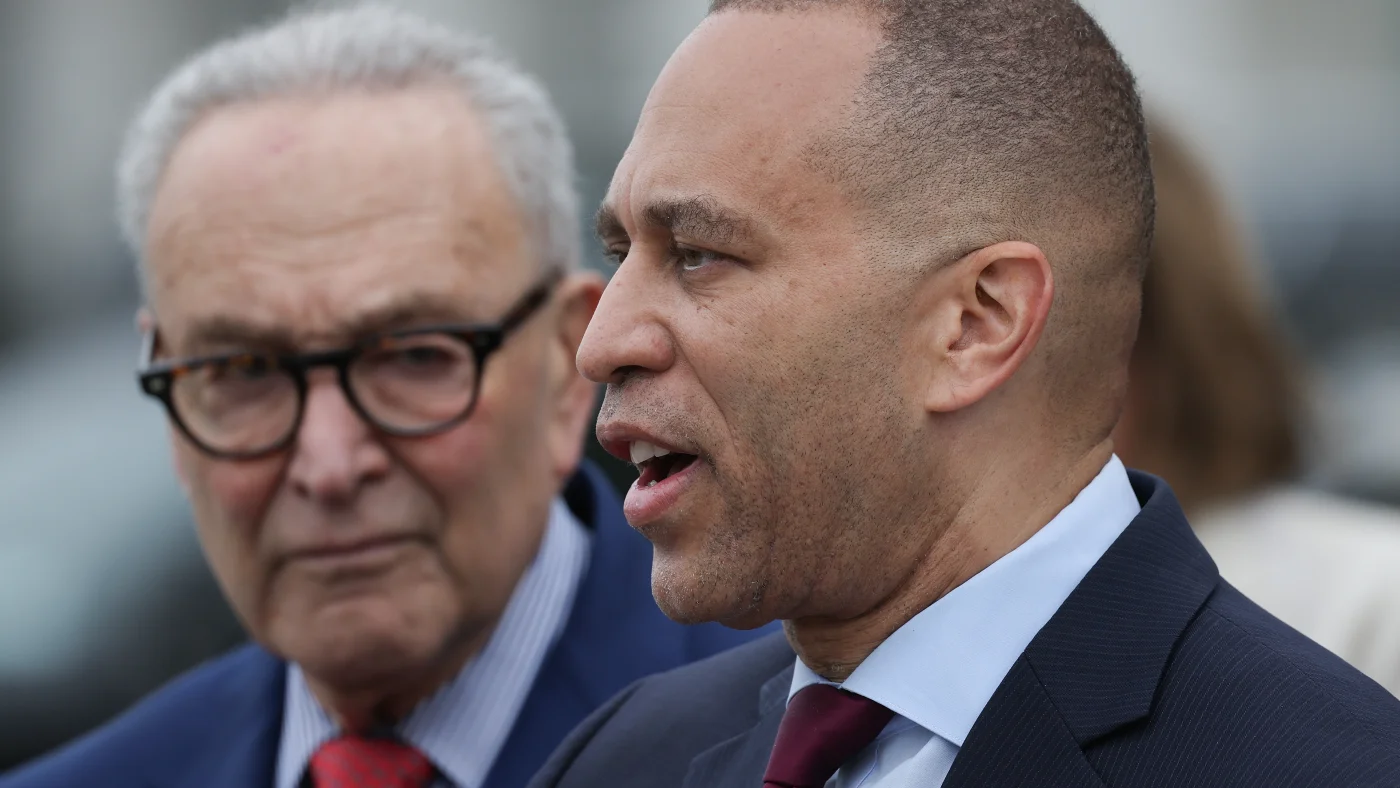
WASHINGTON — After a sweeping set of midterm victories, Democratic leaders say they know exactly what voters wanted from them, and they know how hard it will be to deliver. "We're going to fight to make sure that we make this country affordable for every single American," Democratic Leader Hakeem Jeffries, the presumptive House speaker, said on Tuesday night. "This is a change election, and we understand as House Democrats we need to deliver dramatic change."
Senate Minority Leader Chuck Schumer, D-N.Y., told reporters on Wednesday that "relief is on the way," but he acknowledged that some of the public may be skeptical that Democrats can deliver on the economic message that carried them back to power in both chambers of Congress. The skepticism is rooted in arithmetic. Democrats will control the legislative branch come January, but their majorities will not be large enough to overturn a presidential veto, and they will likely face Republican filibusters in the Senate.
"That doesn't mean that nothing can happen, but it means there are real obstacles," said Bobby Kogan, senior director of federal budget policy at the Center for American Progress, a left-leaning think tank in Washington. Matt Bennett of Third Way, a center-left think tank, said those obstacles create a risk that voters will be let down by the limits of divided government. "What Democrats were really promising was: return us to power, we will put a check on Trump for two years, and then when we get the White House in 2028, we can actually make your lives better," Bennett said. "It isn't clear to me that voters heard the entire message. They might have just heard the last part."
Even without the votes to enact their agenda, Democrats gain a powerful tool by running the House and Senate floors: control over which bills come up for a vote. Kogan pointed to the release of the Epstein files as a model. President Donald Trump and Republican leaders worked to keep that measure from reaching the floor last year, and it took a legislative end run around House Speaker Mike Johnson to force a vote. Lawmakers then voted nearly unanimously to release the files. "The difficulty was just getting it there," Kogan said. "And what Democrats can do is they can make popular things get there."
Forcing votes on popular issues has worked for the party before. After Democrats won Congress in the 2006 midterms, they made raising the minimum wage a signature issue, and Republican President George W. Bush eventually signed it into law. This time, Democrats have signaled plans to put forward bills to help Americans with health care costs, restore enhanced premium tax credits and undo Medicaid cuts. Rebecca Cooke, the Wisconsin Democrat who unseated Republican Rep. Derrick Van Orden in the state's 3rd Congressional District, said the test is simple: "When you vote for a Democrat, your life improves."
Democrats also have budget reconciliation, a procedure that bypasses the filibuster by letting certain budget-related bills pass the Senate with a simple majority. Democrats used it to pass some health care changes in 2010, and Republicans used it for tax cuts in 2017 and again for Trump's signature tax and spending bill. Massachusetts Sen. Elizabeth Warren is already urging her party to embrace it, writing in Time this week that Democrats should use reconciliation to "reverse Republican health care cuts, expand health care coverage, and fund universal child care."
Trump has sent mixed signals about how he will govern against a Democratic Congress, saying at one point that he will "veto everything" and at another that he could "make deals" with Democrats. Congressional Democrats say they are not afraid of the veto pen. "If we have a bill that is bipartisan to restore healthcare for the people who lost their Medicaid or to improve access to affordable medicines and other things, like, I dare him to veto that," Sen. Kirsten Gillibrand, D-N.Y., told NPR's Morning Edition. "If he decides to veto the common sense things that get groceries down or housing prices down, then '28's going to be very favorable for Democrats."
Molly Reynolds, a congressional expert at the Brookings Institution, said the strategy is already visible. Democrats could pass legislation to address the effects of Trump's tariffs, she said, then dare the president to veto it and use the result to show voters where each side stands. Whether that satisfies an electorate that voted for relief rather than contrast is the question that will define the next two years.