A New Catalyst Throws Electrons Loose Into Solution, Breaking a Rule Chemists Have Worked Around for Decades
Instead of handing an electron to whichever molecule wants it most, a University of Wisconsin–Madison team ejects it into the solvent — where it will attach to almost anything.

For decades, chemists building molecules by moving electrons around have been stuck with a rule that reads like an auction: when two molecules compete for an electron, the electron goes to whichever one is easier to reduce. That single preference has quietly fenced off large regions of synthetic chemistry, because the molecule you want to activate is frequently not the molecule that wins the auction. A team led by University of Wisconsin–Madison chemistry professor Zachary Wickens has now found a way to stop holding the auction at all.
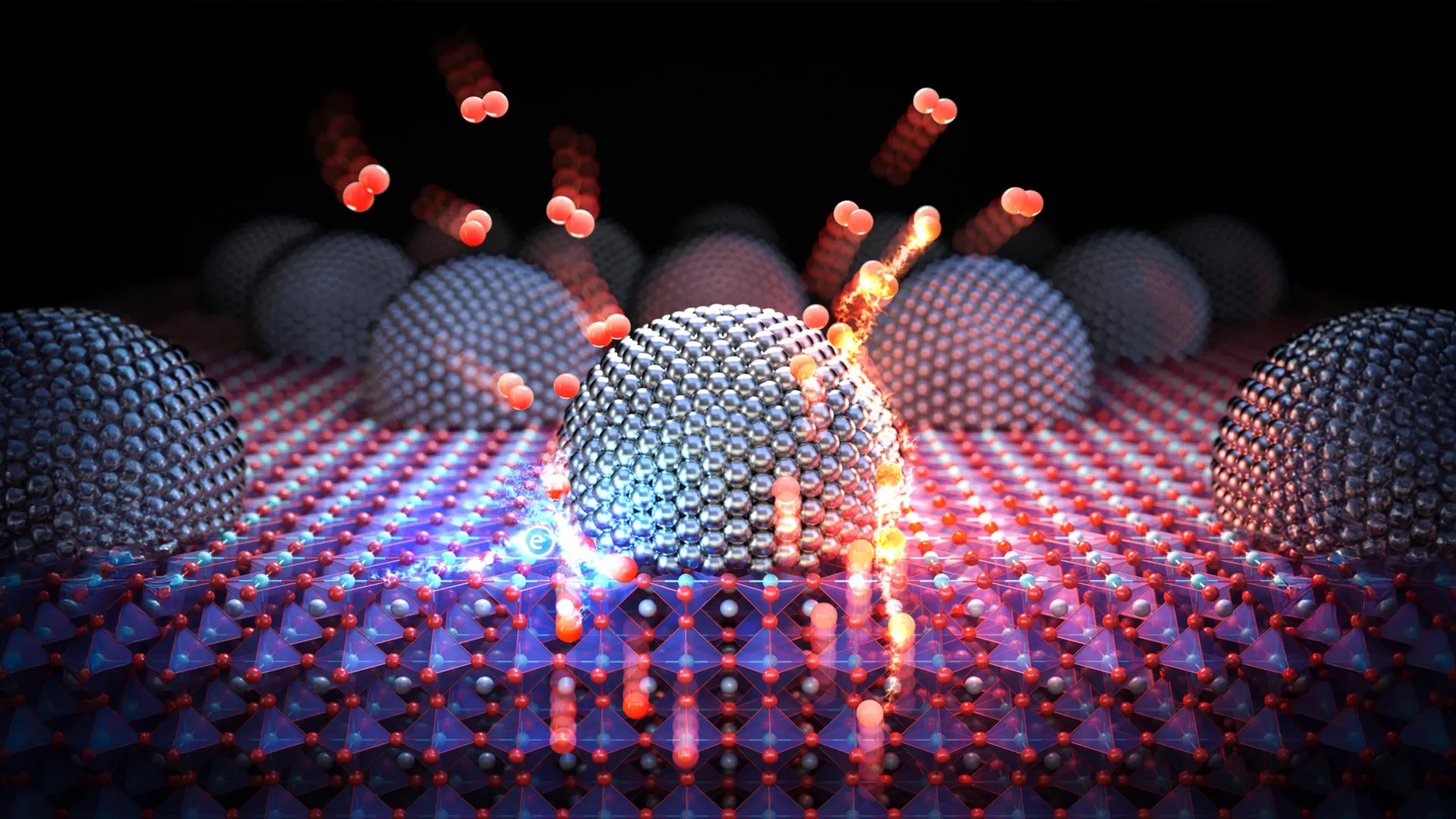
The approach, published Aug. 9 in Nature, uses a catalyst that ejects the electron directly into the surrounding solvent rather than handing it to a partner molecule. A free electron floating in solution is an extraordinarily unstable thing, and that instability is the point. "The strongest reductant and the most aggressive source of electrons you could possibly have, since a free electron would rather be in basically any molecule than just on its own in solution," Wickens said of the method. Once the electron is loose, the question of which molecule is best at stabilizing an extra electron largely stops governing the outcome.
What replaces it is more interesting than simple randomness. Computational work by Robert S. Paton's group at Colorado State University showed that selectivity in these reactions emerges after the electron transfer rather than before it. The electron attaches promiscuously, but only one pathway goes anywhere: the reactant the chemists actually want proceeds onward to the product, while the thermodynamically favored molecule takes the electron, does nothing productive with it, and returns to its original state. The reaction sorts itself out downstream instead of at the moment of transfer.
The work is a collaboration across three institutions. Joseph M. Edgecomb, Matthew D. Resmini and Alissia F. Meyer worked with Wickens at UW–Madison; Paton handled the computational chemistry at Colorado State; and Niels H. Damrauer and Arindam Sau contributed at the University of Colorado Boulder. The paper carries the DOI 10.1038/s41586-026-10897-7.
The practical payoff is a class of coupling reactions that were previously out of reach. Redox chemistry — the business of adding and removing electrons — underpins a large fraction of how pharmaceuticals and advanced materials get built, and a constraint on which bonds can be formed is a constraint on which molecules can exist as drug candidates at all. Reactions that failed because the wrong component kept intercepting the electron become worth attempting again.
The researchers frame the result less as one more technique on the shelf than as a different way to plan a reaction. Conventional redox design starts by asking which species is easiest to reduce and works within that answer. This work suggests the answer can be sidestepped by choosing where the electron is released rather than what it is released to — a shift in the design question itself, and one that applies well beyond the specific transformations demonstrated in the paper.