Caltech Robot Assembles a Truss in Orbit, the First Autonomous Construction in Space
The ASTRA system, funded by DARPA, has spent six months in orbit building a 1.4-meter antenna reflector from tubes and joints without astronauts.
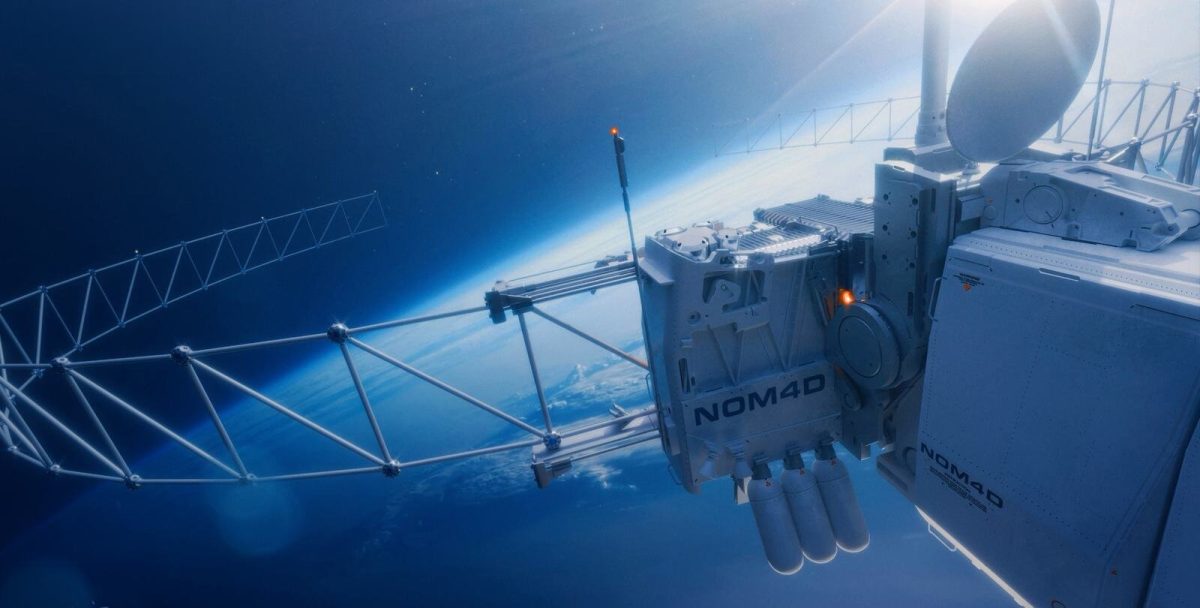
A robot built by Caltech has assembled part of a structure in orbit with no human hands involved, a step toward building spacecraft and antennas far larger than any rocket can carry in one piece.
"This is the first time that a structure has been autonomously constructed in space," said Sergio Pellegrino, the Caltech aerospace and civil engineering professor and senior research scientist at JPL who leads the project. The system is called ASTRA, short for Autonomous In-Space Tensioned Reflector Assembly.
The robot was developed with funding from the Defense Advanced Research Projects Agency as part of its Novel Orbital and Moon Manufacturing, Materials, and Mass-efficient Design program, known as NOM4D. The program studies how to manufacture and assemble enormous structures directly in space.
Instead of relying on astronauts to connect pieces, ASTRA uses an automated arm to pick structural tubes and connecting joints from nearby storage dispensers. It joins them into repeating sections called bays, which form a larger supporting framework known as a truss. DARPA compares the work to building with sophisticated versions of K'Nex or Tinkertoy construction toys, though getting a robot to do it reliably in space is much harder.
The system launched on March 30, 2026, on a SpaceX Transporter-16 mission from Vandenberg Space Force Base. It has spent six months in orbit trying to build a reflector antenna 1.4 meters across. The design uses composite fiber tubes, aluminum connectors and a lightweight reflective surface made from Kapton, a durable polymer film common in spacecraft.
The milestone has limits. According to reports on the demonstration, the robot successfully assembled a third truss bay in orbit but did not complete the entire antenna. DARPA and Caltech describe it as the first automated assembly of a structure in space, which means it is a partial build rather than a finished one.
The ambition behind it is large. NOM4D was created in 2022, and ASTRA is in its third phase, the in-orbit demonstrations, one of only two projects to reach it. DARPA program manager Andrew Detor has said "very large" means structures hundreds of meters or even kilometers across.
Such structures cannot be launched whole. Rockets are limited by the size of their fairings, so today's antennas and telescopes must be folded to fit and then unfolded in space, a design that adds risk and caps their size. Building in orbit from compact parts would remove that ceiling, opening the way to giant radio antennas, solar arrays or telescope mirrors. ASTRA is a small test of that idea, but it shows the basic steps of fetching, joining and repeating can be done by a machine on its own.