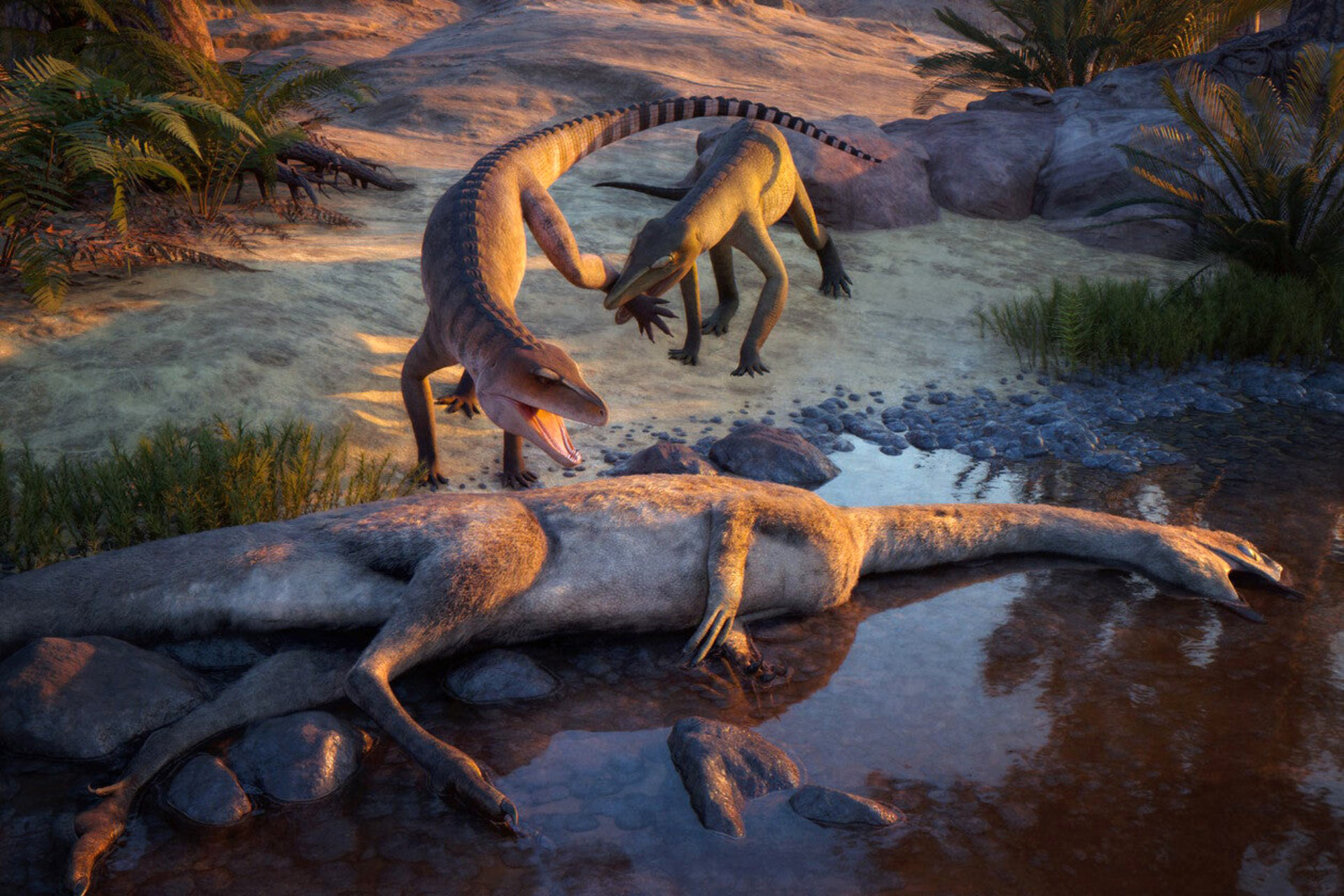
Ancient Ferns Turned End-Triassic Europe Into a Wildfire Machine That Burned for 300,000 Years
Utrecht scientists tracked the colour of 15,000 fossil spores through four drill cores and found the plants that survived the mass extinction were the ones feeding the flames.
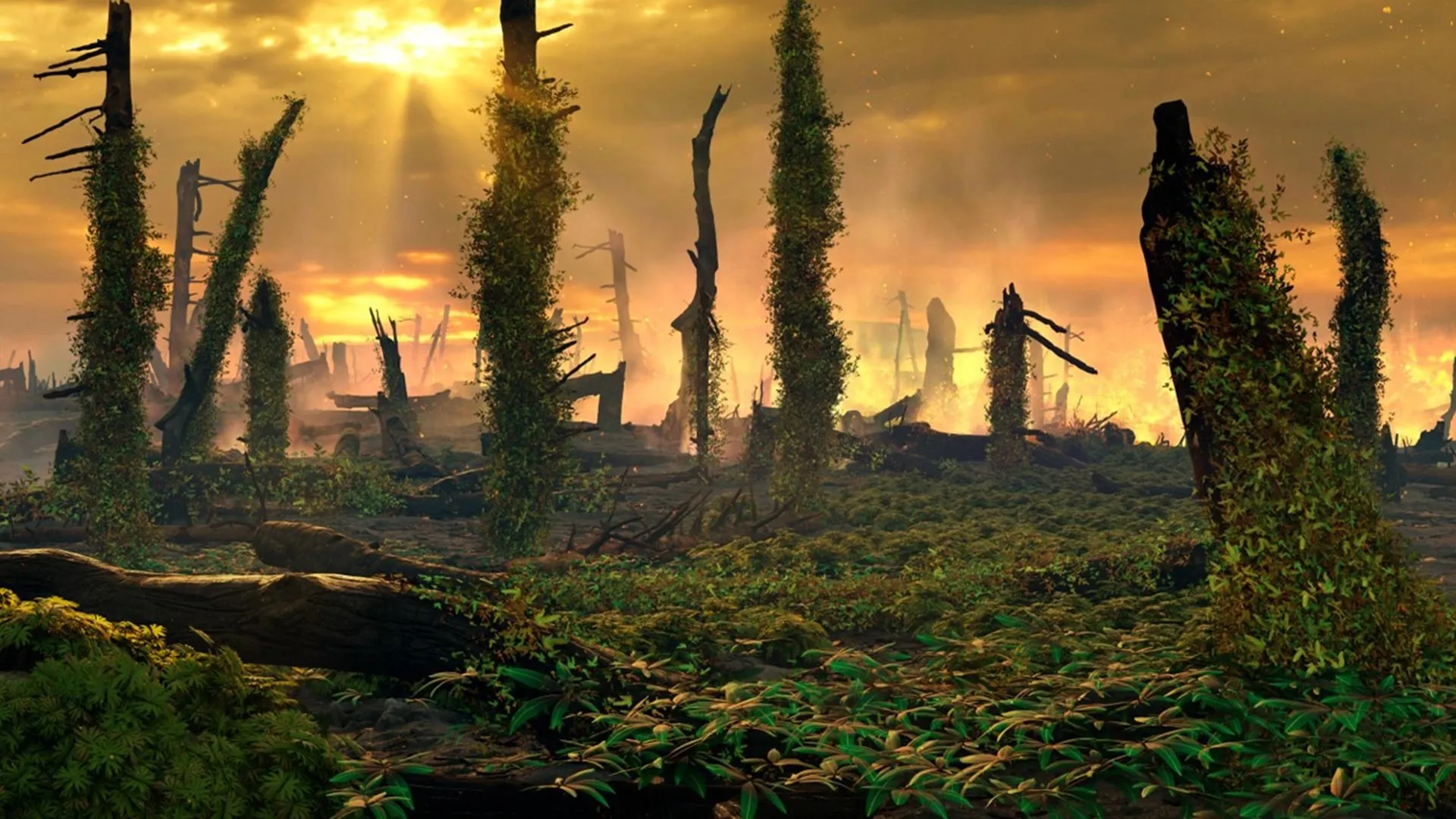
About 201 million years ago, at the boundary between the Triassic and Jurassic periods, three-quarters of the species on Earth disappeared. A study published this week in Nature Geoscience argues that in Europe the killing did not stop when the volcanoes did — because the plants that recolonized the wreckage turned the continent into a landscape that could not stop burning.
The team, led from Utrecht University with Dr. Bas van de Schootbrugge as senior author, examined sediment from four drill cores, including a 640-meter core recently pulled from the United Kingdom. Across those cores they made roughly 15,000 measurements of fossil pollen and spores, tracking not just which plants were present but what condition their remains were in.
The key was a technique the group developed for the study, which they call the Palynomorph Darkness Index. Fossil spores and pollen change colour when they are heated, and the researchers quantified that shift by imaging specimens under a microscope and analysing them across the RGB spectrum. Through the extinction interval the fossils darken steadily from pale yellow toward deep brown, then lighten again once the crisis passes. The same pattern shows up independently in all four cores, hundreds of kilometres apart — the signature of regional, sustained burning rather than local fires.
What was burning was fern savannah. Ferns are classic disaster taxa: they colonize scorched ground fast, they grow in dense continuous stands, and they die back into a mat of dry fuel. In a greenhouse world already destabilized by the eruption of the Central Atlantic Magmatic Province, those qualities created a feedback loop. Fire cleared the ground, ferns filled it within a season or two, and the new growth became the fuel for the next fire. The cores indicate the cycle ran somewhere between 40,000 and 300,000 years.
"Ferns responded to and delivered the fuel that fanned the flames, triggering repeated massive wildfires," the researchers write. "A truly hellish world."
The finding matters beyond the deep past because it identifies a mechanism by which an extinction event outlives its trigger. The volcanic carbon release that started the end-Triassic crisis was geologically brief; the fire regime it set up was not. Recovery of the forests could not begin until the fern-fire loop broke on its own. Modern ecologists watch a smaller version of the same dynamic in landscapes where fire-adapted grasses invade after a burn and lock a region into shorter and shorter fire intervals — a process now visible in parts of the American West and the Mediterranean. The Triassic cores suggest how long such a lock-in can hold when the climate is working against you.