A British Expedition Left a Giant Fossil on an Arctic Mountaintop in 1948. It Sat There 36 More Years
Arctobatrachus urdensis had a boomerang-shaped skull 27 inches wide and 8 inches long. It is the largest plagiosaurid ever found, and one of the oldest.

In 1948 a British expedition reached the summit of Bjørnøya, or Bear Island, in the Norwegian Arctic and found a very large fossil skull lying exposed on the rock. They had no way to carry it off the mountain. So they photographed it, collected a few loose bones, and left the rest where it was, in the open, in one of the harshest climates on earth.
Everyone assumed it was gone. Arctic winters do not treat exposed bone kindly, and for decades researchers wrote the specimen off. Then in 1984 a Norwegian field party walked into it by accident. Thirty-six years of freeze, thaw, wind and rain had cracked the skull badly and taken pieces of it away, but the bulk of the fossil had survived. A week of excavation got it off the island. It then sat largely unstudied for several more decades until it was finally prepared at the State Museum of Natural History in Stuttgart.
The result, published in Papers in Palaeontology, is a new species: Arctobatrachus urdensis, an amphibian-like creature of the Triassic and by a wide margin the largest of its kind ever found. It measured roughly 2.7 metres, about 8.9 feet, from end to end.
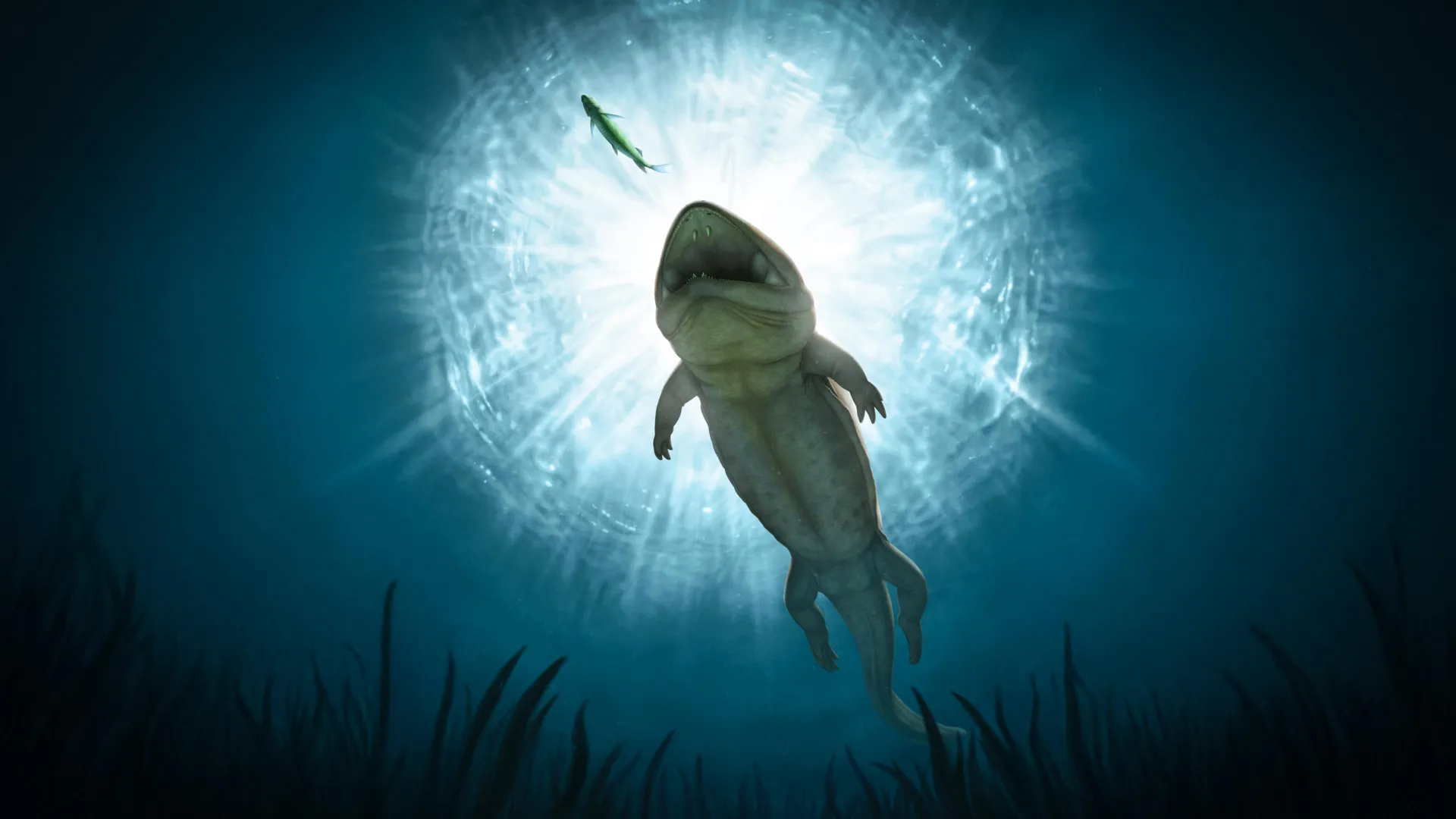
It belonged to a group called plagiosaurids, and their body plan is genuinely strange. "The skull was much wider than long, and its outline resembles a boomerang," said Rainer Schoch, the Stuttgart paleontologist who led the study. On this specimen the skull is about 70 centimetres across and only 21 centimetres front to back, roughly 27.6 inches by 8.3 inches, tracing out something close to a perfect semicircle. Plagiosaurids were flat-bottomed ambush animals that lay on the beds of rivers, lakes and shallow seas waiting for something to swim within reach, then inhaled it through a wide gaping mouth lined with small teeth. Their fossils turn up from Brazil to China.
Reconstructing the missing portions of the skull was possible only because of the 1948 photographs, which recorded parts of the specimen that the Arctic had since destroyed. The completed skull, with its size, its large teeth and its unusually wide gape, points to an animal that was hunting actively rather than scavenging, and quite possibly sitting at the top of its food chain.
Its place in the family tree is what gives the find its scientific weight. Arctobatrachus turns out to be one of the earliest plagiosaurids known, which offers a rare look at what the ancestors of this lineage were like before the lineage became what it is remembered for. The pattern it reveals is a group that started out as reasonably active swimmers with less flattened bodies, and only later settled into the sedentary, pancake-shaped ambush predators of the later Triassic.
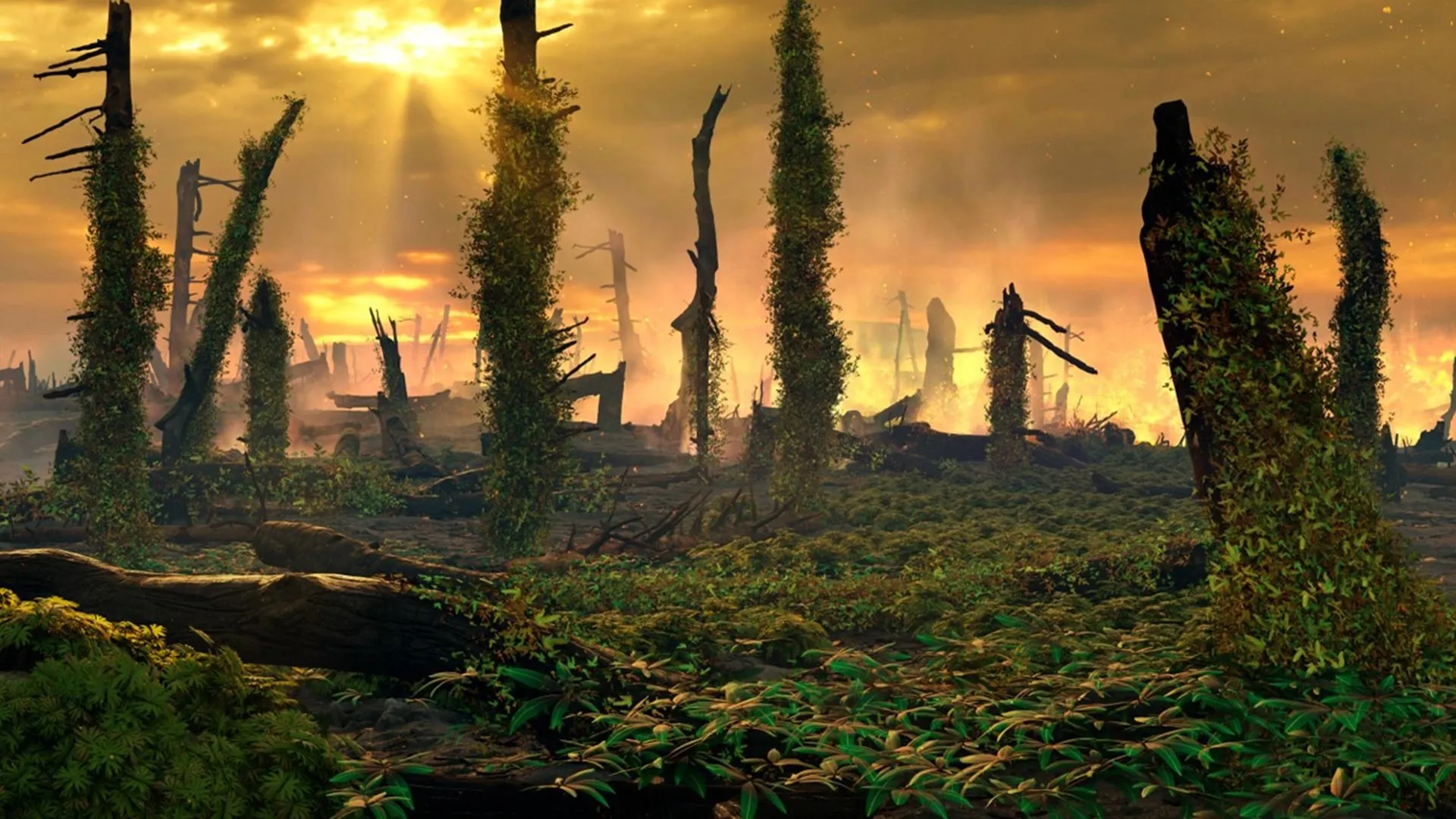
Schoch places the animal in a specific moment in Earth's history. "This species was one of many winners of an extremely hot period that caused a huge extinction a few million years earlier," he said. That, he suggested, is much of the appeal. "Many people are fascinated by our past. What did the planet, its climate and life look like, say 240 million years ago?"