A PhD Student Made 'a Little Bit of the Universe in a Bottle' and Found the Seeds of Life
By jolting a mix of simple gases with 10,000 volts, a University of Sydney researcher brewed synthetic cosmic dust laced with the carbon-based molecules that form the building blocks of living things.
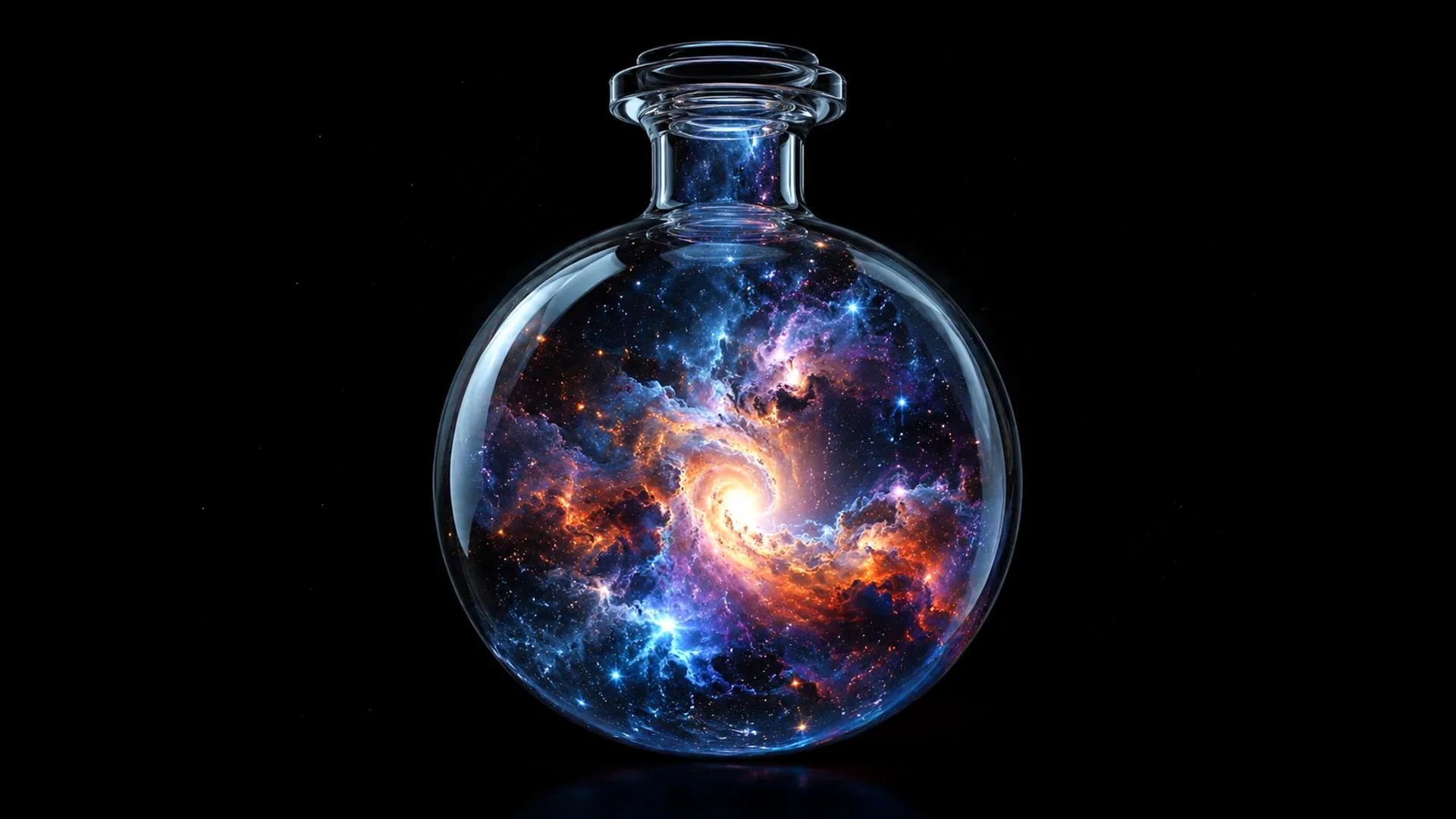
A doctoral student in Australia has recreated the dust that drifts between the stars inside a glass tube on a laboratory bench — and in doing so, produced some of the carbon-rich molecules that are considered essential ingredients for life.
Linda Losurdo, a PhD candidate in materials and plasma physics at the University of Sydney, simulated the conditions of deep space by combining nitrogen, carbon dioxide and acetylene inside sealed glass tubes and blasting the mixture with about 10,000 volts of electrical charge for roughly an hour. "It's like we have recreated a little bit of the Universe in a bottle in our lab," she said.
The high-energy process cooked up complex, carbon-rich particles that settled onto silicon chips, some of them glittering like fragments of the cosmic material they were meant to mimic. Critically, the synthetic dust produced infrared signatures that matched those of real cosmic dust observed by telescopes in space, a sign that the lab-made grains were faithfully reproducing the genuine article.
The particles were rich in so-called CHON molecules — combinations of carbon, hydrogen, oxygen and nitrogen — the same elemental toolkit found in the organic compounds that underpin biology. Researchers have long suspected that such prebiotic ingredients can assemble in the cold, radiation-soaked reaches of space and then hitch a ride to young planets aboard comets, asteroids and meteorites.
By showing how these molecules might form under space-like conditions, the experiment offers a tangible clue to one of science's oldest questions: where the raw materials for life came from. If the chemistry can happen in a bottle in Sydney, it can plausibly happen in the vast molecular clouds that give birth to stars and planets, seeding new worlds with the makings of biology before they are even fully formed.
The experiment echoes a landmark of 20th-century science, the 1952 Miller-Urey experiment, in which researchers sparked a flask of simple gases and produced amino acids, the building blocks of proteins. Where that classic work simulated the early atmosphere of Earth, Losurdo's tubes stand in for the frigid clouds of gas and dust between the stars, extending the same basic idea — that life's chemistry can arise from lightning-like energy acting on humble ingredients — out into the wider cosmos.
The research, supervised by physics professor David McKenzie, was published in The Astrophysical Journal, and Losurdo's presentation of the work earned a best-presentation award at the annual meeting of the Meteoritical Society. The team says the next step is to expand the range of gases and energies tested, mapping out just how far this cosmic chemistry set can go toward building the molecules of life.