China's Zhurong Rover Found Salt Crystals That Only Grow in Standing Water
The Ground Beneath Them Is 757 Million Years Old.
Gypsum shaped like cabbage leaves and Christmas trees does not form from frost or vapor. It needs pooled brine — on a planet most models say froze solid three billion years ago.

Mars may have held liquid water at its surface hundreds of millions of years later than the standard picture allows, according to an analysis of data from China's Zhurong rover that identifies salt crystals whose shapes can only form in standing brine.
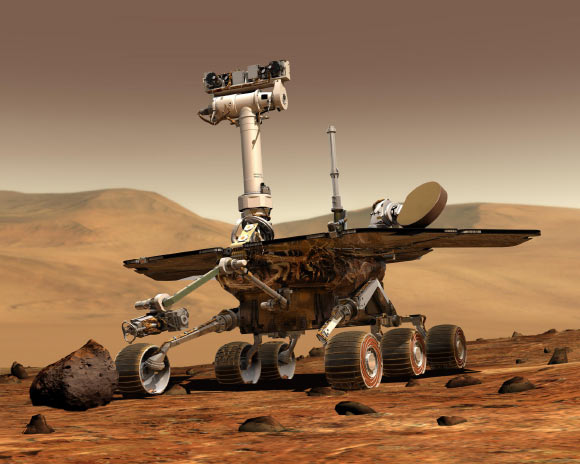
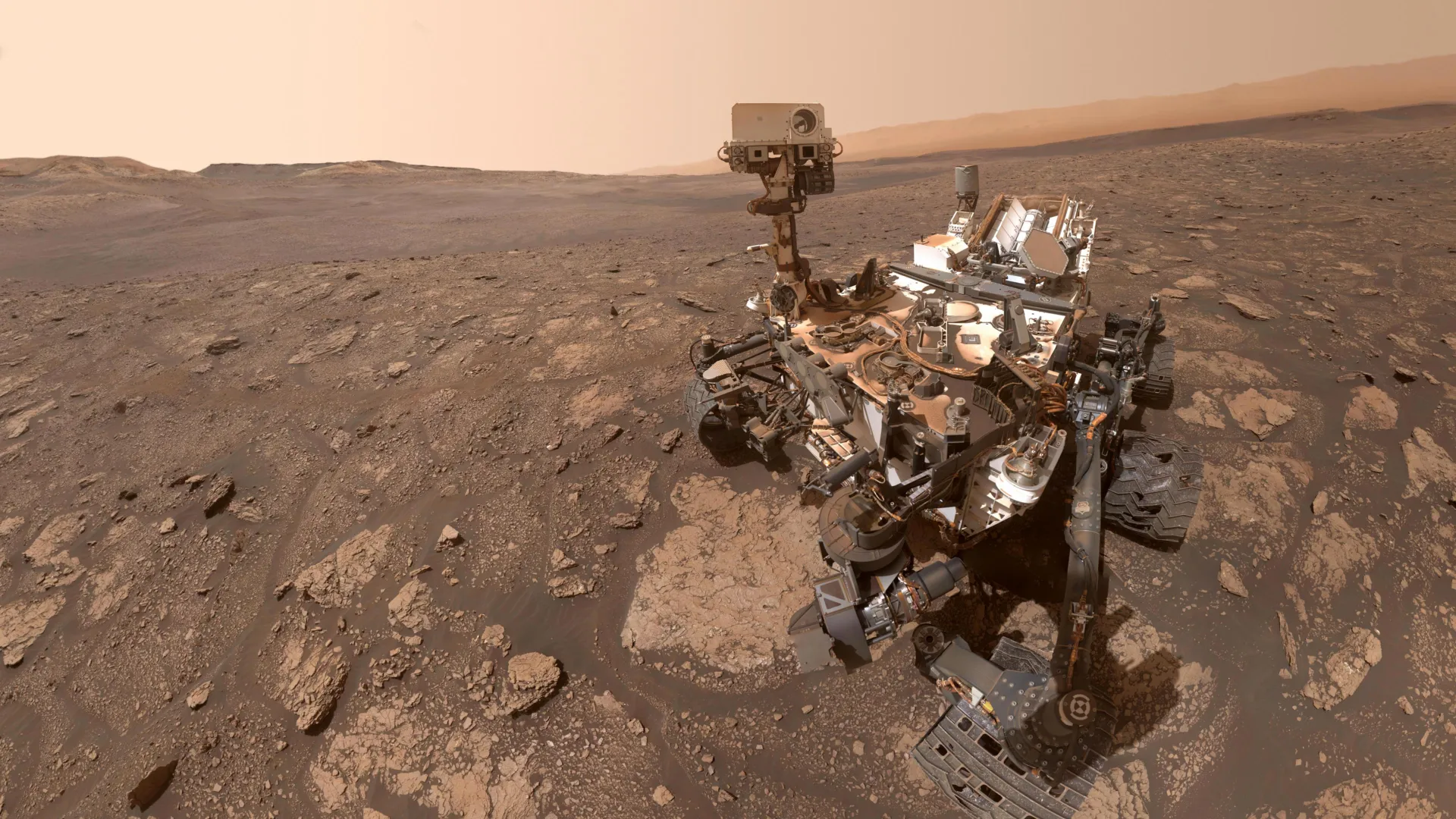
The work, led by Jiacheng Liu at the University of Hong Kong, revisits measurements the rover collected during its 93-day mission in Utopia Planitia, the vast northern plain where it landed in May 2021. Zhurong carried laser and infrared spectroscopy instruments, and among the terrain it examined were bright, flat rocks that turned out to contain water-bearing minerals. The specific mineral matters: the team identified selenite, a variety of gypsum that grows in large, well-formed crystals.
Gypsum by itself is not unusual on Mars, and it can form in several ways, including from thin films of water or from vapor. The crystal habits Zhurong recorded are harder to explain away. The team describes formations curling like cabbage leaves and branching like Christmas trees — morphologies that, on Earth, appear only where crystals grow directly out of a body of concentrated salty water. Frost and vapor deposition produce different shapes.
Dating the site relied on crater counting, the standard method for surfaces no spacecraft has sampled: the longer a surface sits exposed, the more impact craters accumulate on it, and the density of those craters converts to an approximate age. The ground here came out at roughly 757 million years old. The mineral layer's thickness implies the water was not a passing dampness either — producing it would have required somewhere between 6.25 and 25 meters of pooled water, a body deep enough to stand in.
The mechanism the authors propose starts underground. Briny water heated by volcanic activity was pushed upward, accumulated at the surface, and then froze from the top down. As ice formed at the surface it excluded salt, concentrating the remaining liquid below and driving the growth of large selenite crystals out of an increasingly saturated brine — the same process that produces layered evaporite deposits in terrestrial salt lakes, run in reverse thermal conditions.
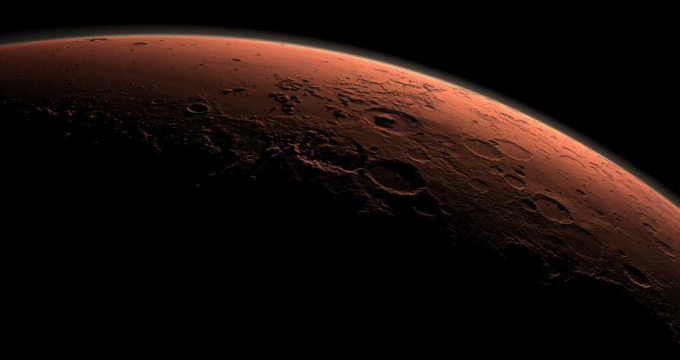
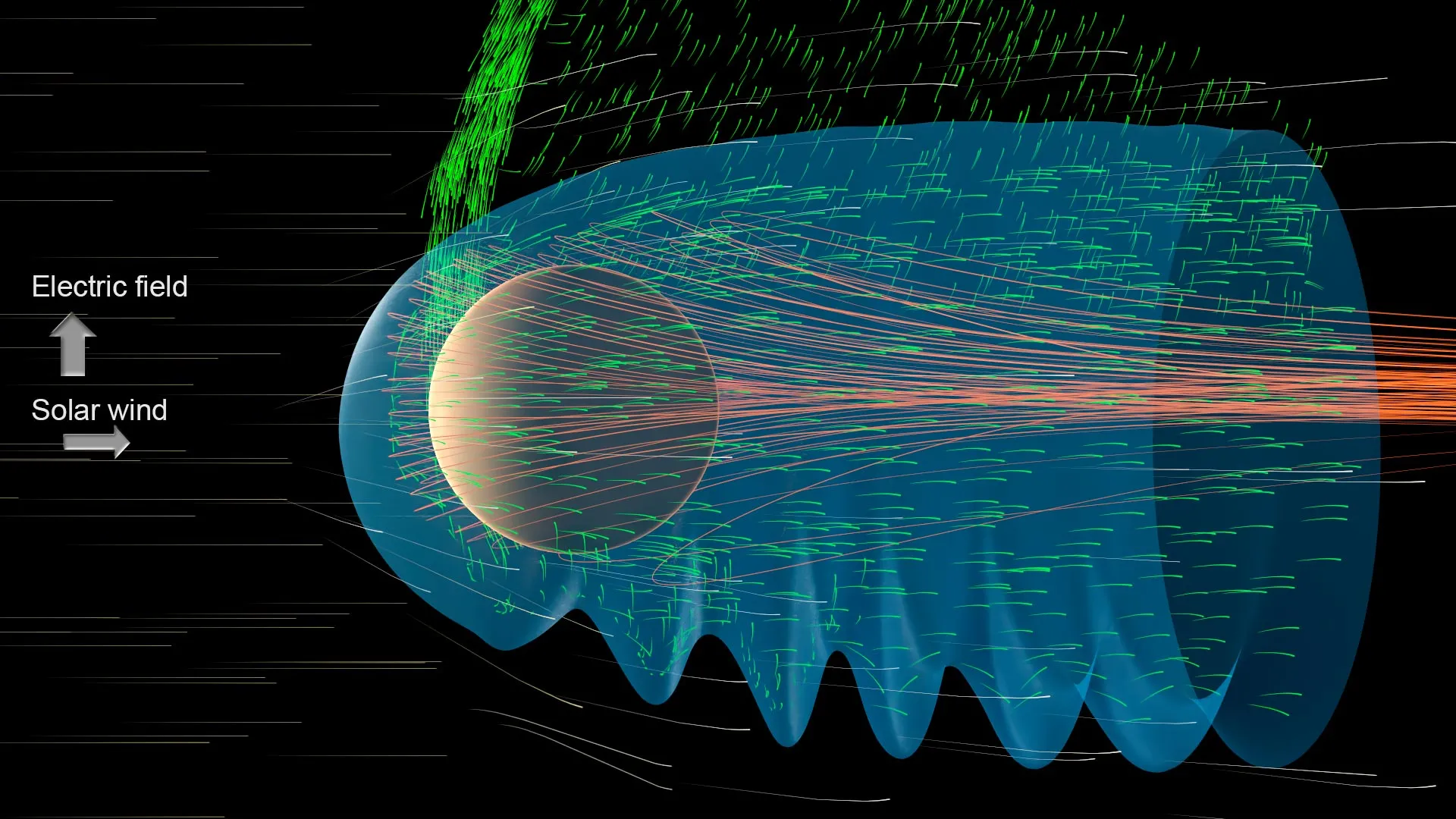
Most models of Martian history have the planet losing its surface water early. The thick early atmosphere thinned, the magnetic dynamo shut down, and by roughly three billion years ago the surface is generally assumed to have been permanently frozen, with any remaining water locked in ice or buried aquifers. A pooled brine at 757 million years puts liquid water on the surface well inside the period when Mars was supposedly dead — not globally, and not for long, but somewhere, in a form that would have offered a habitable environment to anything capable of tolerating high salinity.
That is the connection to astrobiology, and it is a cautious one. Brines this concentrated are hostile even by extremophile standards, and the finding says nothing about whether anything lived in them. What it does say is that the window for surface liquid water on Mars did not close as cleanly as the models assume, and that a rover with a spectrometer, parked on an unremarkable plain for three months five years ago, recorded the evidence. The study appears in Nature Astronomy.