Trump Cancels Nearly $1 Billion Congress Approved, Using a Pocket Rescission Again
The White House is clawing back money for refugee services, international education and housing days before the fiscal year ends, and Republican Sen. Susan Collins called it an 'unlawful cancellation.'
President Trump moved late Friday to cancel almost $1 billion in spending that Congress approved and he signed into law, the White House said, the second year in a row the administration has used a rare budget maneuver that lawmakers in both parties and the Government Accountability Office call illegal.
The largest piece is $567 million for services to refugees, asylees and other migrants run through the Department of Health and Human Services. The White House is also rescinding $50 million for several other programs that help immigrants and noncitizens, $70 million in what it labeled "Woke International Education" grants and fellowships, and $56 million in Department of Housing and Urban Development programs. "President Trump is committed to utilizing all possible tools to cut wasteful and harmful government spending that does not benefit American citizens," the White House said.
The tool is called a pocket rescission. Under the 1974 Impoundment Control Act, a president can ask Congress to cancel money it has appropriated, and lawmakers get 45 legislative days to agree. If the request arrives close enough to the end of the fiscal year, though, the money can simply be held until it expires, whether or not Congress acts. The fiscal year ends Wednesday. Last year the administration used the same move to wipe out $4.9 billion in foreign aid, the first pocket rescission since 1977 under President Jimmy Carter.
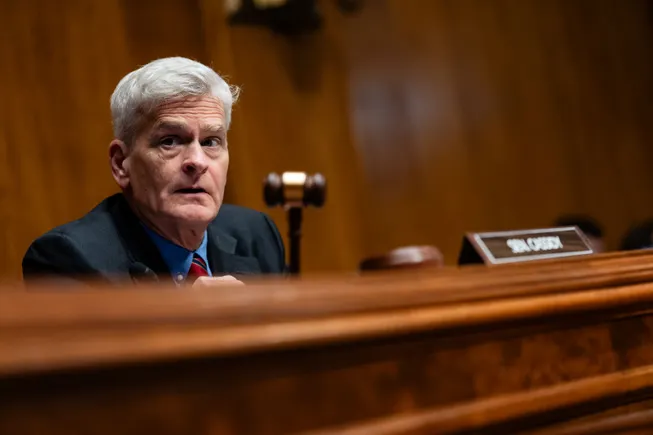
Sen. Susan Collins of Maine, the Republican who chairs the Senate Appropriations Committee, said lawmakers were told of $810 million in pocket rescissions "without warning or consultation." She accused the Office of Management and Budget of having "intentionally withheld these funds for months to execute this unlawful cancellation of appropriations that were approved on a bipartisan basis and signed into law." Collins, who is running for reelection in November, noted the GAO has already ruled pocket rescissions illegal. "Any effort to rescind appropriated funds without congressional approval is a clear violation of the law," she said. "I will work with my colleagues to address these illegal actions."
Rep. Rosa DeLauro of Connecticut, the top Democrat on the House Appropriations Committee, said the administration is "once again trying to steal more money promised to communities across the country." Since returning to office, Trump has repeatedly sought to call off spending on programs that do not match his priorities, drawing a string of lawsuits.
Last year's rescission was challenged in court by groups and businesses that relied on the foreign aid money. The Supreme Court ultimately let the administration cancel those funds, pointing to the president's broad authority over foreign relations, but it did not rule on whether pocket rescissions are legal on the merits. This round targets mostly domestic programs, where the foreign-affairs rationale the court leaned on carries less weight, so any new challenge could force a clearer answer on whether the tactic is legal.