A Republican and a Democrat Got a Bill Out of Committee to Stop the Education Department From Giving Its Own Work Away
S. 5046 cleared the Senate HELP Committee 13-9 over the objection of its own chairman. It would void the interagency agreements moving special education, civil rights and student aid work to four other departments.
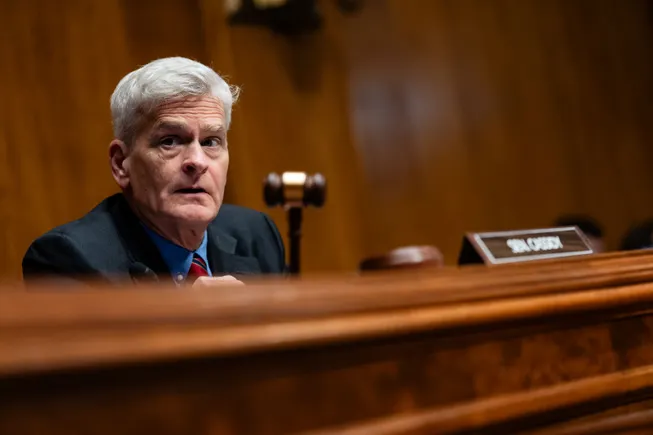
The Senate Health, Education, Labor and Pensions Committee voted 13-9 on July 30 to advance a bill that would block the Education Department from transferring four of its core offices to other federal agencies — the most direct congressional challenge yet to the Trump administration's dismantling of the department.
The bill, S. 5046, is sponsored by Sen. Tim Kaine, Democrat of Virginia, and co-sponsored by Sen. Susan Collins, Republican of Maine, and Sen. Lisa Murkowski, Republican of Alaska. It would prohibit transfers of the Office of Special Education and Rehabilitative Services, the Office of Elementary and Secondary Education, the Office of Postsecondary Education, and programs for Native American education.
The mechanism the administration has used is the interagency agreement — a contracting instrument that lets one federal agency perform work on behalf of another. Over the past year the Education Department has signed agreements moving six of its offices into partnerships with the departments of Health and Human Services, Labor, Interior, Justice and State. Special education work has gone largely to HHS. Federal student loan servicing moved to Treasury in March. Civil rights enforcement has been split with the Justice Department.
Only Congress can abolish a cabinet department, and Congress has not done so. The administration's position is that interagency agreements are an ordinary management tool and do not require new legislation. The counterargument, made by Kaine and Collins and by the school districts and disability groups backing the bill, is that Congress created these offices by statute and located them inside the Education Department on purpose, and that moving their functions to agencies without the staff or the subject-matter expertise to run them is a repeal by other means. Collins said the agreements "are misaligned with their program purposes." Kaine said the bill is about maintaining "really core components" of the agency.
The vote was not clean. An amendment offered by Democrats that would also have blocked the transfer of the Office for Civil Rights failed 12-11. And the committee's own chairman, Sen. Bill Cassidy, Republican of Louisiana, opposed the bill; he has argued that the interagency agreements should be allowed to run as a pilot before Congress intervenes. A committee reporting a bill over its chairman's objection is unusual, and it is a measure of how uneasy some Republican appropriators have become about a reorganization they were not asked to approve.
The bill's path from here is narrow. It needs 60 votes on the Senate floor, which means at least seven more Republicans beyond the three already on it, and the House is moving roughly ten bills in the opposite direction. What the vote establishes is a marker: a bipartisan Senate majority on the committee of jurisdiction has now said on the record that the department cannot be taken apart administratively.
Originally reported by Higher Ed Dive.