Truck Bomb Rips Through a Colombian Police Station Six Days Before the New President Is Sworn In
Eight police officers and three civilians were injured in Cucuta, near the Venezuelan border. President-elect Abelardo de la Espriella said terrorism "will not intimidate Colombia."
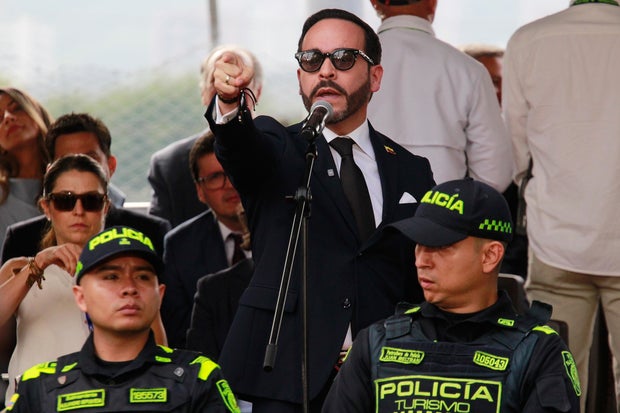
A truck packed with explosives detonated beside a police station in Cucuta, northern Colombia, on Saturday, injuring 11 people six days before the country swears in a new president.
Eight police officers and three civilians were hurt in the blast, according to George Quintero, the security secretary for the department of Norte de Santander. "An atrocious, violent act," Quintero said, "and what happened is regrettable." Authorities offered a reward of more than $32,000 for information leading to arrests. No group had claimed responsibility.
Cucuta sits directly on the Venezuelan border and has long been one of the most contested pieces of territory in Colombia — a crossing point for migrants, contraband and armed groups that operate on both sides of the line. Colombia remains the world's largest producer of cocaine, and the trafficking corridors that run through Norte de Santander have made the department a recurring target for bombings aimed at police and military posts.
The timing is what gave the attack its weight. President-elect Abelardo de la Espriella, the hard-right lawyer known as "El Tigre" who won the presidency in June, is scheduled to be inaugurated on August 7. He condemned the bombing "in the strongest terms" and said "terrorism will not intimidate Colombia." His inauguration has already been moved out of Bogota, where Colombian presidents are traditionally sworn in, to Cali. Roughly 11,000 soldiers and police officers are being deployed to secure the ceremony.
De la Espriella has campaigned on a sharp break from the security policy of outgoing President Gustavo Petro, Colombia's first leftist president, who pursued negotiated settlements with armed groups under a policy he called "total peace." The president-elect has instead promised military alliances with the United States and Israel and a far more confrontational posture toward the guerrilla factions and trafficking organizations operating along the border. President Trump backed him in the election.
Petro did not comment on the bombing. He was in Cuba, meeting with Miguel Diaz-Canel to discuss United States policy toward the region — an itinerary that underscores how completely the two men differ on where Colombia's alignments should sit, and how abruptly that is about to change.
The attack follows a familiar script in Colombian politics: violence timed to a transfer of power, aimed at the institution that will have to enforce whatever the incoming government decides. Investigators were still working the site on Saturday, and officials had not said how the vehicle reached the station or whether anyone was inside it when the explosives went off.
Originally reported by CBS News.