US and Japan Agree to Build AMRAAM Missiles in Japan as Chinese Warships Pass Kyushu
Defense Minister Koizumi announced 'Operation Supercharge' after meeting Hegseth in the Philippines, and flagged a first-of-its-kind Chinese fleet movement near Japan.
The United States and Japan have agreed to set up a Japanese facility for the joint production of advanced medium-range air-to-air missiles, Japan's defense minister said Wednesday, the latest move by the allies as they voice alarm over China's growing assertiveness in Asia.
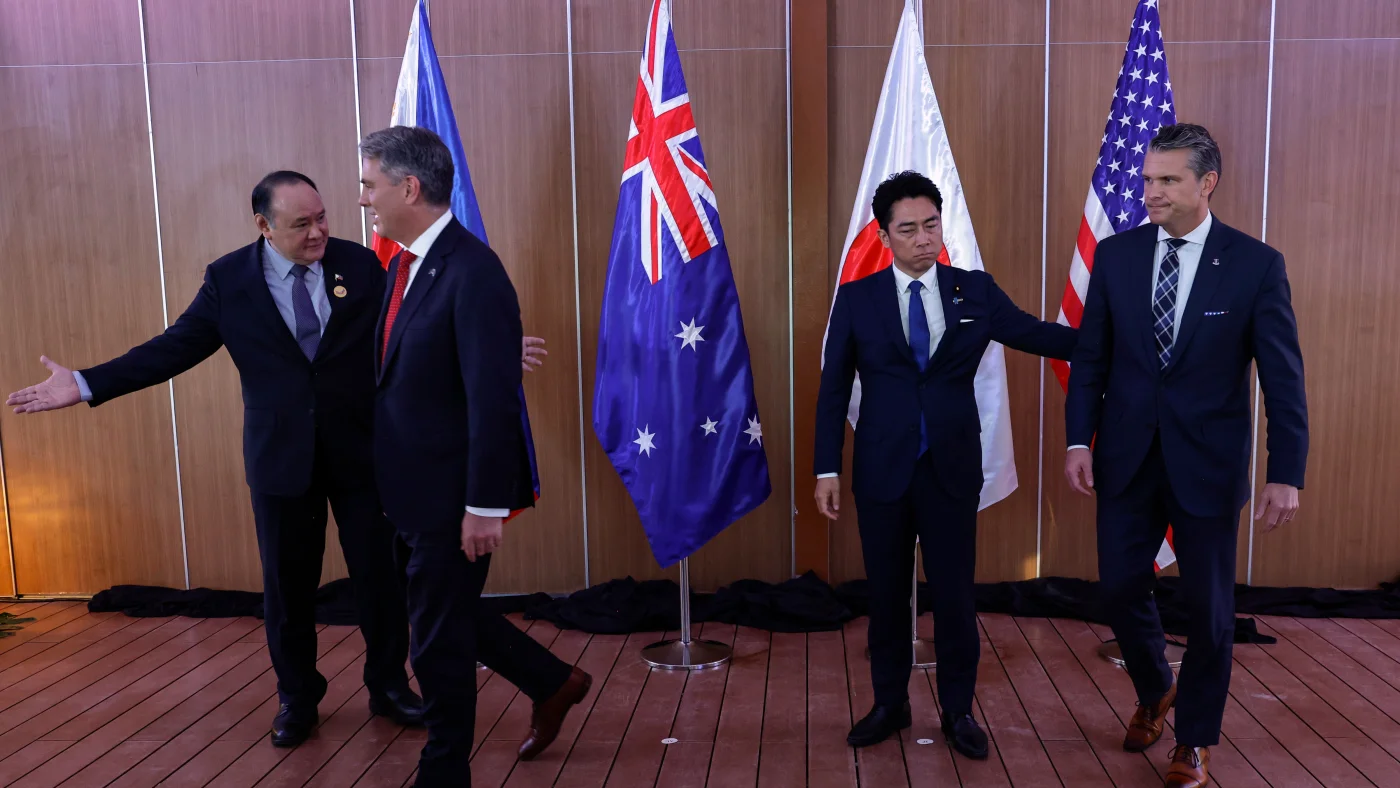
Defense Minister Shinjiro Koizumi announced the plan at a news conference in the central Philippine province of Cebu, where he met U.S. Defense Secretary Pete Hegseth on the sidelines of an annual gathering of Southeast Asian defense chiefs and their major Asian and Western counterparts. The joint effort is called "Operation Supercharge," Koizumi said, and the missiles are essential to F-35 fighter jets, which the Japanese military also flies.
Under the agreement, the two sides will build a final assembly and inspection plant in Japan for the Advanced Medium-Range Air-to-Air Missile, known as AMRAAM. The U.S.-made weapon is one of the main munitions carried by the F-35. Producing and checking the missiles in Japan is meant to increase the allies' combined output.
In their brief meeting, Koizumi said, he and Hegseth "shared a sense of crisis ... regarding the increasingly severe regional situation and we agreed to strengthen the deterrence and response capabilities of the Japan-U.S. alliance with greater speed and intensity than ever before." They also reaffirmed what Koizumi called the importance of "a free and open international order based on the rule of law, which rejects any attempts to unilaterally alter the status quo through the use of force, coercion or other means."
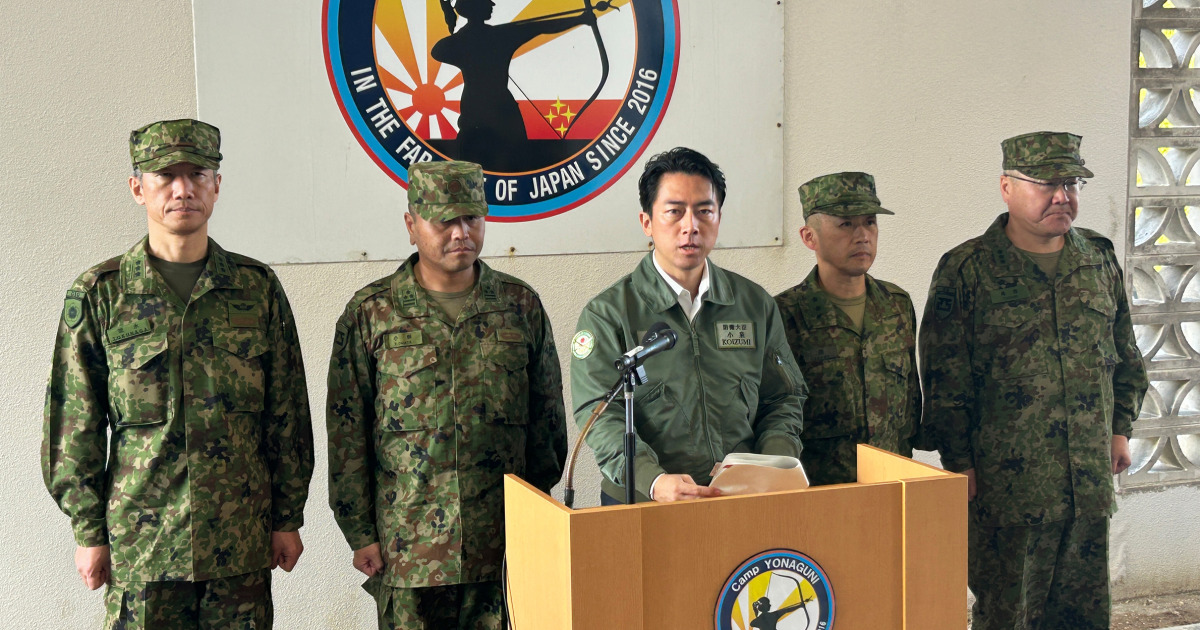
Koizumi used the Thursday sessions of the meeting to raise concern about China's naval activity in southwestern Japan. He said three Chinese destroyers and a coast guard ship crossed the Osumi Strait, south of the southern main island of Kyushu, and headed east into the Pacific this week. It was the first time Japan's defense ministry had spotted a Chinese fleet in that configuration, he said, and he called it "an example illustrating the challenging security environment in the region." The ministry will keep watching the Chinese activity closely, he said.
Japan has been accelerating its military buildup in the southwest of the country to deter China. The annual defense meetings are meant to avert a major regional conflict and deepen cooperation, though the United States, China and their allies often trade criticisms on the sidelines.
Hegseth renewed the Trump administration's repeated assurances of commitment to the region in a separate meeting Wednesday with defense ministers of the Association of Southeast Asian Nations, led by Philippine Defense Secretary Gilberto Teodoro Jr. Like Koizumi, Hegseth did not name China as he described his security concerns. "The approach we're taking, we describe as strong, quiet and clear," he told the ASEAN defense chiefs. It is "strong enough to deter coercion and aggression, quiet enough to avoid needless escalation or public theatrics to let our actions speak for themselves."
The missile plant is the kind of step allies take to make sure that, in a crisis, they can replace weapons faster than they use them. For Washington, building more of the missile in Japan eases pressure on U.S. factories. For Tokyo, it adds a domestic link in the supply chain for the weapons its F-35 fleet depends on, at a time when Chinese warships are sailing closer to its southern islands.