King Charles Faces Calls for Slavery Apology on Caribbean Tour as Palace Rules One Out
Protesters met the king in Nassau with signs reading 'Pay us what you owe us.' Buckingham Palace says any formal apology is a matter for the British government.
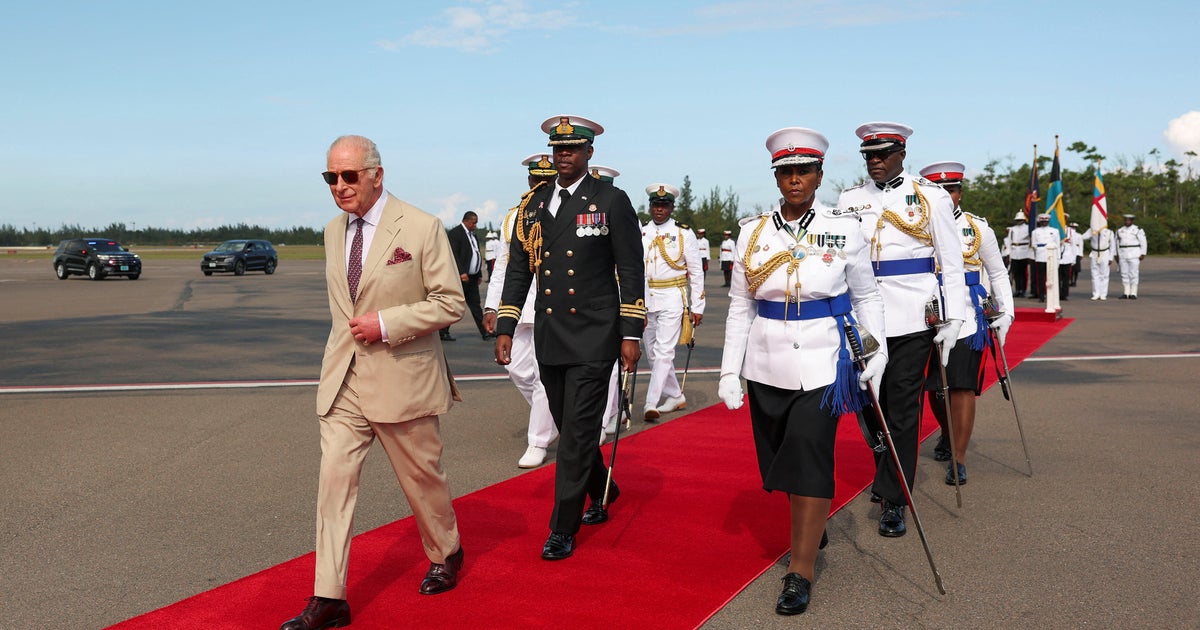
King Charles III is facing renewed demands for a slavery apology and reparations on a nine-day tour of the Caribbean, and Buckingham Palace has said he will not deliver a formal apology.
Charles began the tour on Tuesday, Oct. 27, in the Bahamas. On Wednesday in Nassau he joined a Junkanoo street parade, while protesters nearby held signs reading "Pay us what you owe us." On Thursday he was due in Guyana, and he then travels to Antigua and Barbuda for a Commonwealth heads-of-state meeting where the legacy of slavery is expected to be discussed. In the Bahamas, he told young people that Britain's colonial past and the suffering it caused should be acknowledged.
That did not satisfy campaigners. Dr. Niambi Hall Campbell-Dean, who chairs the Bahamas National Reparations Committee, called his remarks "hollow platitudes" and said the Caribbean deserves far more. Hilary Beckles, who leads the Caribbean Community Reparations Commission, said Caribbean people want "proprietary justice, beginning with remorse." He urged the king to show young people the same empowerment he would want for his own children.
Not everyone in the region backs the push. Rasheed Griffiths, a Barbadian economist, opposes the reparations campaign. He argues that the fiscal failures of Caribbean leaders, not Britain, are to blame for the region's economic problems, and says the UK should not take the demands seriously.
The palace's position is that an apology is not the king's to give. It says that decision rests with the British government, though Charles will take part in wider discussions about Britain's role. Experts quoted by CBS say the royal family may fear that an apology could strengthen legal claims for reparations and lead to large financial demands. In 2023, the lawyer and reparations expert Esther Stanford-Xosei told CBS that an apology could expose the institution's wrongdoing and cost it money and status. Prince Harry's memoir "Spare" acknowledged that the family profited from the slave trade.
The historical record is at the center of the argument. Between the 15th and 19th centuries, about 5 million enslaved Africans were taken to the Caribbean, including more than 2 million to British colonies. Historians document investments by King Charles II and his brother James in the Royal African Company, which trafficked enslaved people. When slavery was abolished across most of the British Empire in 1834, the government paid £20 million, about $23 billion in today's money by one estimate, to slave owners. The people who had been enslaved received nothing.
Defenders of Britain's record point to the Royal Navy's West Africa Squadron, which seized more than 1,600 slave ships and freed about 150,000 Africans between 1808 and 1869. One study estimated that Britain's anti-slavery campaign cost 1.8% of national income each year over that period.
Charles has spoken on the subject before. In 2021, at Barbados's transition to a republic, he called slavery an "appalling atrocity." In 2022, Prince William and Kate faced protests in Jamaica, where William expressed "profound sorrow" and called slavery abhorrent but did not offer a formal apology. Barbados Prime Minister Mia Mottley has pushed for reparations in the form of investment in education, health care and economic development.
The Bahamas and Antigua and Barbuda remain constitutional monarchies with Charles as their head of state, which is part of why the demands are being aimed at him personally. The debate has intensified since the 2020 Black Lives Matter protests, and the rest of this tour is likely to keep it in view.