Guyana Just Took Its First Six U.S. Deportees. More Than 30 Countries Have Now Signed Similar Deals
Six Cuban and Afghan nationals landed in Georgetown on Friday under a one-year arrangement run through a U.N. migration agency. Guyana pays nothing for their housing, and none of them are being resettled.
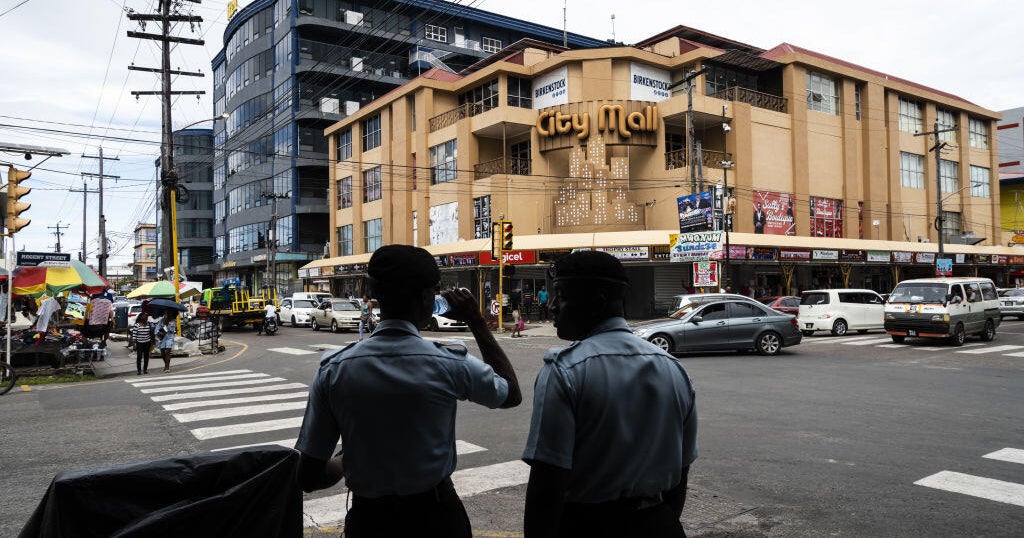
Six people deported from the United States arrived in Guyana on Friday, the first group to land under an agreement that makes the South American country the latest stop in a rapidly expanding network of third-country deportation deals.
The six are nationals of Cuba and Afghanistan. Guyanese officials said all of them were vetted for criminal backgrounds before the transfer was approved. None of them are Guyanese, and none of them are being resettled there permanently.
The mechanism matters. The arrangement runs through the Assisted Voluntary Return Program, which is implemented by the International Organization for Migration, the United Nations migration agency. It is structured as a one-year arrangement rather than a resettlement program. The deportees are to wait in Guyana while their U.S. immigration cases play out, after which they could be returned to their countries of origin or moved somewhere else again. The Guyanese government is not carrying the cost of housing or supporting them.
Robert Persaud, Guyana's foreign secretary, said Washington "has not made any further requests" beyond this first group — a careful formulation that leaves the size of the program undefined and keeps the government's political exposure narrow.
Guyana is not an outlier. More than 30 countries have now signed comparable agreements with the United States, and the Caribbean has become a particular focus. St. Kitts and Nevis and Belize have signed on, and St. Lucia was due to accept its first group during the same week. For small states with limited leverage in Washington, the deals are a low-cost way to bank goodwill on trade and visa questions.
Human rights groups have described the arrangements as inhumane and illegal under international law. Their central objection is not the deportation itself but the destination: sending people to countries with no connection to them, some of whom are fleeing persecution, can strand asylum seekers in legal limbo where no government is clearly responsible for adjudicating their claims. The Trump administration's position is that the removals are lawful and that they deter illegal immigration by removing the expectation that a failed claim ends in indefinite residence.
The Cuban and Afghan nationalities of this first group illustrate the practical problem the program is meant to solve. Both are countries the United States has limited or no ability to deport people to directly — Cuba because of the state of bilateral relations, Afghanistan because of who governs it. Third-country agreements are the workaround, and Friday's arrivals in Georgetown are the workaround functioning as designed.