Macron Vows to Punish 'Those Who Sought to Bring Down the Republic' After 1,800 Arrests in French Riots
A nationwide protest over living costs and school conditions turned into looting and arson Saturday, collapsing the roof of the historic city hall in Limoges. Macron addressed the nation Sunday and blamed far-left insurrectionists and criminals.

PARIS — French President Emmanuel Macron said Sunday that rioting and looting during nationwide protests had left the country feeling "anger" and "shame," and promised that those responsible would be punished. At least 1,800 people have been arrested.
"Those who looted will have to pay back for the damage, and those who sought to bring down the Republic will be held accountable," Macron said in a televised address to the nation. He blamed the "unrestrained violence" on "insurrectionist elements from radical far-left groups, joined by numerous criminals." He had earlier held an emergency meeting with senior government officials, and he said he had instructed prefects to work with mayors to protect public buildings and businesses in the coming weeks, including by banning protests when necessary.
The worst damage came Saturday, when masked groups set fires and attacked public buildings, including city halls, in several cities. Flames engulfed the 19th-century City Hall in Limoges, in central France, and its roof collapsed, nearly destroying the building. Interior Minister Laurent Nuñez said hundreds of businesses were looted in cities including Paris, Marseille, Lyon and Bordeaux. "The right to protest is a fundamental right," he wrote on X. "Deliberately and collectively sowing disorder through violence is not."
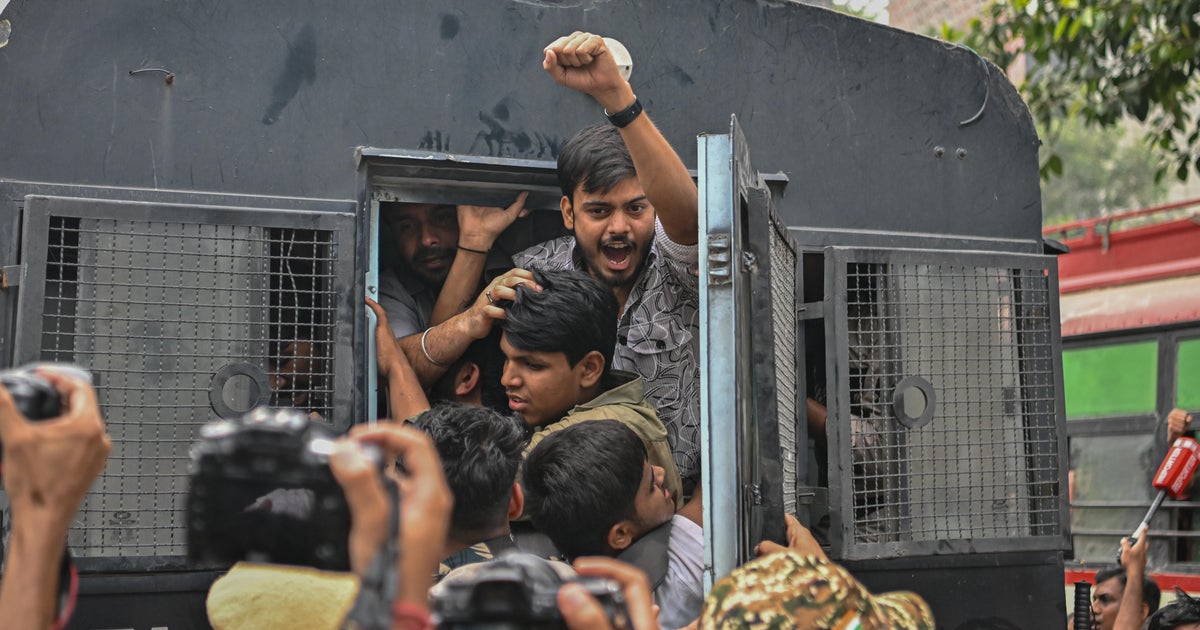
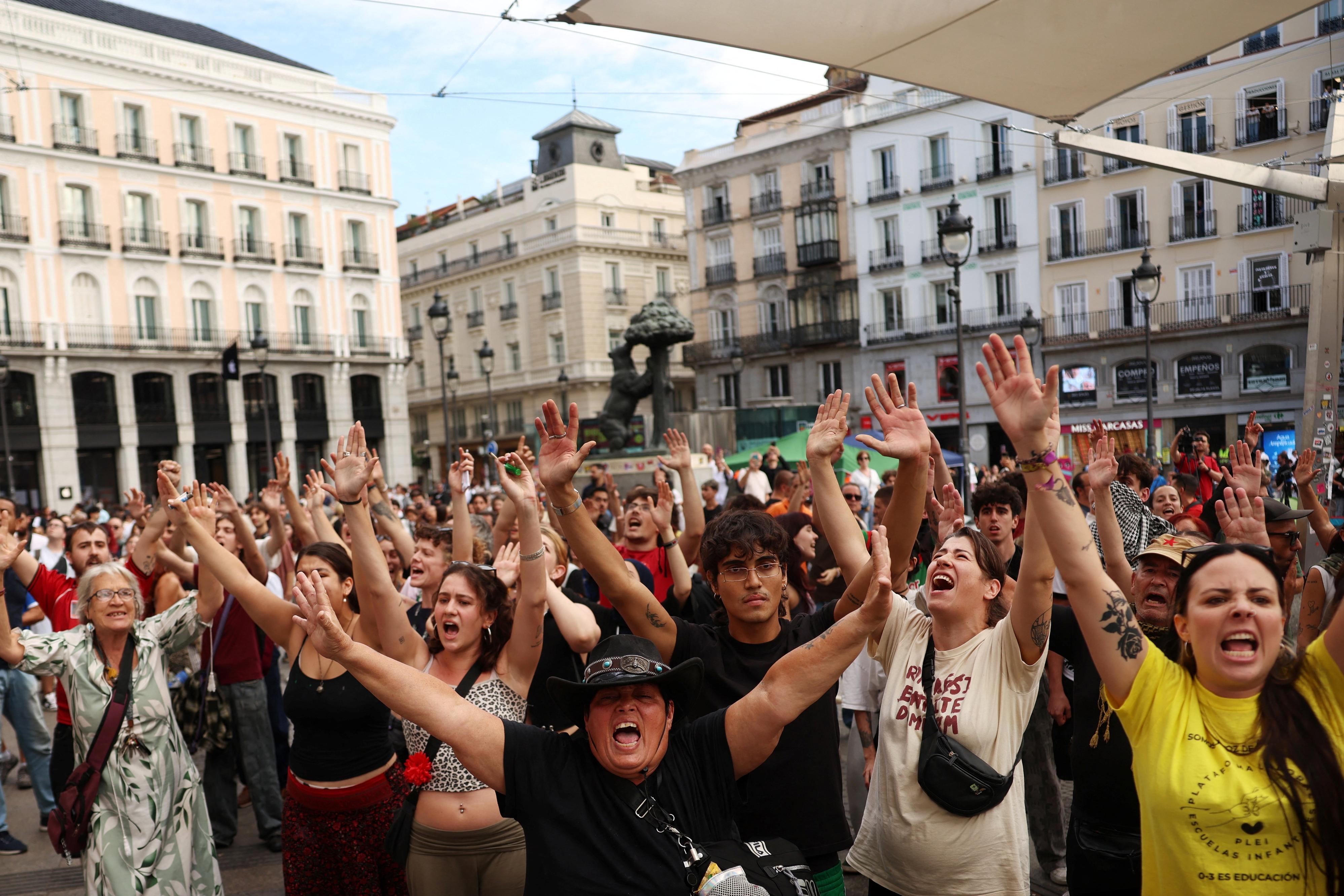
Authorities said about 550,000 people took part in protests across France, while organizers put the figure closer to 800,000. Demonstrators were responding to calls from a labor union, student organizations and activists hoping to revive the "yellow vest" movement, which emerged in 2018 to protest social injustice. They were protesting rising living costs and poor conditions in schools. The arrest tally approached the nearly 2,000 recorded nationwide during a single day of yellow vest protests in December 2018.
Paris police said 855 people were arrested in the capital region, and the city's prosecutor's office said 557 of them remained in custody. One person died of a heart attack, police said, without giving details, and the Paris prosecutor's office is investigating. Hundreds of protesters gathered again Sunday at the Place de la République in Paris under a heavy police presence. Officers used tear gas as tensions flared sporadically, with small groups trying to set bicycles and trash bins on fire.
Around the square, dislodged cobblestones, shattered storefronts and broken glass littered the ground. Parisians photographed the partially dismantled base of the square's central monument, a statue of Marianne, a symbol of France. "I am actually stunned by the level of destruction and violence that was expressed," said Marie Peyreigne, a 57-year-old government employee. Margaux Eude, 26, said she supported the movement but "didn't think it would escalate like this." "It's the troublemakers who came, and it breaks my heart because it delegitimizes the movement," she said.
Political leaders across the spectrum tried to turn the fallout into capital ahead of next spring's presidential election. Far-right leader and presidential hopeful Marine Le Pen called Macron's centrist government "exhausted, disoriented and seemingly incapable of doing anything other than commenting on its own powerlessness." Far-left leader Jean-Luc Mélenchon accused Prime Minister Sébastien Lecornu of "playing with fire." Mass protests in France are often marred by violence on the fringes of otherwise peaceful marches, but the scale of Saturday's destruction has pushed the government into a harder line, with the threat of protest bans now on the table.