Tear Gas and 166 Arrests as French Protests Spread Beyond Students
Nationwide marches against rising living costs turned violent in Paris and Marseille on Saturday, after a month of school blockades that have already led to thousands of arrests.
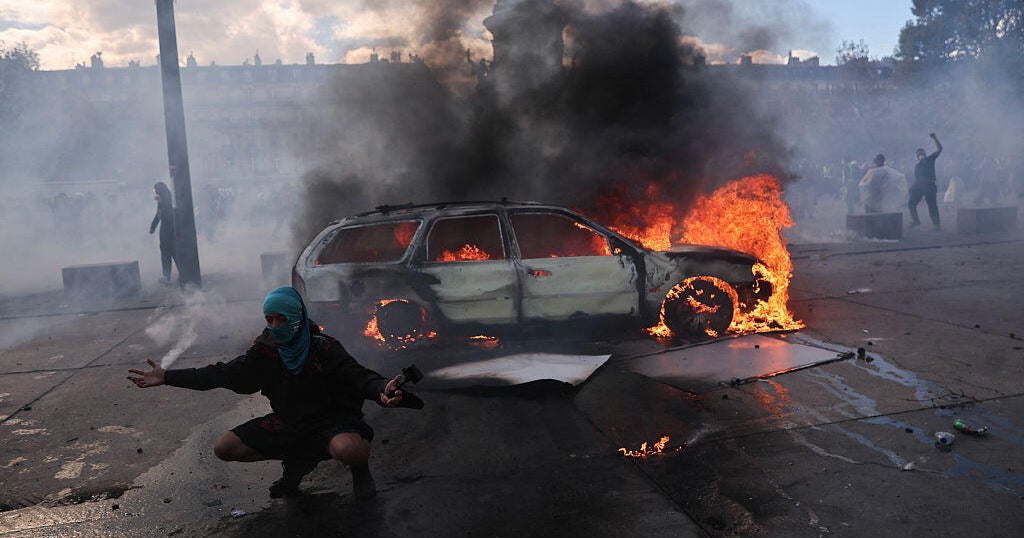
Scuffles broke out Saturday in Paris between police and small groups of protesters who joined a march as part of nationwide demonstrations against rising living costs and in support of high school students' grievances. Police used tear gas to push back people in hoods and masks who were throwing fireworks and other objects at officers in the Place de la République, northeast of the city center. Large numbers of riot police were deployed in the square and surrounding streets.
Protesters across France responded to calls on social media to revive the "yellow vest" movement, which emerged in 2018 against social injustice. Student groups that have been protesting since mid-September through school blockades urged supporters to join them. The CGT, one of the country's major labor unions, also backed the protests, calling for "higher wages and pensions, lower prices and the protection of public services that meet people's needs."
Interior Minister Laurent Nuñez's office said authorities had recorded 140 protest actions outside the Paris region by midday, involving more than 30,000 people. Authorities reported at least 166 arrests across the country. The ministry pointed to violence by people wearing masks in Paris, Marseille, Rennes, Toulouse and Angers, including attempted looting, attacks on police officers, fires set to street furniture and attacks on government institutions and media outlets.
In the southern port city of Marseille, some shops and a municipal police station were damaged, and some protesters briefly forced their way into the lobby of City Hall. Mayor Benoît Payan, speaking on BFM television, described "limited damage" in the lobby after police dispersed the crowd. Police banned some other proposed gatherings in central Paris, and many metro stations were closed at police request, including those around the Champs-Elysées and near the presidential palace, parliament and government offices.
President Emmanuel Macron appealed for calm on Friday while in Brussels. "There is a constitutional right to protest and to express oneself," he said. "But this right comes with the need to respect. Respect for people, respect for property, and therefore a commitment not to insult or destroy."
The weekend marches follow weeks of unrest. France has seen thousands of arrests, hundreds of injuries and schools set on fire as the new school year descended into nationwide student protests. Earlier this month French students closed up to 500 schools as arrests passed 5,000. The protests are influencing the country's presidential election campaign and drawing international attention.
Some of the harshest scrutiny has fallen on police tactics. Particularly gruesome wounds suffered by some teenagers have been blamed on police riot-control weapons. Nuñez suspended the use of one type of police stun grenade against young demonstrators after a 15-year-old lost a hand. On Tuesday, climate and social justice activist Greta Thunberg joined students at a high school in the Paris suburb of Saint-Denis. Saturday's turnout was the first major test of whether a movement that began in classrooms over student grievances can draw in the wider anger over prices that fueled the yellow vests eight years ago.