Explosions Rock Damascus During Macron's Landmark Syria Visit, Wounding 18
Two roadside bombs tore through central Damascus near the hotel where the French president had stayed, as Emmanuel Macron — the first Western leader in Syria since Assad's fall — met the country's new president.
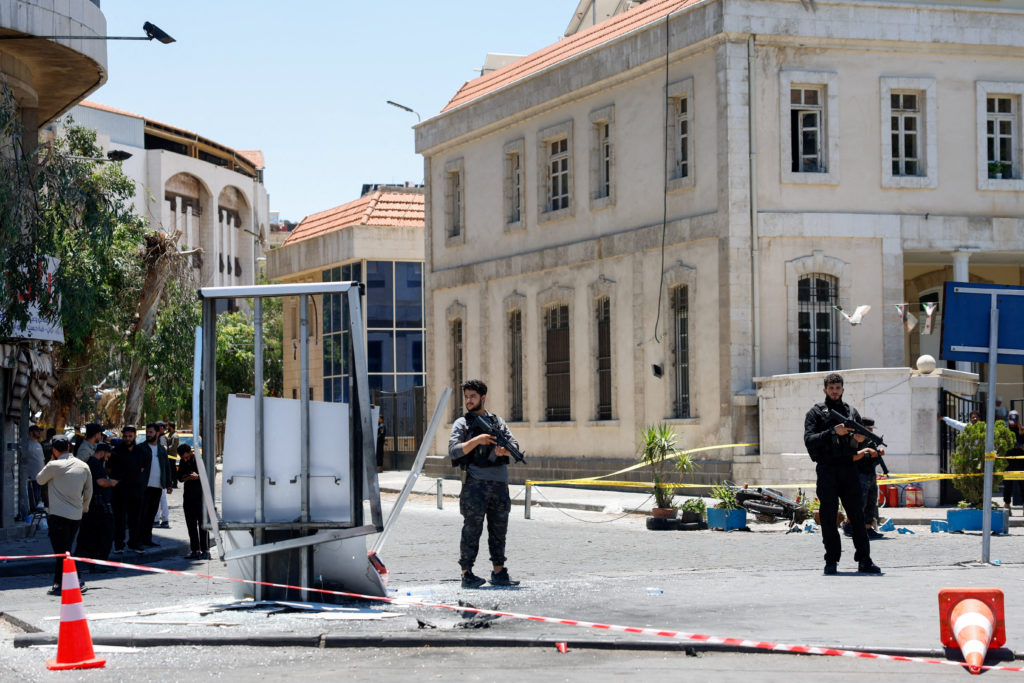
Two explosions ripped through central Damascus on Tuesday as French President Emmanuel Macron was visiting the Syrian capital, wounding at least 18 people in what security officials feared may have been an attempt to target the French delegation.
The blasts struck a busy area near the Ministry of Tourism and the Four Seasons Hotel, where Macron had spent the previous night. Syria's interior ministry said the explosions were caused by two improvised devices — the first hidden inside a car parked at the roadside, the second placed in a garbage container — and that those wounded included four police officers.
Macron was in the presidential palace meeting Syria's new president, Ahmed al-Sharaa, when the devices detonated, and did not hear the explosions, his office said. An official at the Élysée Palace said the president was safe and that the meeting with al-Sharaa continued as planned, even as the blasts sent smoke rising over the city center.
The visit is a landmark moment: Macron is the first Western leader to travel to Syria since the December 2024 ouster of longtime ruler Bashar al-Assad by rebel forces led by al-Sharaa. His trip is widely seen as a signal of Europe's cautious willingness to engage with Syria's new government as it seeks legitimacy, reconstruction aid and relief from years of international sanctions.
But Tuesday's bombings underscored how fragile security remains in a country still fractured by more than a decade of civil war. Damascus has seen sporadic violence since Assad's fall, and analysts said the timing of the attack — during a high-profile foreign visit meant to showcase stability — appeared calculated to embarrass the new authorities and disrupt their outreach to the West.
No group immediately claimed responsibility for the blasts, and it was not clear whether the French delegation was the intended target or whether the timing was coincidental. Syria remains a patchwork of armed factions and unresolved grievances more than a year after Assad's fall, and sporadic bombings and assassinations have continued to punctuate the new government's efforts to project control over the capital.
Macron's agenda in Damascus went well beyond symbolism. French officials said he pressed al-Sharaa on protecting Syria's religious and ethnic minorities, pursuing an inclusive political transition and cooperating on counterterrorism, while dangling the prospect of reconstruction assistance and gradual sanctions relief as incentives for reform. For Paris, engaging early with the new leadership is a calculated bet to gain influence over the direction of a strategically vital country on Europe's doorstep.
Syrian officials pledged a full investigation and vowed that the attack would not derail their efforts to reintegrate the country into the international community. For Macron, the explosions were a stark reminder of the risks facing any leader betting on Syria's uncertain path toward stability.