A Typhoon the Size of France Bears Down on Taiwan — the Biggest to Threaten the Island in Three Decades
Super Typhoon Bavi, more than 1,000 kilometers across, forced evacuations along Taiwan's mountainous east as China and Japan braced and rescuers in southern China still dug through the wreckage of a storm that killed 39.

A storm large enough to blanket a country the size of France is closing in on Taiwan, and forecasters say Super Typhoon Bavi is the biggest cyclone to menace the island in a generation. With a strong-wind radius stretching some 380 kilometers and an overall diameter topping 1,000 kilometers, Bavi is the largest typhoon to approach Taiwan since the mid-1990s, when the way meteorologists measure storm size was standardized.
Taiwan's Central Weather Administration issued a land warning as the storm's outer bands began lashing the coast, cautioning that Bavi could dump as much as a meter of rain in the mountains north of Taipei, with regional totals near the eye approaching 40 inches. More than a thousand people have already been evacuated, most of them in the rugged eastern county of Hualien, where officials are nervously watching two barrier dams that could be overwhelmed by the deluge. Ferry services and tourist sites were suspended, and schools and offices braced for closures.
Bavi's history this season has been violent. The system spun up on June 30 and exploded into a Category 5-equivalent monster, with sustained winds estimated at 205 kilometers per hour by Japan's Meteorological Agency and as high as 285 kilometers per hour by the U.S. Joint Typhoon Warning Center, and a central pressure that bottomed out near 901 hectopascals. When it slammed into the island of Rota in the Northern Mariana Islands on July 6, it became what forecasters called the strongest tropical cyclone on record to strike U.S. territory, damaging or destroying roughly half the structures there and knocking out power that may take up to three months to restore. In the Philippines, heavy rain and landslides on the storm's fringe left at least 17 people dead and more than 10 missing.
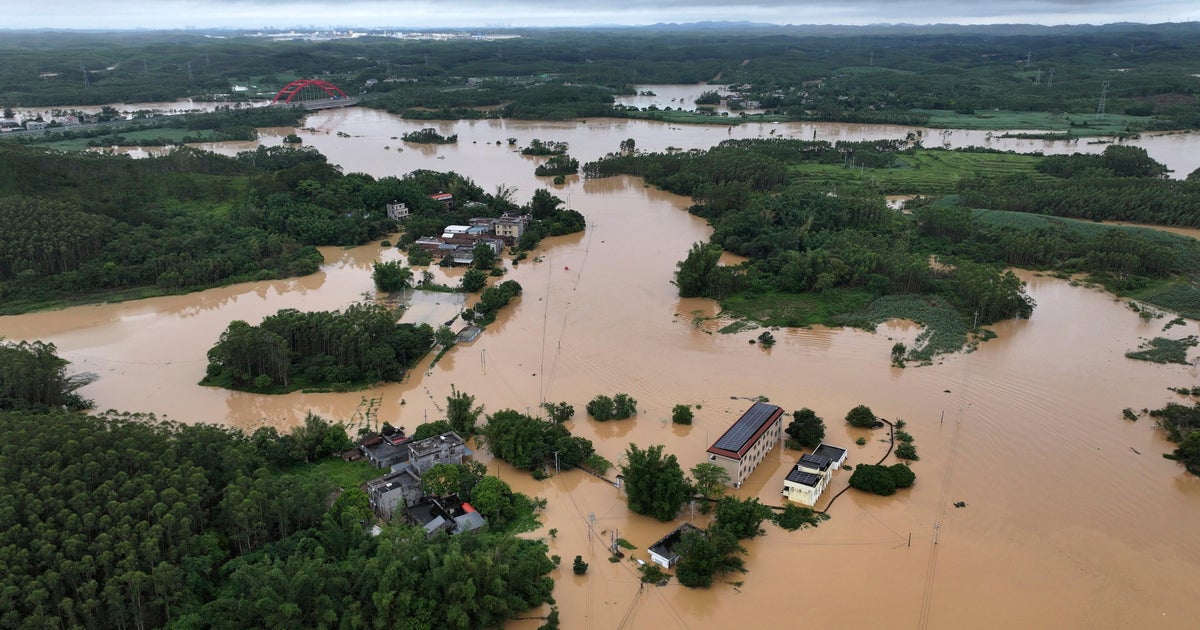
The typhoon is arriving as the region is already reeling. In southern China's Guangxi region, rescue workers were still searching for survivors of Typhoon Maysak, which triggered floods that killed at least 39 people earlier in the week. Chinese authorities raised emergency response levels in the coastal provinces of Zhejiang and Fujian, and Japan issued warnings across its southwestern islands as Bavi's enormous circulation churned northwest.
Meteorologists stress that a typhoon's size is not the same as its peak intensity, but a storm this broad spreads damaging winds, storm surge and torrential rain across a far wider area, magnifying the risk to coastlines hundreds of kilometers apart. For Taiwan, Japan and a still-flooded southern China, the coming days will test emergency systems against one of the most sprawling storms the western Pacific has produced in decades.