Japan Rolls Type-88 Anti-Ship Missiles Onto Ishigaki, 150 Miles From Taiwan, in First Wartime-Footed Nansei Exercise
About 300 troops and two ScanEagle II surveillance drones deployed across Ishigaki, Yonaguni and Miyakojima through May 22 in what defense analysts call a triple signal — to Tokyo's own public, to Washington, and to Beijing.
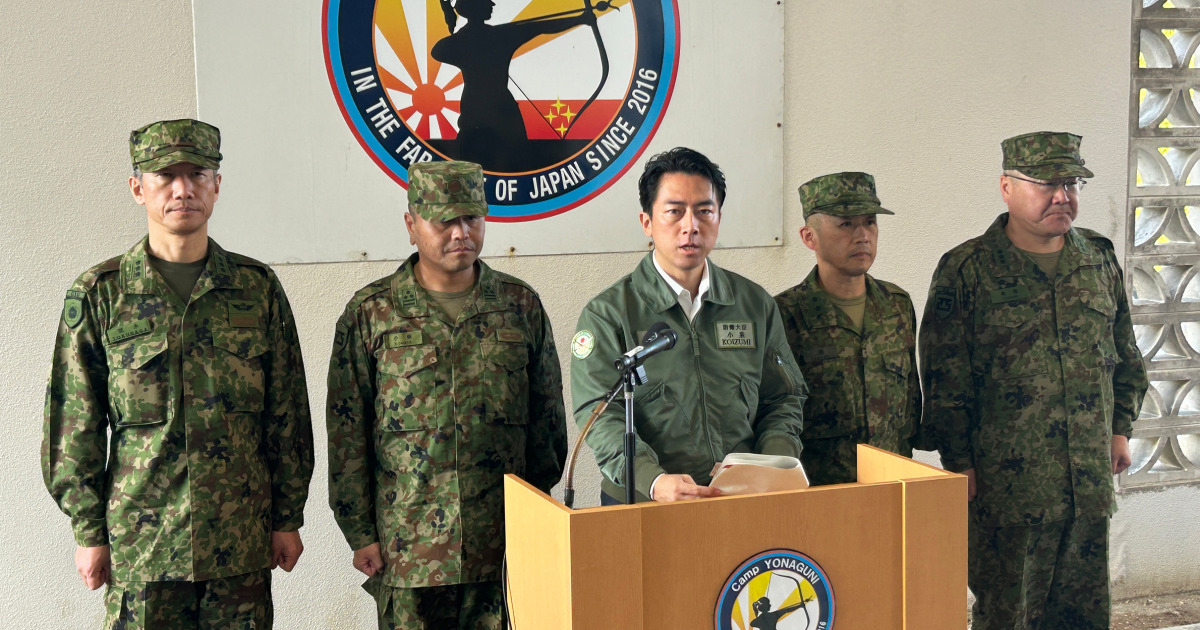
ISHIGAKI, Japan — Japan's Ground Self-Defense Force on Sunday rolled a Type-88 truck-mounted anti-ship missile launcher onto Ishigaki Island, just 150 miles east of Taiwan, kicking off a five-day exercise that for the first time treats Japan's southwestern "Nansei" chain as a real warfighting theater rather than a peacetime training corridor.
The drill, which runs through May 22, also moves about 300 soldiers and two ScanEagle II surveillance drones to Yonaguni Island, the country's westernmost outpost and only 70 miles from Taiwan. Stars and Stripes, which first reported the deployment plan, said the Type-88 — a 1980s-era launcher with a range of roughly 110 miles — is being used as a substitute for the newer Type-12, which Japan plans to upgrade to a 900-mile cruise missile by 2030. "This is the first time we will conduct a comprehensive exercise focused on the Nansei Islands," Ground Component Commander Lt. Gen. Masaki Sakamoto said in a statement, calling the move "essential to deterrence in the southwest."
Beijing reacted quickly. Foreign Ministry spokesperson Lin Jian called the deployment an "extremely dangerous provocation" that "undermines regional stability" and warned that Japan was "playing with fire on the Taiwan question." China's Eastern Theater Command, which oversees operations across the Taiwan Strait, said it scrambled an unspecified number of J-16 fighters on Sunday afternoon and tracked the Japanese movements with its electronic warfare aircraft from Fujian province. Taiwan's defense ministry welcomed the exercise but declined to comment on specific tactical details.
The deployment follows a fortnight of escalating signals. On May 6, Japanese troops fired a Type-88 missile from Philippine soil during the Balikatan 2026 exercises — the first time Japan has launched an offensive ground-based missile outside its borders since 1945. President Donald Trump, returning from a two-day summit with Xi Jinping in Beijing this past weekend, told reporters aboard Air Force One that he had warned Xi "in strong terms" against "a Taiwan independence move," comments that Taipei's leading dailies, including the United Daily News, characterized as "alarming" for the island. Trump's national security adviser said the U.S. military will "fully support" Japan's Nansei posture without committing additional American troops.
Defense analysts called the drill significant beyond its modest size. "You only do an exercise this visibly if you're trying to send three signals at once: to your own public, to your ally, and to Beijing," said Sayuri Romei of the Center for a New American Security in Washington. "Tokyo is telling the country it is willing to fight for these islands, telling Washington it is doing more than just hosting bases, and telling Beijing that the cost of a Taiwan contingency now includes Japan from day one." The Japanese yen weakened 0.4% against the dollar on Monday morning trading in Tokyo as the deployment news fed into broader risk-off sentiment driven by the UAE drone strike and rising oil prices.