Colombia Heads to Runoff as Pro-Trump Firebrand de la Espriella Edges Petro Ally Cepeda
Right-wing outsider Abelardo de la Espriella narrowly led the first round with 43.7% to leftist Senator Ivan Cepeda's 40.9%, setting up a June 22 runoff that could redefine Colombia's relationship with Washington.

Colombians will return to the polls on June 22 after a first-round presidential vote on May 31 produced no outright winner, setting up a stark ideological showdown between a pro-Trump right-wing outsider and a veteran leftist ally of outgoing President Gustavo Petro.
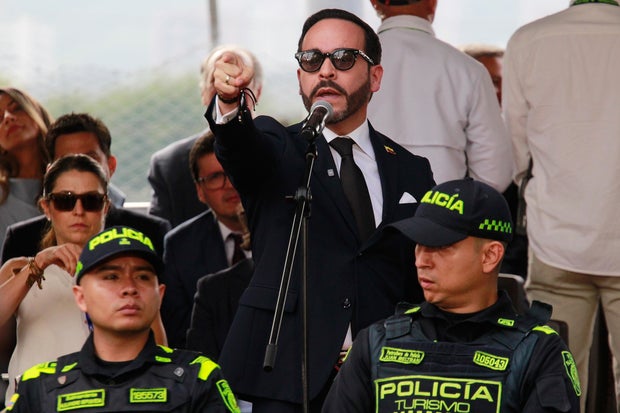
Abelardo de la Espriella, a flamboyant celebrity lawyer who has run a tough-on-crime, anti-establishment campaign, took 43.7 percent of the vote. Senator Ivan Cepeda, the 63-year-old standard-bearer of Petro's governing Historic Pact coalition, followed closely with 40.9 percent. Because neither candidate crossed the 50 percent threshold required to win outright, the two will face off again in three weeks. Democratic Centre candidate Paloma Valencia finished a distant third with 6.9 percent.
The result upended pre-election surveys, several of which had placed Cepeda in the lead. A longtime human-rights advocate and one of the most recognizable figures on the Colombian left, Cepeda has campaigned on continuing the social and economic agenda of Petro, the country's first leftist president, who is barred from seeking a consecutive term.
De la Espriella, by contrast, has styled himself as a disruptor in the mold of populist leaders elsewhere in the Americas, promising a hard line on crime and security and signaling a desire for warmer ties with the Trump administration. His surge reflects deep voter frustration with insecurity and the economy, and analysts say the runoff could significantly reshape Bogota's posture toward Washington at a moment of strained hemispheric relations.
The campaign has unfolded against a tense backdrop. Relations between Petro's government and the Trump administration have frayed over migration, drug policy and trade, and the next president will inherit those disputes along with a fragmented Congress and persistent violence from armed groups in rural areas. Whoever wins will also shape Colombia's role within a region where several governments have swung sharply between left and right in recent election cycles.
Turnout and the consolidation of centrist and third-place voters are expected to decide the outcome. Valencia's supporters and other right-leaning blocs could prove decisive if they coalesce behind de la Espriella, while Cepeda will need to expand beyond Petro's base to overcome the first-round gap. With less than three weeks to campaign, both candidates are racing to define the contest as a referendum either on continuity with the Petro era or on a sharp break toward the right. Election authorities have urged calm ahead of the June 22 runoff, which will determine who governs Colombia for the next four years and set the tone for the country's foreign and security policy. Both campaigns are expected to court Valencia's voters and the roughly one in ten Colombians who backed minor candidates in the first round, a bloc that could decide an unusually tight race.