South Korea's Top Court Locks In Yoon's Seven-Year Sentence in First Martial-Law Verdict
The Supreme Court dismissed all appeals Thursday, finalizing a seven-year prison term for former President Yoon Suk Yeol for obstructing his own arrest and falsifying the martial-law decree he sprang on the nation in December 2024.
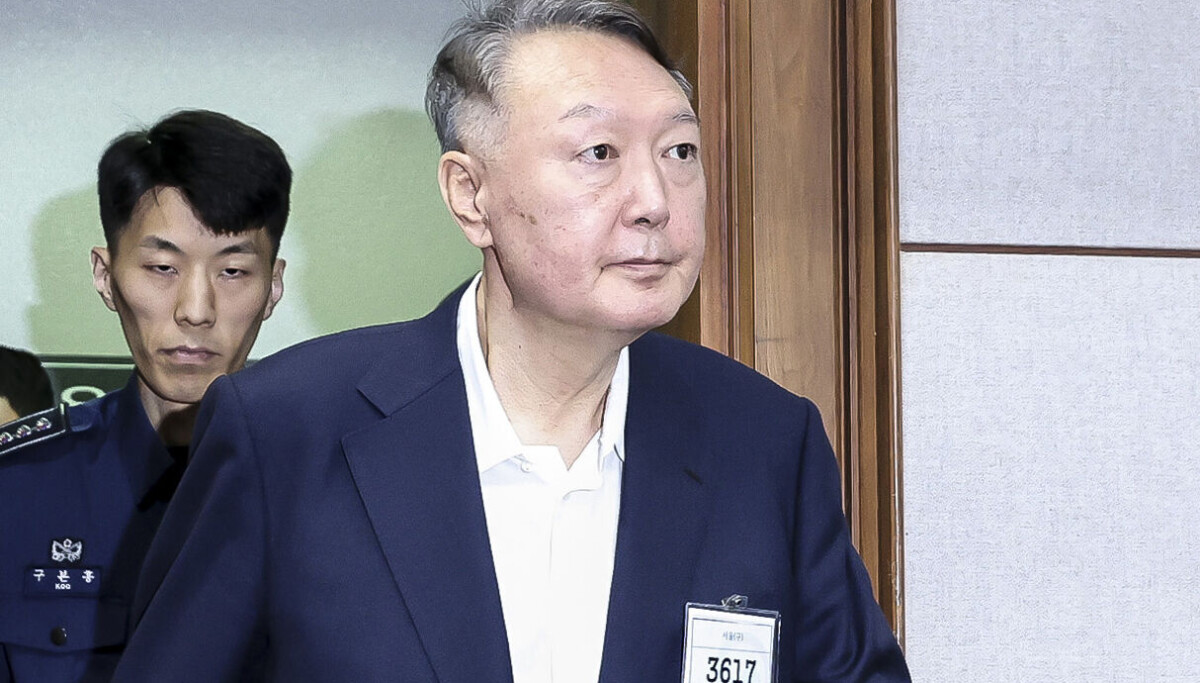
South Korea's Supreme Court on Thursday upheld a seven-year prison sentence for former President Yoon Suk Yeol, finalizing the first criminal verdict tied to the short-lived martial law he imposed in December 2024 and closing one chapter of a saga that has convulsed the country for more than a year and a half.
"All appeals are dismissed," a Supreme Court judge said in a televised ruling, adding that the lower court's judgment "contained no errors." The decision leaves in place a conviction handed down by the Seoul High Court, which in April increased Yoon's sentence to seven years from five after finding him guilty of additional charges. The ruling came 583 days after the martial-law crisis first plunged the nation into turmoil.
The court found that Yoon infringed on Cabinet members' right to deliberate before he declared martial law, that he falsified the official proclamation to cover up the procedural lapse and later destroyed the document, and that he deployed presidential security forces to illegally resist law enforcement officers who came to arrest him weeks after his impeachment. Prosecutors had portrayed the obstruction as a brazen attempt by a sitting head of state to place himself above the law.
The seven-year term is only part of Yoon's mounting legal reckoning. In February, he was sentenced to life in prison on separate charges of masterminding an insurrection tied to the same martial-law declaration, a verdict still winding through the appeals process. He has also received additional prison time in other cases, leaving the former prosecutor-turned-president facing the prospect of spending the rest of his life behind bars.
Yoon stunned the country on the night of Dec. 3, 2024, when he abruptly declared martial law and sent troops toward the National Assembly, only for lawmakers to force their way past soldiers and vote hours later to lift the decree. The backlash was swift: he was impeached by parliament, formally removed from office by the Constitutional Court in April 2025, and has been in custody through a cascade of criminal trials that have gripped a nation still reckoning with its authoritarian past.
Thursday's ruling was hailed by Yoon's opponents as proof that even a president cannot escape accountability, while his dwindling base of supporters denounced it as political persecution. Legal analysts said the finalized conviction removes any remaining ambiguity about the obstruction case and hardens the legal foundation for the broader insurrection prosecution that will ultimately determine how history judges the gravest constitutional crisis South Korea has faced since it became a democracy in the late 1980s.