The Lakes of the World's Largest Sand Island Once Vanished — Even as the Rain Poured Down
Sediment cores from Australia's K'gari reveal that some of its deepest freshwater lakes dried out about 7,500 years ago during a wetter-than-today era, a warning that even iconic waters aren't safe.
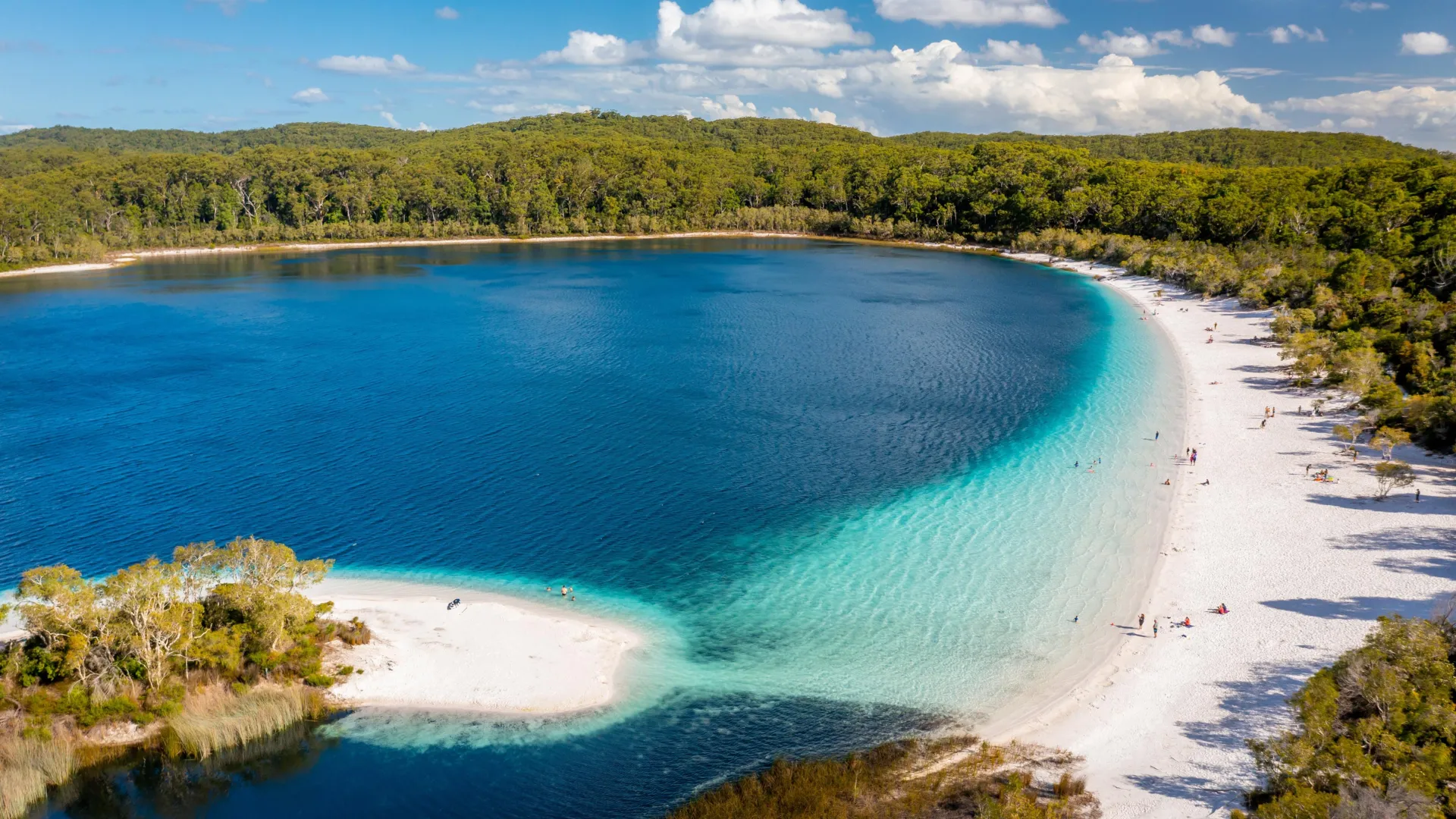
K'gari, the world's largest sand island, is famous for the crystalline freshwater lakes that shimmer atop its dunes off the southeastern coast of Queensland, Australia. But new research reveals a startling episode from the island's past: about 7,500 years ago, several of its deepest lakes mysteriously dried up — and they did so during a period that was, on the whole, wetter than today.
That paradox is what makes the finding so striking. Scientists generally expect lakes to shrink during droughts, not during rainy eras. Yet by drilling into the ancient sediment layers preserved at the bottom of the island's lakes, researchers uncovered clear signs of a major drying event during the middle Holocene, a span thousands of years ago when the region received more rainfall than it does now, long after the last Ice Age had ended.
"About 7,500 years ago, at a time of higher rainfall and long after the end of the last Ice Age, some of K'gari's deepest lakes dried out," said Associate Professor John Tibby of the University of Adelaide, who led the research. The layered sediments act like a natural archive, recording chemical and biological fingerprints that allow scientists to reconstruct the water levels and conditions of the distant past.
The team's leading explanation is that shifting wind patterns redirected rain away from the island, starving the lakes even as the broader region stayed wet. On a sand island, where water is held in perched lakes cradled by layers of organic material and compacted sand, small changes in how and where rain falls can have outsized effects. The mechanism suggests the lakes are more sensitive to atmospheric circulation than to rainfall totals alone.
The lakes are more than scenery. Perched high in the dunes and fed only by rainfall, they support distinctive ecosystems and hold deep cultural significance for the Butchulla people, the island's traditional custodians, who gave K'gari its name. A drying event on the scale the sediments record would reshape those environments profoundly, as it apparently did thousands of years ago.
The implications reach into the present. K'gari's lakes are prized natural treasures and a magnet for visitors, but the research suggests that even its largest and deepest bodies of water could be vulnerable to disappearing under the right — or wrong — combination of conditions. As the climate shifts again in the decades ahead, the study's authors caution, the long-term survival of these ancient lakes can no longer be taken for granted. What vanished once, the sediment record shows, could vanish again.