DNA From the Shroud of Turin Turned Up Wheat, Bananas, Dogs, Cats and Mediterranean Coral — and Nothing About Its Age
A team at the University of Lancashire sequenced everything living or formerly living on samples taken in 1978. The result is a 600-year archive of everyone who ever handled the cloth, and no verdict on the question people actually ask.
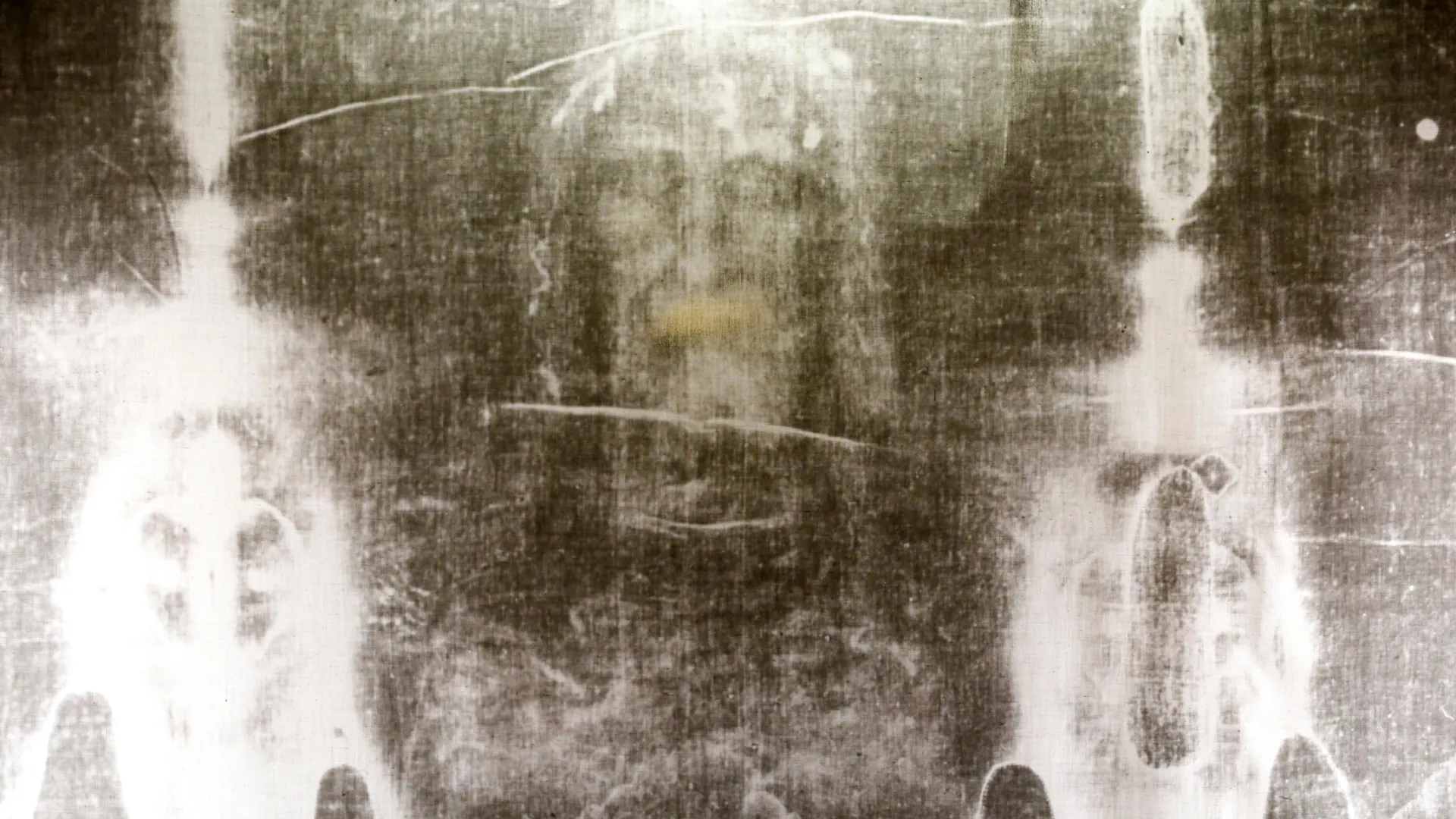
Scientists have sequenced the genetic material clinging to the Shroud of Turin and found a dense, tangled record of six centuries of human handling — multiple human maternal lineages, a whole ecosystem of bacteria and fungi, crops from three continents, and traces of Mediterranean red coral. What they did not find is any answer to the question that has followed the cloth since the 1350s.
The work was led by Professor Noemi Procopio, a professor of forensic science at the University of Lancashire, with an international group of co-authors including Gianni Barcaccia and Nicola Rambaldi Migliore. It appears in Scientific Reports. The team worked from official samples collected in 1978, the last time the shroud was subjected to a large coordinated scientific examination, and applied a PCR-free next-generation metagenomic sequencing approach — a method that reads whatever DNA is present without first amplifying selected targets, which avoids the bias that has bedeviled earlier genetic work on the cloth.
The human DNA is the most immediately striking finding: not one genetic signature but many mitochondrial lineages, consistent with a textile touched, folded, repaired, displayed and venerated by a great many people over a very long time. Alongside it the team recovered a microbiome of bacteria, fungi and salt-loving microorganisms, plus plant DNA from wheat, carrots, maize, bananas and peanuts, and animal DNA from cattle, pigs, chickens, dogs and cats.
That plant list is worth pausing on. Maize and peanuts are New World crops, unknown in Europe before the late fifteenth century. Bananas are a tropical Old World crop that reached European commerce late. Their presence does not date the cloth; it dates the dust. It is a record of the rooms the shroud has sat in, the hands that have touched it and the air that has moved past it since the age of exploration, which is precisely what a metagenomic survey of a heavily handled object should produce.
The Mediterranean red coral traces point the same direction — coral was widely used in devotional objects, rosaries and jewelry, and the shroud has spent most of its documented existence in Italy and France in close contact with such things.
The researchers were explicit about the limits of what they had done. The findings do not prove the shroud's age or its authenticity. Radiocarbon dating in 1988 placed the linen between roughly 1260 and 1390, a result that has been contested ever since on grounds of sample contamination and repair, and nothing in this genetic survey resolves that dispute in either direction.
What the team offers instead is a reframing. "The Shroud represents a rich archive of genetic information that has accumulated over centuries of human interaction and environmental exposure," Procopio and her colleagues write. Read that way, the cloth is a legitimate scientific document regardless of what it wrapped — a continuous biological log of the people and places that have kept it, which is a rarer thing than it sounds, and which no amount of arguing about the first century can take away from it.
Originally reported by ScienceDaily.