NASA's Swift Telescope Is Set to Fall From Orbit Early Wednesday After 22 Years of Chasing Cosmic Explosions
The Space Force predicts reentry around 3:30 a.m. EST on Nov. 4, with a risk of harm to anyone of about 1 in 2,100.

NASA's Swift Observatory, a space telescope weighing roughly a ton and a half, is expected to fall back to Earth around 3:30 a.m. EST on Wednesday, Nov. 4, according to the latest U.S. Space Force prediction as of Monday. The uncertainty is about 11 hours either way.
NASA says the risk of harm to anyone on the ground is "unlikely," about 1 in 2,100. Most of the spacecraft should burn up in the atmosphere, but some pieces, including dense tungsten parts and mirror components, could survive. Any wreckage is most likely to land in the ocean. The reentry path crosses parts of Africa, Australia, India, Southeast Asia, and Central and South America.
Swift launched on Nov. 20, 2004, to study gamma-ray bursts, the brightest explosions in the universe, and supernovas. Over 22 years it recorded more than 2,000 gamma-ray bursts and 1,400 exploding stars, along with comets, asteroids and black holes. It was best known for how fast it could swing to point at a new event, a trait that made it a first responder for other observatories.
That role mattered. Swift's alerts let Hubble, Webb and other telescopes follow up on fleeting events in greater depth. Scientists are now working out how to fill the gap its loss leaves.
The end came because of the sun. Intense solar activity heated and expanded Earth's upper atmosphere, increasing drag and pulling the telescope's orbit down faster than expected.
NASA tried to save it. The agency hired Katalyst Space about a year ago to send a robotic servicer, named Link, to boost Swift into a higher orbit. Link launched in July but got no closer than 7 to 9 miles from the telescope and burned up in September. The rescue was called off, and NASA said at the time that Swift would burn up over the following months.
Swift resumed observations after the rescue ended, but by late October it was too low to stay steady, and its systems were shut down.
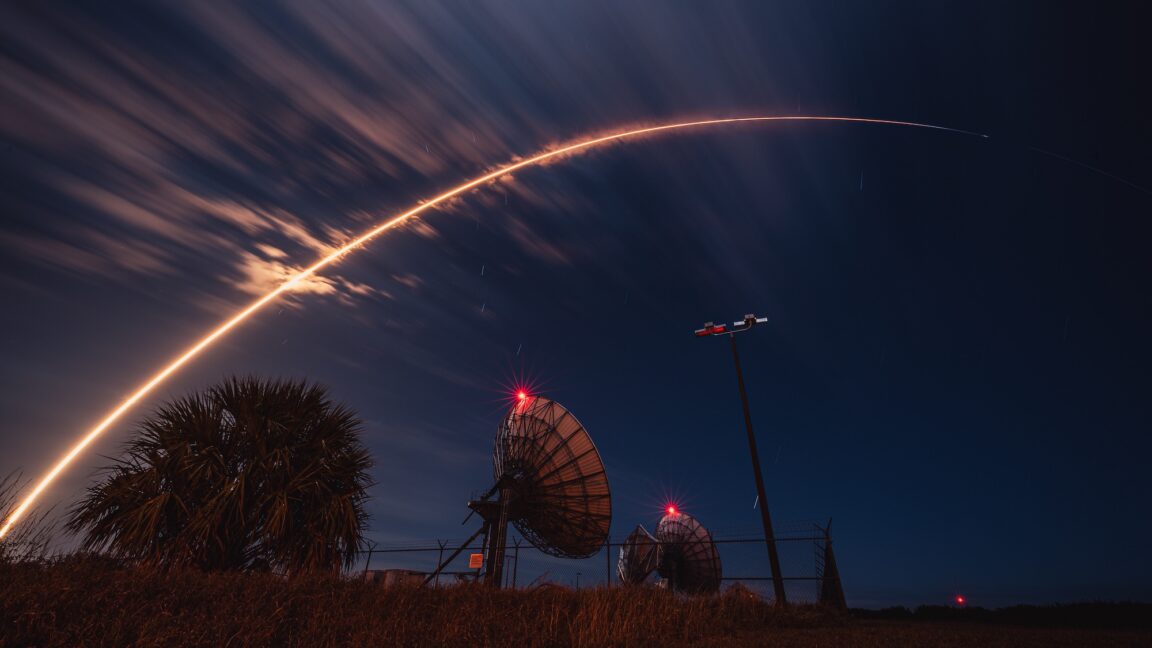
The telescope's launch date, Nov. 20, 2004, means it would have marked its 22nd anniversary later this month. Instead, the observatory that spent more than two decades watching for the universe's biggest flashes will end as a streak of its own in the sky over the Southern Hemisphere or the tropics, somewhere along a path that the Space Force cannot yet pin down.