Scientists Photographed an Archaeon Wired to a Bacterium by Nanotubes
That Junction May Be Where We Came From.
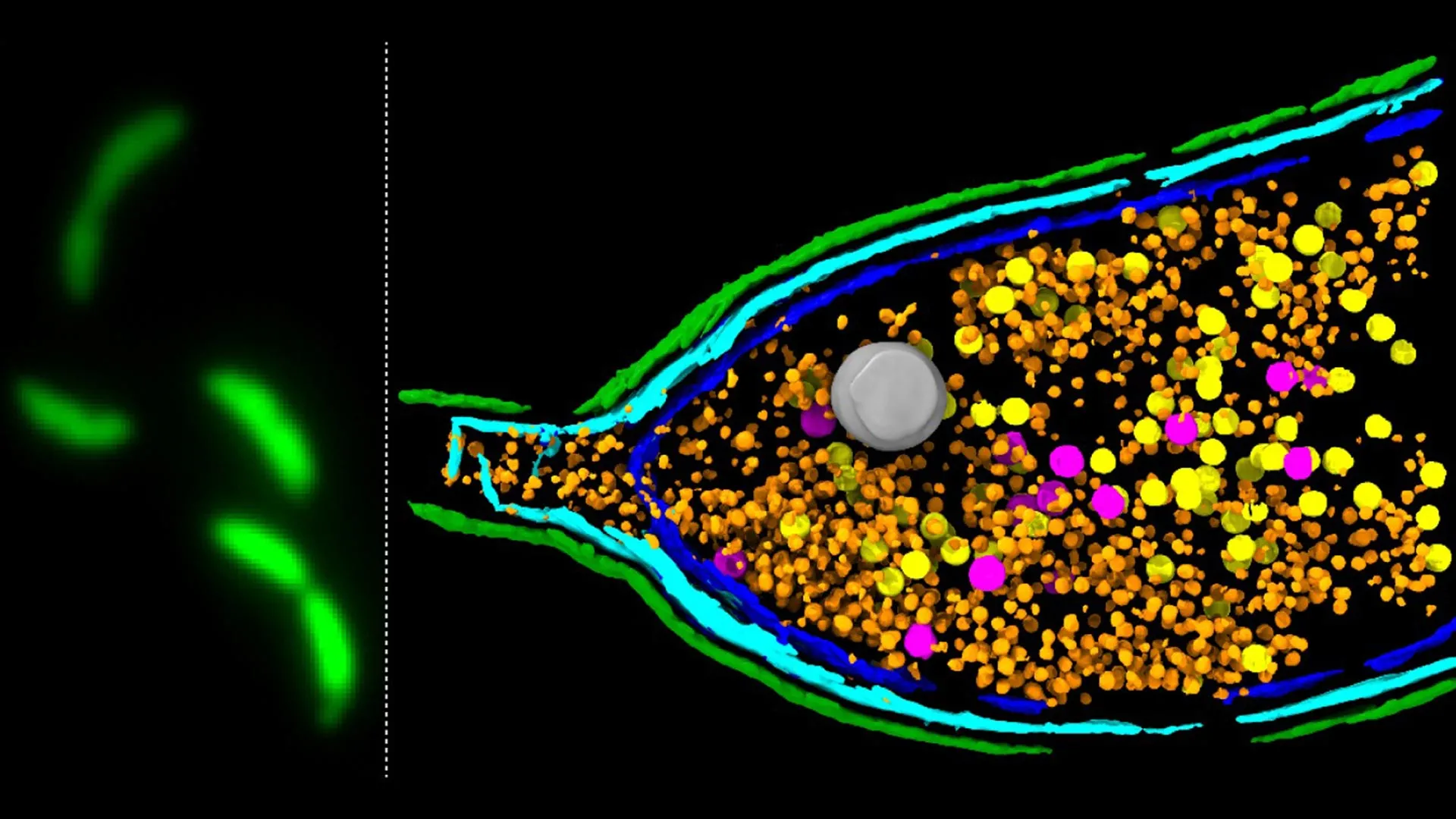
A team led by UNSW Sydney pulled a new Asgard archaeon out of Shark Bay stromatolites and imaged it physically joined to a bacterial partner, trading vitamins and hydrogen.
For about four decades, the leading explanation for where complex life came from has been an argument about a partnership nobody had ever seen. Every animal, plant and fungus is built from eukaryotic cells, and the dominant theory says those cells began when an ancient archaeon and a bacterium stopped merely living near each other and started living off each other. It was a good theory with no photograph attached.
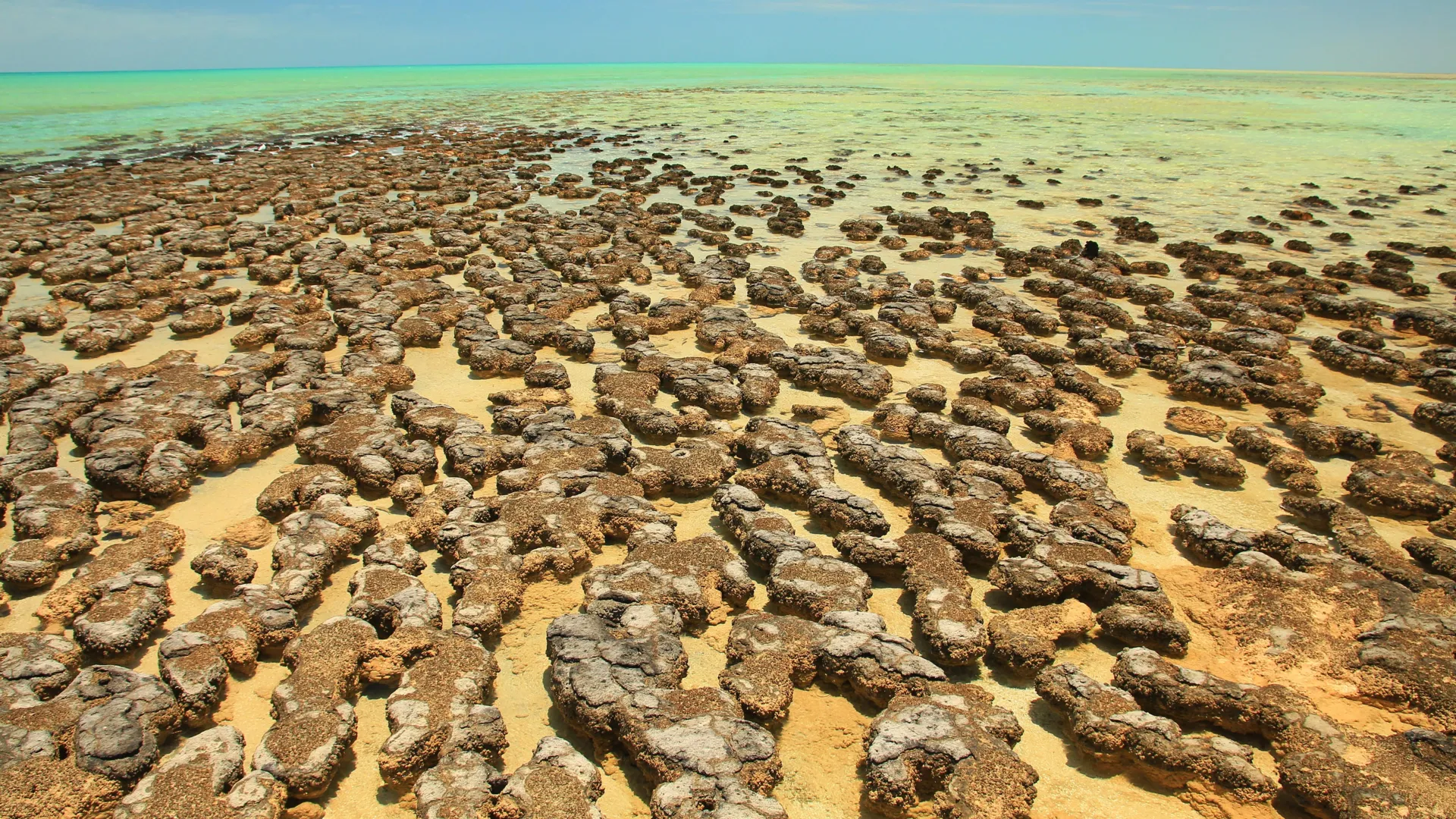
A team led by Associate Professor Brendan Burns at UNSW Sydney has now supplied one. Working with samples from the living stromatolites of Shark Bay in Western Australia — layered microbial mounds that have been building themselves the same way for billions of years — the researchers isolated a previously unknown Asgard archaeon and imaged it physically connected to a bacterium through bacterial nanotubes. The two organisms appear to be exchanging nutrients across the link, including vitamins, hydrogen and other essentials. The work was published in Current Biology.
The new organism is named Nerearchaeum marumarumayae. The first half comes from Nereus, the Greek sea god. The second comes from marumarumayae, meaning "ancient home" in Malgana, the language of the traditional owners of Shark Bay.
Getting it into a lab took four or five years. "A lot of time, optimizing and chasing different shadows," Burns said. Asgard archaea have been notoriously resistant to cultivation, and the reason may be the finding itself. "The fact that we could never get these organisms into pure culture is probably because they always depend on other organisms to survive," Burns said. They cannot be grown alone because they do not live alone.
The imaging was done with electron cryotomography, which builds three-dimensional pictures at scales measured in millionths of a millimeter, at the Melbourne end of the collaboration. Associate Professor Debnath Ghosal at the University of Melbourne, Associate Professor Kate Mitchie at UNSW and Associate Professor Iain Duggin at the University of Technology Sydney contributed. The team also used deep learning to predict the structures of proteins in the two microbes, which is how you begin to work out what is actually moving through a nanotube.
What the pictures do not show is the origin of eukaryotes itself. That happened once, roughly two billion years ago, and nobody is going to photograph it. What they show is a living system with the right shape — an archaeon and a bacterium metabolically fused, dependent, exchanging exactly the sorts of small molecules the endosymbiotic theory requires. "This could be a little model for how these kinds of partnerships started and ultimately formed eukaryotes," Burns said.
There is a second implication, about where to look. "Stromatolites could be more than 'just' a cradle of life where early microbial life flourished," Burns said. "They could also tell us how complex life first emerged." Ghosal put the result more plainly: it brings the field "a few steps closer towards understanding how complex cells evolved from relatively simpler microbial life forms."