The Pentagon Gave Weapons Makers 21 Days: 'Years-Long Development Cycles Are Not Acceptable'
A memo from Deputy Defense Secretary Steve Feinberg lands as an outside analysis estimates the U.S. Patriot interceptor stockpile has fallen at least 65% since the Iran war began.

The Pentagon has given American weapons manufacturers three weeks to explain how they intend to build critical munitions dramatically faster, an unusually blunt demand that surfaced this weekend as the five-month-old war with Iran continues to drain U.S. stockpiles of advanced missile interceptors.
Deputy Defense Secretary Steve Feinberg wrote to industry leaders on Wednesday, giving them no more than 21 days to submit plans that "drive significantly faster, more aggressive delivery schedules and/or increased production for critical capabilities," according to a memo obtained by The Washington Post. "Years-long development cycles are not acceptable," Feinberg wrote. "We must dramatically accelerate our program schedules and expand our production capacity now." Reporting on the memo identified the Next Generation Interceptor, the National Advanced Surface-to-Air Missile System and a mobile air-defense radar among the programs under consideration for acceleration or increased procurement.
Pentagon spokesman Sean Parnell confirmed Saturday that the memo is "real," adding that it "will inform the fiscal year 2028 budget submitted to Congress for funding, and it is entirely consistent with our ongoing push to rebuild the defense industrial base." Parnell said the department was actively focused on boosting munitions acquisitions to provide "the weapons our warfighters need at the pace the threat demands," and framed the effort as part of a broader modernization push that predated the conflict.
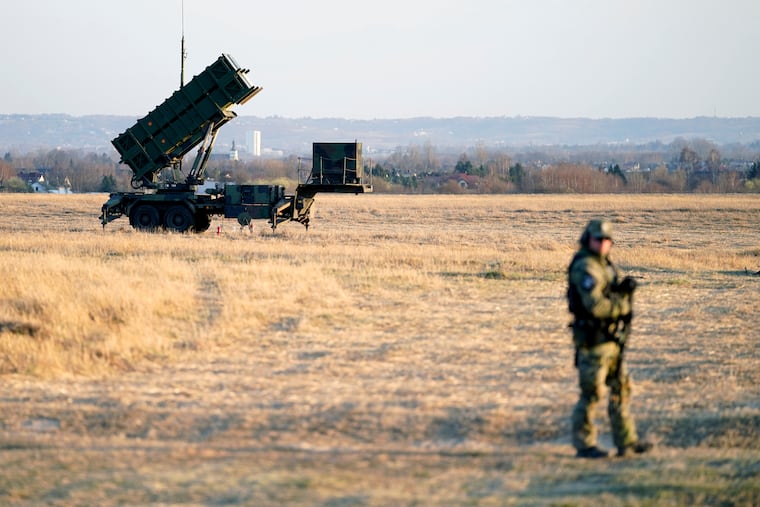
The numbers behind the urgency come from the Center for Strategic and International Studies, a Washington think tank, which estimates the U.S. Patriot interceptor inventory fell from 2,330 before the war to 1,030 by the time an April ceasefire took effect, and now sits between 759 and 827 — a drop of at least 65%. THAAD interceptors fell from 452 before the war to between 232 and 262 at the ceasefire; partial replenishment brought that to between 234 and 278, still at least 38% below prewar levels. CSIS warned that shrunken inventories may force the U.S. and its Middle Eastern allies to take more risk to conserve air defenses — for instance, firing fewer interceptors at incoming Iranian drones and missiles, which raises the odds that one gets through.
President Donald Trump has publicly rejected the premise. He posted on Truth Social on Thursday that the U.S. has "massive amounts" of munitions, adding that "large amounts are being manufactured and shipped to the U.S. as needed." That leaves the administration arguing simultaneously that stockpiles are ample and that industry must overhaul its production schedules inside three weeks.
None of it is funded yet. A defense spending bill is stalled in Congress, where lawmakers are fuming over Trump's military action against Iran and resisting a White House request to raise Pentagon spending to roughly $1.5 trillion, up from about $900 billion last year. Feinberg's 21-day clock will expire well before that fight is resolved, meaning the plans contractors submit are, for now, proposals against a budget that does not exist.