House Passes $1.1 Trillion Pentagon Bill and a Blueprint to Unlock $70 Billion More for the Iran War
Two razor-thin votes — 216-212 and 216-214 — sent the defense authorization and a reconciliation framework to a Senate where Republicans still need Democratic votes they do not have.

House Republicans muscled through a pair of defense measures this week by a combined margin of six votes, approving roughly $1.1 trillion in Pentagon authorization and a separate budget framework designed to unlock more than $70 billion in new money for the war with Iran.
The National Defense Authorization Act passed 216-212, with six Democrats crossing over to supply the margin. Minutes later, the chamber adopted a $95 billion reconciliation blueprint by 216-214. That second package is the one that matters most to the Pentagon's cash position: alongside the Iran war funding, it carries roughly $12 billion in farm assistance and money to implement provisions of President Donald Trump's election overhaul law — a bundling strategy meant to hold together a conference that has splintered repeatedly over both the war and the price tag.
Republican leaders chose reconciliation deliberately. The procedure strips the Senate's 60-vote threshold, meaning the war funding could in theory clear the chamber on a party-line vote. The NDAA enjoys no such protection, and Senate Democrats blocked an earlier version this month while demanding concessions that would constrain the administration's ability to widen the conflict. Nothing in this week's votes changes that math.
The dissent on the Republican side came from two directions at once. Fiscal hardliners objected that not a dollar of the new spending is offset by reductions elsewhere, adding the full amount to the deficit in an election year. A separate group of members, several from competitive districts, balked at appropriating billions more for a war that is escalating faster than Congress can legislate and that polls poorly with voters. Democrats made the tradeoff explicit. "I cannot and do not support meeting these needs by making massive cuts to critically important domestic programs and slashing taxes," said Rep. Adam Smith of Washington, the ranking Democrat on the House Armed Services Committee.
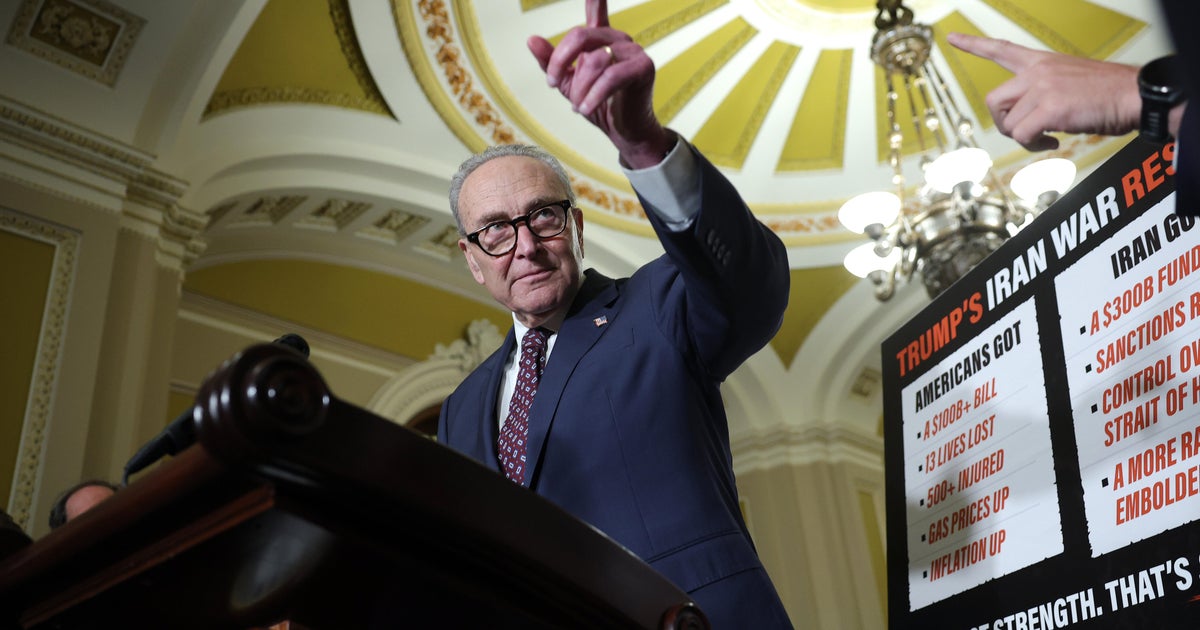
The context outside the Capitol is grim and getting worse. The Pentagon has told lawmakers the Iran conflict has already cost $37.5 billion, with 18 U.S. service members killed and close to 500 wounded. Defense Secretary Pete Hegseth has separately asked Congress for far more, and an internal estimate reported this month put the true running cost closer to $100 billion. Gasoline has pushed past $4 a gallon nationally as Houthi attacks on Saudi oil infrastructure and shipping keep a war premium in crude prices.
Both measures now move to the Senate, where the timetable collides with the September 30 end of the fiscal year and a shutdown fight that leadership in both parties has been trying to postpone until after the midterms. Republicans hold no cushion: they need Democratic votes for the authorization bill, and Democrats have shown no sign of supplying them without limits on the war that Trump has refused to accept.