The U.S. Has Fired Off Nearly Its Entire Global Supply of Long-Range Precision Missiles in the Iran War
Defense officials tell CBS News the American arsenal of ATACMS and Precision Strike Missiles is all but empty, and an independent tally says Patriot interceptors have fallen by roughly two-thirds since the fighting began.

The United States has used up nearly its entire worldwide inventory of long-range precision missiles in the war with Iran, defense officials told CBS News, a depletion that reaches deeper into the American arsenal than the Pentagon has publicly acknowledged. The weapons in question are the Army Tactical Missile System, known as ATACMS, and its newer replacement, the Precision Strike Missile — the ground-launched weapons the Army relies on to hit targets hundreds of miles away without putting a pilot over hostile airspace.
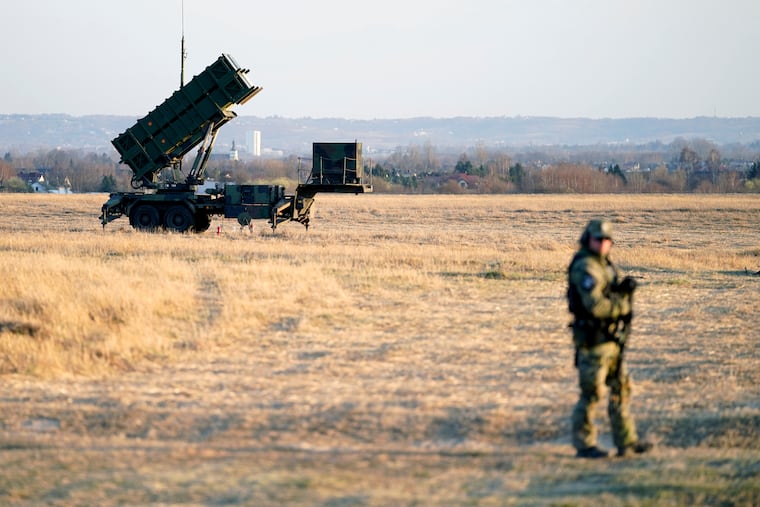
The picture is not much better for the interceptors that shoot incoming missiles down. A report from the Center for Strategic and International Studies estimated that the U.S. supply of Patriot interceptors fell from about 2,330 before the war to somewhere between 759 and 827 by late July. THAAD interceptors, the higher-flying system designed to knock out ballistic missiles outside or at the edge of the atmosphere, dropped from 452 to between 234 and 278 over the same stretch. CNN, citing its own sources, reported that roughly 80% of key interceptor stocks have been expended.
What makes those numbers difficult for planners is not the shooting but the rebuilding. Patriot and THAAD interceptors are made in small annual batches on production lines that cannot be turned up quickly, because each round depends on specialized seekers, rocket motors and solid-state electronics with long supplier queues. The CSIS analysis concluded it could take until at least mid-2029 to return to pre-war inventory levels for both systems — meaning the shortfall would outlast this administration's term regardless of how the current fighting ends.
The Pentagon has pushed back hard on the idea that anything is running short. "America's military is the most powerful in the world and has everything it needs to execute at the time and place of the President's choosing," Pentagon spokesperson Sean Parnell said. Defense Secretary Pete Hegseth was blunter, saying that "our stockpiles are great, and they're only getting stronger." President Trump has denied that the U.S. is running low on munitions and said vast resupplies are being made.
The dispute lands at a delicate moment. Large-scale U.S. military operations against Iran are currently paused to give room to negotiations over reopening the Strait of Hormuz, talks that Tehran has said are close to a deal brokered with Oman. Trump has warned that attacks will resume on a large scale if American demands are not met. That threat is the reason the inventory question matters: a country that has spent most of its long-range precision stock has fewer ways to make good on it, and every interceptor fired at an Iranian ballistic missile is one that is not available to defend a base, a carrier group or an ally somewhere else in the world.
Congress has begun to notice. Lawmakers in both parties have pressed the Defense Department for classified accounting of what has been fired and what remains, and defense contractors have been asked how fast they could surge output if given multiyear contracts. For now, the only public numbers come from outside analysts working from open sources — and those numbers describe an arsenal that has been drawn down faster than it can be refilled.