The U.S. Has Fired 1,500 of Its 2,330 Patriot Interceptors
Officials in Europe Say the Stockpile There Is 'Beyond Critical.'
Defense and NATO officials told the AP that American forces in Europe could not stop a sustained Russian ballistic missile attack. The Pentagon says the reports are false.
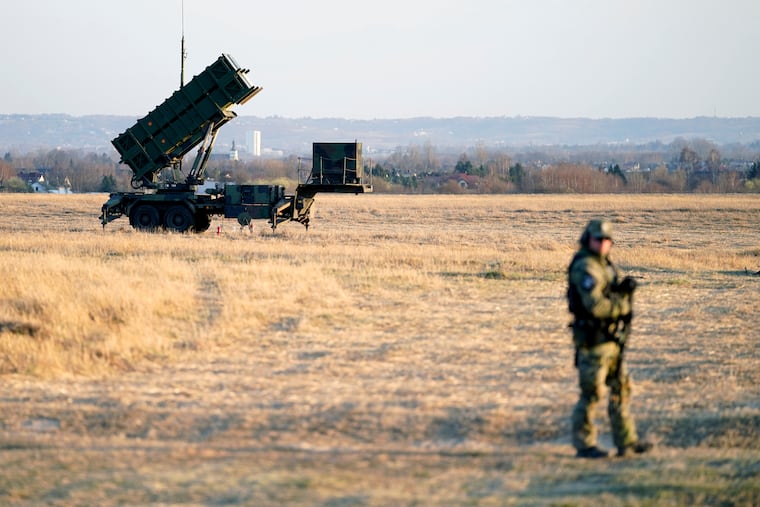
Six months of war with Iran have burned through roughly 1,500 of the approximately 2,330 Patriot interceptors in the American inventory — about 65 percent of the stockpile — and U.S. defense and NATO officials now describe what is left in Europe as "beyond critical," according to reporting by the Associated Press published Thursday.
The Patriot PAC-3 is the only widely fielded American system that can reliably intercept a high-speed ballistic missile on its way down. It is the interceptor the United States has used to defend its bases across the Middle East and to help shield Israel from Iranian barrages since the war began in late February. Every one of those launches came out of a global pool that is replenished slowly. Lockheed Martin is expected to turn out roughly 600 interceptors in 2026, with production scaling toward about 2,000 a year by 2030. At current rates, the missiles fired in six months would take more than two years to replace.
A U.S. defense official in Europe, speaking anonymously, told the AP that American forces on the continent would have only "very limited" ability to stop even a single ballistic missile aimed at a base, and described the position in a sustained Russian attack in blunt terms — that U.S. forces would "take punch after punch in the mouth." A NATO official separately confirmed that inventories among both American and allied forces in Europe are low. None of the officials said an attack was imminent or that they had intelligence pointing to one.
The Pentagon and NATO's military command pushed back hard and on the record. Army Col. Martin O'Donnell, a senior spokesperson for NATO's military headquarters, said it is "simply not the case" that Patriot numbers in Europe are beyond critical. Chief Pentagon spokesman Sean Parnell said in a statement Thursday that claims of U.S. munitions shortages "are false." Neither offered inventory figures, which are classified.
The gap between those two accounts is the story. It is not disputed that the Iran campaign has consumed interceptors at a rate no peacetime production line was built to match, or that the United States shipped roughly 600 Patriot interceptors to Ukraine during the Biden administration. What is disputed is whether what remains is enough to cover the Article 5 commitment in Europe while the Middle East draw continues.
European governments have been buying the systems — Germany, the Netherlands, Romania and Spain have all placed orders — but a launcher without missiles is a radar with wheels. A NATO-backed Patriot interceptor plant in Germany is scheduled to open in September, with first deliveries expected in early 2027. That is the earliest date any of the current shortfall begins to close, and it does not close it quickly.
The reporting arrived as the war with Iran reached its six-month mark and as U.S. intelligence assessments circulating in Washington describe Moscow as viewing American conventional stocks as depleted. Congress has already been told, in July testimony, that the Iran campaign had cost $37.5 billion. The interceptor arithmetic is now the part of that bill that cannot be paid with a supplemental appropriation alone.