The Pentagon's Own Watchdog Says $22.3 Billion in Munitions Fired at Iran Caused 'Strategic Inventory Shortfalls.' The War Has Cost $33.4 Billion, Four F-15s and Up to 30 Reaper Drones.
The inspector general's first mandatory report to Congress contradicts Trump's claim two weeks ago that the U.S. has 'virtually unlimited' ammunition. A CSIS analyst says the stockpile is fine for Iran and would last about a month against China.
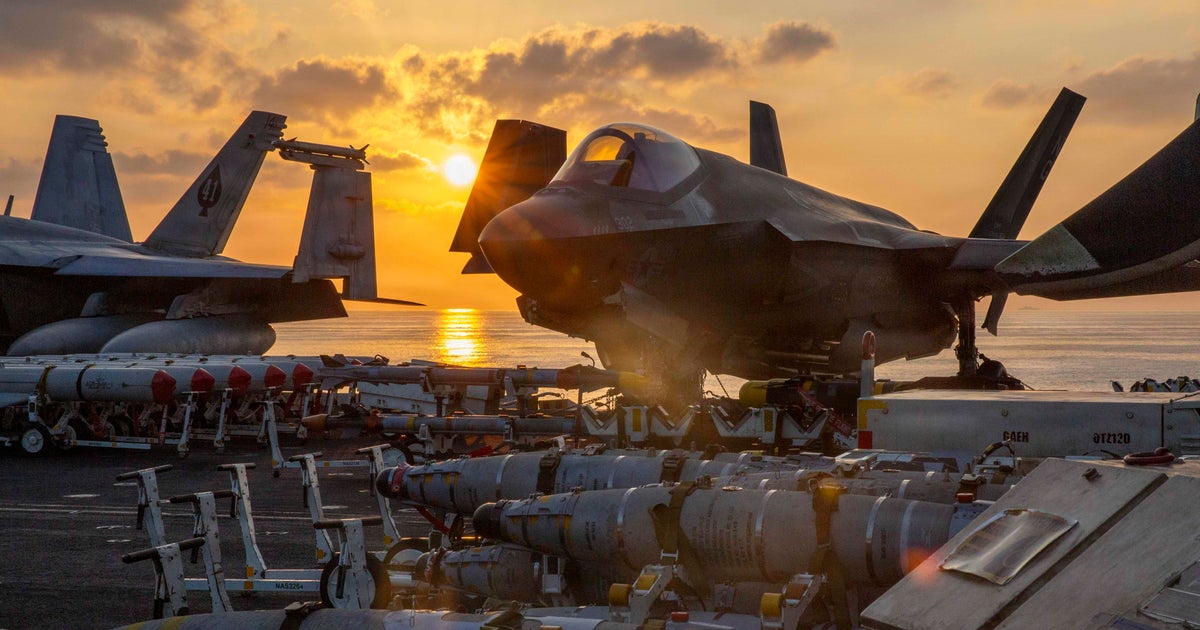
The Defense Department's inspector general told Congress on Monday that the United States is facing a shortfall in ammunition as a direct result of its war with Iran, the first official acknowledgment from inside the Pentagon of a problem senior officials had spent months denying.
In a first-of-its-kind mandatory report to Congress, the inspector general put the estimated cost of Operation Epic Fury between Feb. 28 and June 30 at $33.4 billion. Of that, $22.3 billion went to munitions alone. "The munitions expenditure on OEF has resulted in strategic inventory shortfalls and revealed industrial base bottlenecks for munitions resupply," the report states.
The report also lists American hardware lost in the six months of fighting: four F-15 fighters destroyed, one F-35 damaged, seven KC-135 tanker aircraft damaged and up to 30 MQ-9 Reaper drones destroyed. It puts the cost of repairing "physical damage from Iranian strikes" to U.S. diplomatic facilities in Iraq, Kuwait, Saudi Arabia and the United Arab Emirates at roughly $184 million, and says the State Department spent another $79.2 million on "contingencies stemming from the Iran conflict, such as evacuation-related expenses for State personnel and their family members, U.S. citizens, and eligible third-country nationals."
Iranian strikes "damaged and destroyed hundreds of buildings and structures at U.S. bases in Kuwait, Bahrain, Qatar, UAE, Saudi Arabia, Iraq, Oman, and Jordan," the report says. It does not put a price on that damage, and it says it is not yet clear whether every base will be rebuilt or who would pay for it.
The findings are at odds with President Trump's public statements. Two weeks ago he wrote that the United States has "virtually unlimited amounts of Mid to High Grade Ammunition, far more than we could ever use for this, or for any other War (which is highly unlikely!), that could improbably take place. In addition, we are producing Munitions at levels never seen before. We are stockpiling and preparing for any contingency that could happen." Top Pentagon officials had also denied reports of shortages in the days before the inspector general's report was released.
Behind the scenes, the administration has been pushing for more production. Defense Secretary Pete Hegseth has been urging contractors to increase output, and Tim Cahill, who runs Lockheed Martin's missile division, described the current pace to CBS News as "controlled chaos." CBS Sunday Morning was recently given access to Lockheed's plant in Arkansas, where the company builds the latest version of the Patriot interceptor. Each one costs about $4 million, and the line turns out roughly 750 a year.
Mark Cancian of the Center for Strategic and International Studies said the numbers matter less for the war the United States is fighting than for the one it might. "For a war against Iran, the answer is yes," he told CBS News when asked whether the stockpile is sufficient. "The problem is a war against China. We might be able to provide enough munitions for a month, but getting on to month two or month three or four, that's a great challenge."
The cost figures have been climbing all year. In April, a Pentagon official testified on Capitol Hill that Operation Epic Fury had cost about $25 billion. U.S. officials familiar with internal assessments told CBS News shortly afterward that the real figure at the time was closer to $50 billion. Monday's report covers only the first four months of the campaign, which began Feb. 28 and continued past a ceasefire that expired last month.
The report arrives as the war's effects spread through the U.S. economy. The 10-year Treasury yield topped 5 percent on Monday for the first time since 2023, diesel is at a record $6.23 a gallon and Saudi Arabia's East-West pipeline remains shut. Trump said over the weekend that he is "open to" negotiating an end to the conflict.
Originally reported by CBS News.