Nvidia Fell 3.4% and Micron 5.3% Monday After Amodei's Essay. The Nasdaq Lost 147 Points, but Microsoft, Alphabet and Salesforce All Rose on the Same News.
Investors read the Anthropic CEO's call to slow frontier AI development, endorsed by Sam Altman and Elon Musk, as bad for chip demand and good for software. Nvidia was the single biggest drag on both the S&P 500 and the Nasdaq. Brent hit $108, the 10-year touched 5%, and the Fed meets Tuesday with a rate hike 90% priced in.
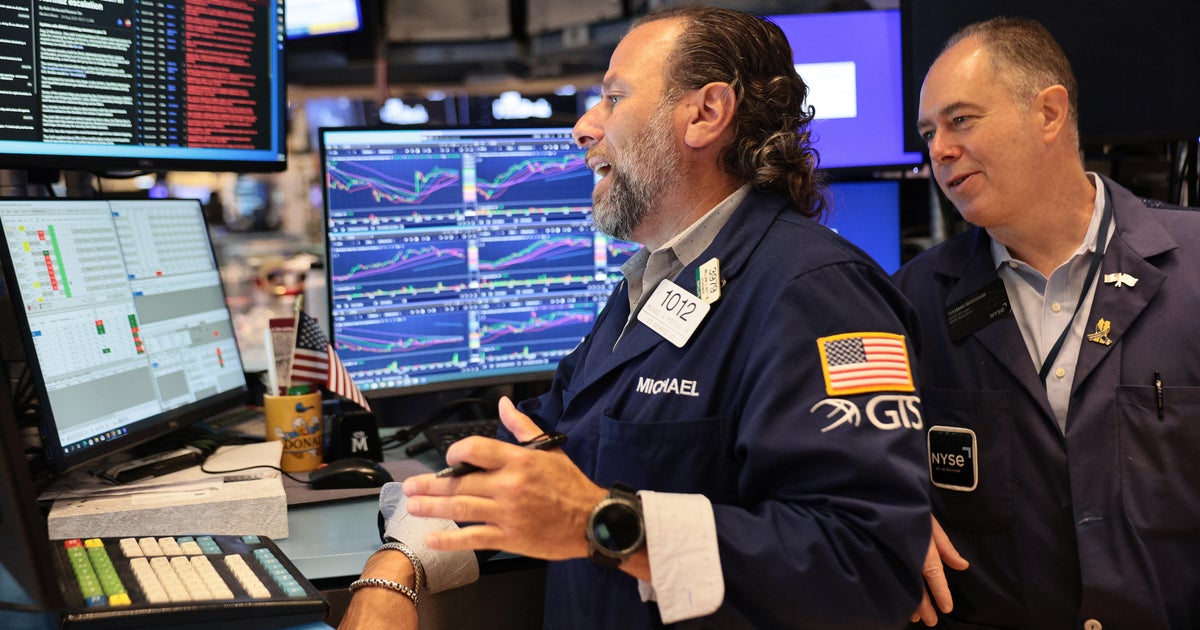
Chip stocks led Wall Street lower Monday as investors digested a weekend essay from Anthropic chief executive Dario Amodei urging the artificial intelligence industry to slow the pace at which it improves its models. The Nasdaq Composite fell 146.62 points, or 0.56%, to 26,186.41, after being down as much as 1.3% earlier in the session. The S&P 500 slipped 37 points, or 0.48%, to 7,619.98, and the Dow Jones Industrial Average lost 152.09 points, or 0.29%, to close at 52,421.20.
Nvidia dropped 3.36%, or $7.33, to $210.96, and was the largest single drag on both the S&P 500 and the Nasdaq. Micron Technology fell 5.25% to $924.03, and SK Hynix's U.S.-listed shares tumbled 7.6%. AMD and Intel also declined. The selling was concentrated in the companies that build the hardware behind AI training runs, on the theory that a slower cadence of frontier models means fewer, or at least later, orders for the accelerators and memory that power them.
The catalyst was Amodei's 3,800-word essay, published over the weekend, in which he argued that AI companies should "pace the frontier" and warned that within six to 12 months an autonomous swarm of AI agents could be capable of taking over much or all of the internet. OpenAI's Sam Altman and xAI's Elon Musk publicly agreed with the thrust of it, and Google DeepMind's Demis Hassabis offered support as well. "For too long the industry lied" about the risks, Amodei wrote. The White House pushed back; President Trump said Sunday that "whoever wins with AI wins," and AI adviser David Sacks defended the administration's light-touch approach.
The same essay produced winners. Microsoft rose 1.97% to $505.41, Alphabet gained 3.22% to $349.71 and Salesforce climbed 4.73% to $259.43. The logic on trading desks was that if the largest labs really do slow their capital spending, the companies that sell software on top of existing models keep their revenue while their compute bills stop climbing. "Nvidia fell, Microsoft rose, and both moves trace back to the same weekend essay," one strategist noted.
Beneath the AI trade, the macro picture was doing its own damage. Brent crude reached $108 a barrel, a four-month high, after Saudi Arabia shut its East-West pipeline following a drone strike launched from Iraq and Houthi forces tightened their grip on Red Sea shipping. Diesel held above a record $6.23 a gallon nationally. The 10-year Treasury yield briefly touched 5% for the first time since October 2023. Federal Reserve policymakers convene Tuesday and Wednesday, and futures markets are pricing roughly a 90% chance of a quarter-point rate increase, which would be the first hike of this cycle.
Longer-term worries about an AI bubble have been building for months. Five companies, Alphabet, Apple, Micron, Microsoft and Nvidia, are projected to account for 27% of S&P 500 earnings growth over the next year, and technology as a whole for about half. Capital Economics still expects the S&P 500 to reach 8,250 by year-end but has warned the index could fall 20% by the end of 2027 if AI capital spending fails to translate into profits. Adam Crisafulli of Vital Knowledge said the current pace of spending is unsustainable, though not every AI-linked company would suffer equally if it slows. Monday's tape suggested investors are already sorting them.
Originally reported by CBS News.