New Zealand Election Ends Deadlocked as Newcomer Party Holds the Balance of Power
Neither Christopher Luxon's National Party nor Chris Hipkins' Labour won a clear mandate, and final results will not be known until Nov. 27.
WELLINGTON, New Zealand — New Zealanders face weeks of waiting to learn who will lead their country after Saturday's election gave neither the right nor the left a decisive win. The tightest vote in years leaves tense coalition talks as the only apparent path to power for either side.
The result was a rebuke to the two big parties that have long dominated politics. Prime Minister Christopher Luxon's center-right National party took 29.21% of the party vote as of Sunday, while Chris Hipkins' center-left Labour party took 29.36%. Voters sent more support than before to smaller parties on both flanks.
The surprise was Opportunity, a new party led by 38-year-old business consultant Qiulae Wong. It is aligned with neither bloc and won seven seats, enough to complicate any simple route to a majority. Wong became leader less than a year ago after the party failed three times to reach Parliament, and she has said she could work with either side.
On the numbers counted so far, Parliament has 131 seats and 66 are needed for a majority. Luxon's conservative bloc would hold 67, a margin of one. National won 42 seats, all of them in local constituency races. Its partners did better: the libertarian ACT party won 13 seats and the populist New Zealand First won 12. Labour won 36 seats, the Greens 16 and Te Pāti Māori five, leaving the left bloc at 57.
Officials began counting nearly 400,000 special votes on Sunday, including ballots from New Zealanders living abroad. The count is expected to take three weeks, and formal government talks will not begin until final results are released on Nov. 27. Special votes have historically added a seat or two to left-wing parties, which could erase the right's one-seat edge. Even then, Hipkins would apparently need Wong's support to govern. Before the election Luxon repeatedly ruled out negotiating with Wong, and on Sunday he sidestepped questions about whether his position had changed.
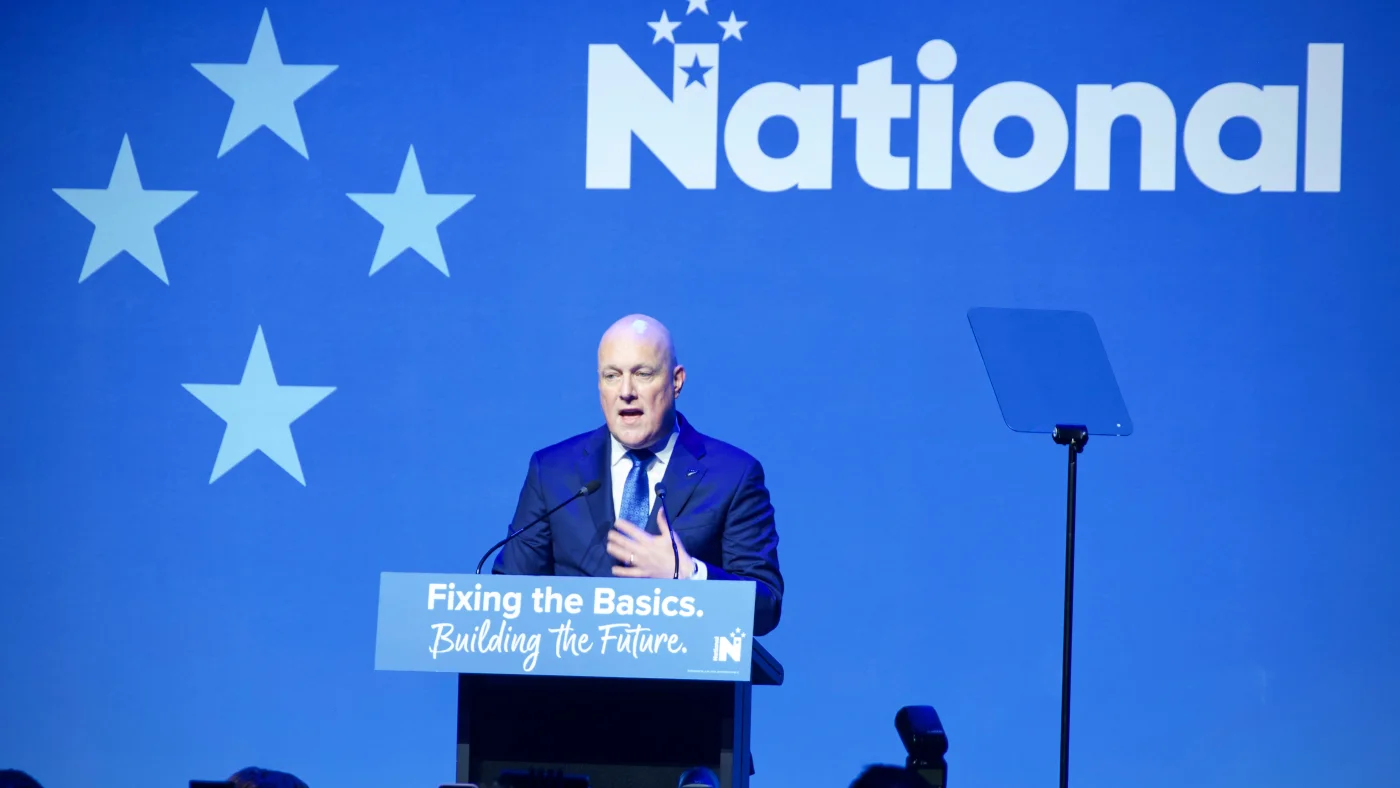
Luxon did not claim victory. He struck a note of cautious optimism, said National had won more seats than any other group, and blamed public dissatisfaction on global shocks that have hit New Zealand's trade-dependent economy. "I think everyone's over politics so let's all have a bit of a break for the next three weeks," he told reporters. He will lead a caretaker government until a deal is reached.
National's night was bleak in other ways. On the current results, several of its senior lawmakers, including the ministers of finance and defense, the speaker of Parliament and the attorney general, will leave politics. Luxon also faced two separate confidence votes among his own lawmakers this year. Critics say his dealings with ACT and New Zealand First, both led by veteran politicians, exposed his inexperience, and both partners now have more leverage to demand policy concessions.
Hipkins, who lost office in 2023 largely over the same cost-of-living anger, did not appear to gain from voter fatigue. If no government can be formed, New Zealand could face a fresh election. In New Zealand, voters cast one ballot for a party and another for a local representative, and the country has a single house of Parliament with no states, so whoever governs holds wide power. On Sunday, "who won the election 2026" was the top trending Google search in the country of 5.6 million people.