Hoax Bomb Threats Hit 6,300 Italian Schools and Hundreds More Across the U.K. and Ireland
Mass evacuations followed in Italy as officials weigh whether Russia or Iran is behind the emails, the third school wave there in a month and one that follows fake threats against 20-plus flights.
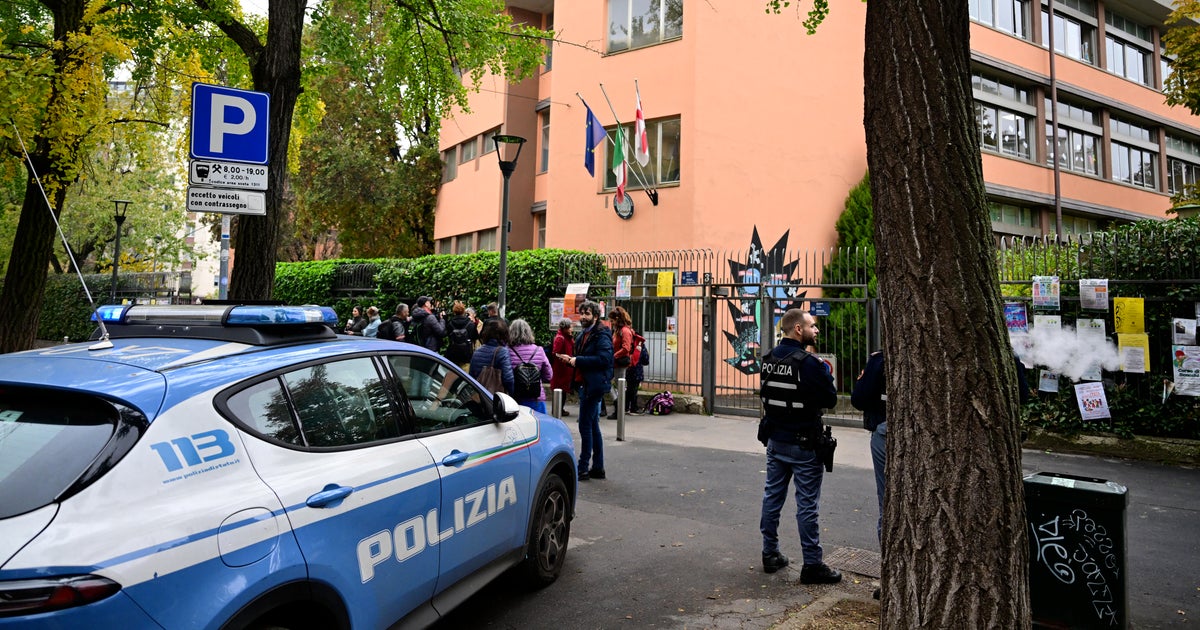
Thousands of schools across Europe received apparently hoax bomb threats on Wednesday, forcing mass evacuations in Italy and prompting a new round of questions about who is behind a growing campaign of disruption aimed at the continent.
The threatening messages reached at least 6,300 schools in Italy alone, along with hundreds more in Ireland and across the United Kingdom, CBS News reported. No explosives or suspicious devices had been found at any of the schools by Wednesday, and investigations into the source of the messages were continuing.
Lessons were suspended and precautionary evacuations were ordered in Rome, Milan, Naples, Palermo, Bologna and several other Italian cities. Police, bomb disposal specialists and the Postal Police inspected buildings and began tracing the messages. Italian news outlets published an email they said the schools received, which claimed to come from "Mikhail Andropov, leader of the Vilayat of Misoginistan," a Russian misogynistic extremist group that Moscow banned several years ago. "We have come to annihilate you," the email read. "I have just left a powerful explosive device with a remote detonator inside a plastic bag in your building." It also carried threats against Italian Prime Minister Giorgia Meloni.
CBS News confirmed last week that a message attributed to the same name and the same group was sent to airport authorities in Rome, threatening two of the flights hit by a mass wave of hoaxes on Nov. 5. More than 20 European commercial flights received fake bomb threats that day, forcing many to divert.
Meloni said there was no "concrete danger" behind the threats and described them as part of "a strategy aimed at causing alarm and concern." She called a meeting for Wednesday with Italian intelligence officials and cybersecurity experts to discuss a possible link to the recent airline threats and to identify those responsible.
This was the third wave of bomb threats against Italian schools in a month. Messages arrived on Oct. 19 and again on Nov. 2, when about 280 schools were targeted, according to Italian media. Wednesday's wave was more than twenty times larger than that one.
In Ireland, the national police force, the Garda, said it was aware of a "generic communication" sent to a number of educational establishments. It said the threat had been judged "not credible" and did not advise any school to evacuate. Police in Northern Ireland said the emails sent to schools there appeared to have originated outside the United Kingdom.
Officials have not assigned blame for the hoaxes. But the threats are adding to concern about what security experts and Western officials describe as hybrid warfare, a mix of cyberattacks, sabotage and psychological pressure that they attribute largely to Russia and Iran amid the wars in the Middle East and Ukraine. International investigators are also examining cyberattacks on grocery store refrigeration units in Europe and the United States, as well as on blood banks in France.
The same day, The New York Times and Reuters reported that U.S. Treasury Secretary Scott Bessent had relocated from his Washington-area home to a military base after Iranian threats against him, another sign of how far the confrontation with Tehran has spread beyond the battlefield.