Mississippi's Senate Race Hangs on Provisional Ballots That No One Can Count
About 2,000 votes separate Sen. Cindy Hyde-Smith and Democrat Scott Colom, and the state has no recount provision and no central tally of outstanding ballots.
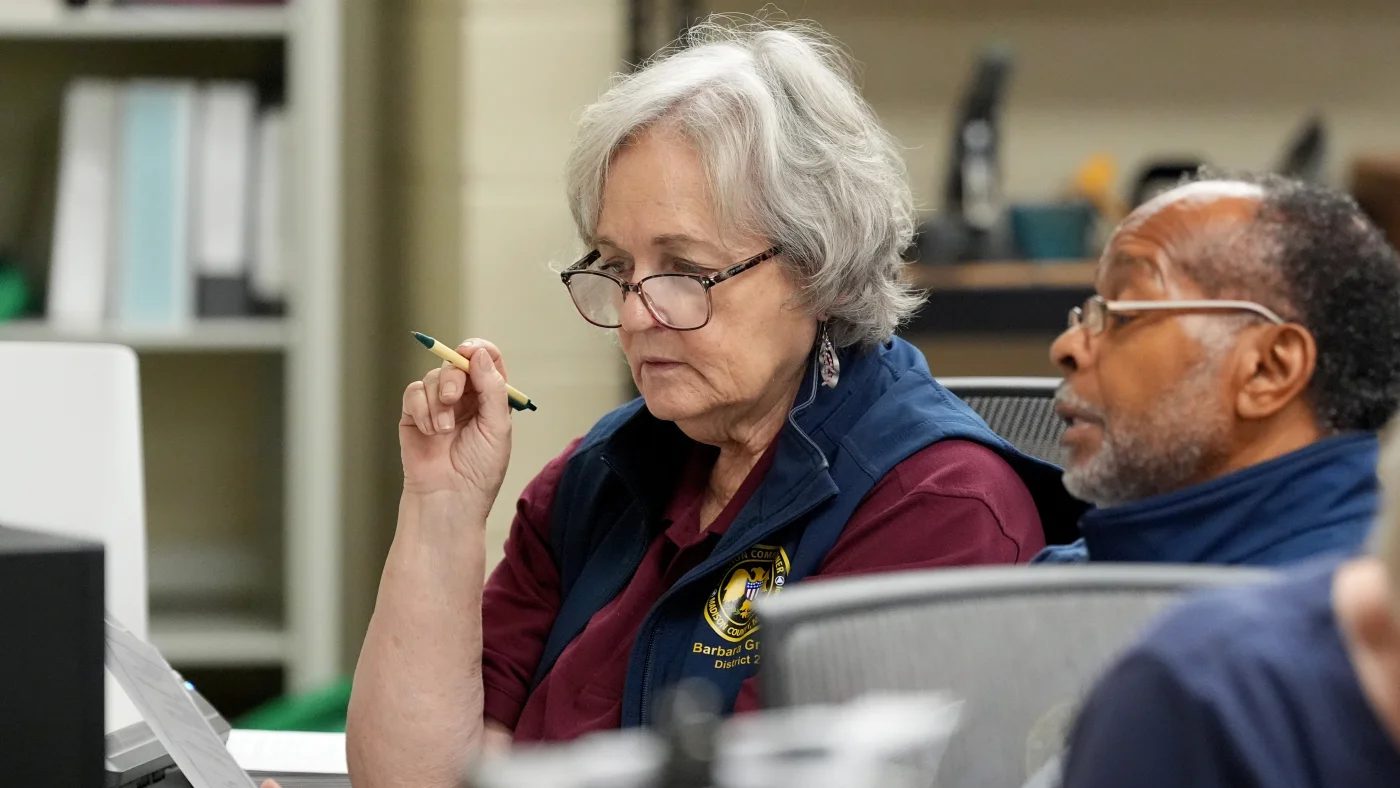
Days after Election Day, the U.S. Senate race in Mississippi remains too close to call, and nobody can say for certain how many ballots are left to count. The razor-thin margin between incumbent Republican Sen. Cindy Hyde-Smith and Democratic challenger Scott Colom is shining a light on an election process that is among the slowest and most decentralized in the country. It also has no provision for recounts.
As of mid-afternoon Friday, more than 2,000 votes separated the two candidates, according to NPR. Estimates of what remains vary widely. The Colom campaign said late Tuesday that it was aware of more than 15,000 provisional ballots, which require verification before they are counted. The chair of the state Republican Party said Thursday he believed about 20,000 ballots were outstanding, including absentee votes that officials may legally receive until Nov. 10 if they were postmarked by Election Day.
Mississippi's top elections official, Republican Secretary of State Michael Watson, said counties run their own elections and that even his office did not know how many provisional ballots were left. He said that by midday Friday, more than 9,000 had been processed. "Until we have the certified results, the individual counties will be the best source of the latest and most up-to-date information," Watson said in a statement. The state has 82 counties, and they are not required to send results to the state until next week.
Michael Morse, a University of Pennsylvania law professor who studies voting, said he was shocked by how little information was available for such a high-profile contest. "Mississippi is not a model of election administration," he said. "Right now I would love to know a lot of things about the process and I am struggling to figure out what is unfolding here. I cannot tell you basic things."
What is becoming clear is that Mississippi's rate of provisional ballots, which the state calls affidavit ballots, may end up among the highest in the country this cycle. These ballots are cast by people whose eligibility is questioned by local officials, and they are set aside while officials decide case by case whether to count them. If the Colom campaign's estimate of 15,000 holds, that would be roughly 1.5 percent of all ballots cast in the Senate race, according to unofficial results. In the last midterm year, 2022, just four states had a provisional rate higher than that, according to federal data, and Mississippi appears to be running at nearly double North Carolina's rate this year, based on preliminary figures.
One likely reason is how Mississippi handles voter registration. In most states, voters who have not cast ballots over several election cycles are moved to "inactive" status but can still vote normally for a few years before they must confirm their eligibility or are removed. Mississippi is one of the few states that forces those inactive voters to cast provisional ballots, which local officials then review after the fact. Mississippi Today has reported extensively on the state's experimental use of credit data to clean up voter lists. Morse said that technique has drawn attention, but "it's not the whole story."
Watson has defended the system. "The extra few minutes it may take to vote via affidavit ballot are well worth the election integrity added by having cleaner voter rolls!" he wrote Tuesday on X. Kathy Boockvar, a Democrat and former Pennsylvania secretary of state, said many people who vote provisionally are ultimately deemed eligible, but the process still erodes trust. "It feels like you have to go talk to the teacher or something in the back room," she said. She added that the scarcity of information shows Mississippi has rarely been a battleground, and that "transparency and good data is one of the best solutions we have to combating all the suspicion and distrust."
With the margin this narrow and the count this opaque, the outcome could hinge on decisions made in dozens of county offices over the next several days, with no state-level recount to fall back on.