Your Two Eyes Descend From a Single Cyclops Eye on a 600-Million-Year-Old Ancestor, Researchers Say
A study in Current Biology argues vertebrates lost their paired eyes, kept one eye on top of the head, then rebuilt stereo vision out of it — and that the leftover of that ancient eye is still inside your skull.
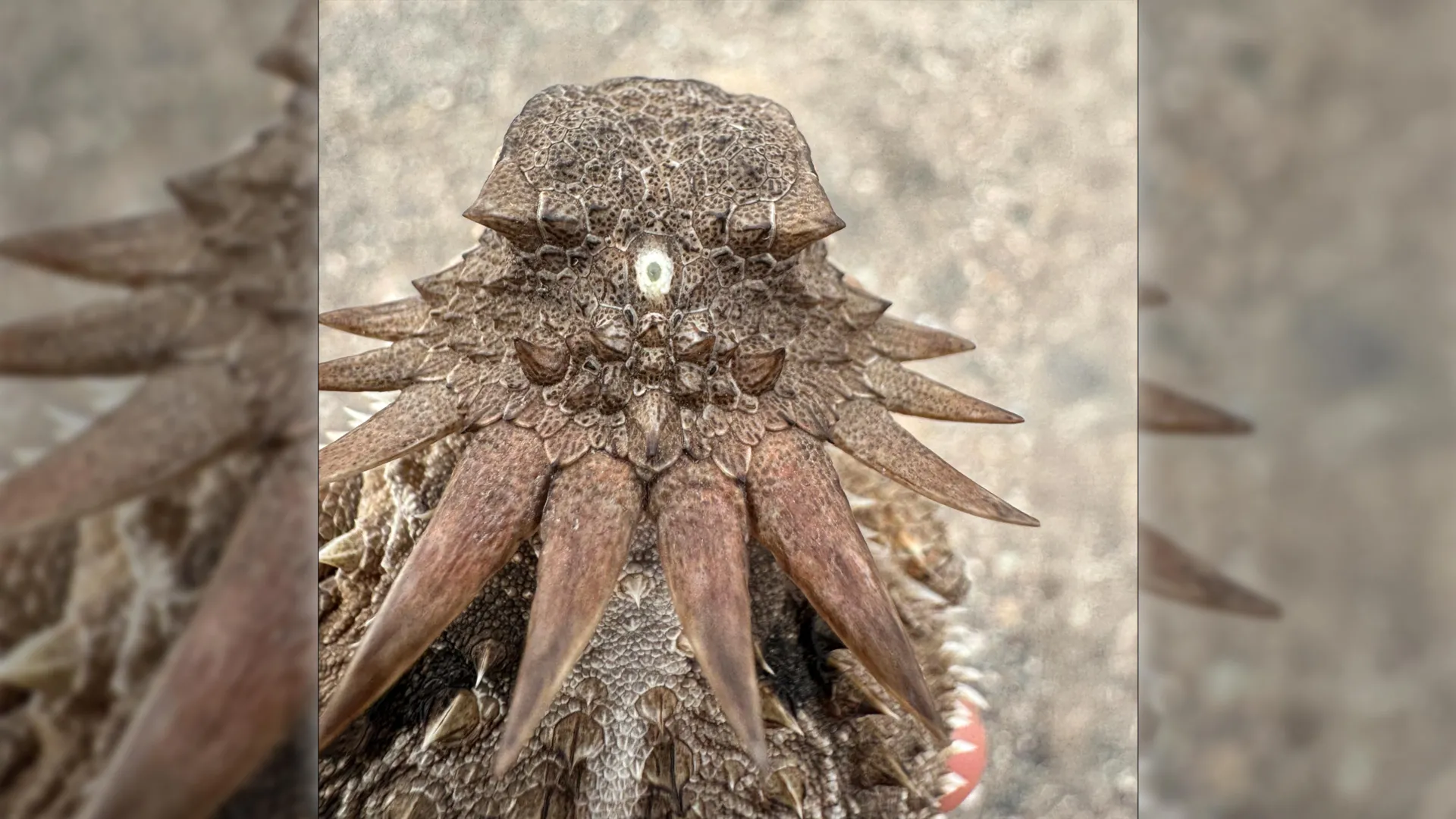
Researchers at Lund University and the University of Sussex have proposed an answer to one of the more stubborn puzzles in the evolution of animal bodies: why vertebrate eyes are built so strangely, and why they are built out of brain tissue when nobody else's are. Their answer is that your eyes are not the original pair. They are a reconstruction, assembled out of the remains of a single eye that sat on top of an ancestor's head roughly 600 million years ago.
The work, published in Current Biology by Dan-E Nilsson, professor emeritus of sensory biology at Lund, with co-authors George Kafetzis, Michael J. Bok and Tom Baden, reconstructs the sequence by comparing light-detecting cells across the animal kingdom — where they sit in the body, what they connect to, which nerves serve them and what tissue they grow from. The pattern that emerges is a loss followed by a rebuild.
The proposed history runs like this. An early bilaterian ancestor had paired eyes, like most active animals do. That lineage then settled into a sedentary life — filter-feeding, anchored, not going anywhere — and paired eyes stopped earning their keep. They were lost. What survived was a single median eye on the top of the head, a composite structure useful for the one thing a stationary animal still needs light for: telling day from night and up from down. When descendants of that animal took up active swimming again, they had no paired eyes left to re-inherit. So evolution reached for what was there and repurposed parts of the median eye into a new pair of image-forming eyes, one on each side of the head.
That history, the authors argue, explains an anatomical oddity that has bothered biologists for a long time. Vertebrate retinas develop out of brain tissue — they are outgrowths of the forebrain, which is why the optic nerve is technically a tract of the central nervous system and why the retina is wired what looks like backwards, with light passing through layers of neurons before reaching the photoreceptors. Insect and squid eyes do nothing of the sort; they develop from the surface tissue of the head, the way a sensible engineer would build a camera. If vertebrate eyes were carved out of a structure that was already sitting on top of the brain, the brain-tissue origin stops being a puzzle and becomes a straightforward consequence of where the raw material was.
The most striking part of the proposal is that the original eye did not entirely disappear. The pineal gland — the small structure near the center of the human brain that produces melatonin and governs the sleep-wake cycle in response to light — is, on this account, the surviving remnant of that ancient median eye. In lampreys, lizards and some frogs, the connection is not even subtle: they still carry a functional "third eye," a parietal structure under a translucent patch of skull that detects light directly.
So the light-sensing organ that tells a human being when to sleep is, on this reading, older than the eyes that read this sentence — and the eyes are the newcomers, built from its spare parts.