Millipedes Beat Backboned Animals Onto Land by 80 Million Years, a Sweeping New Family Tree Reveals
Scientists assembled the first complete evolutionary history of every living millipede order, tracing the leggy creatures back roughly 460 million years — long before any vertebrate crawled ashore.
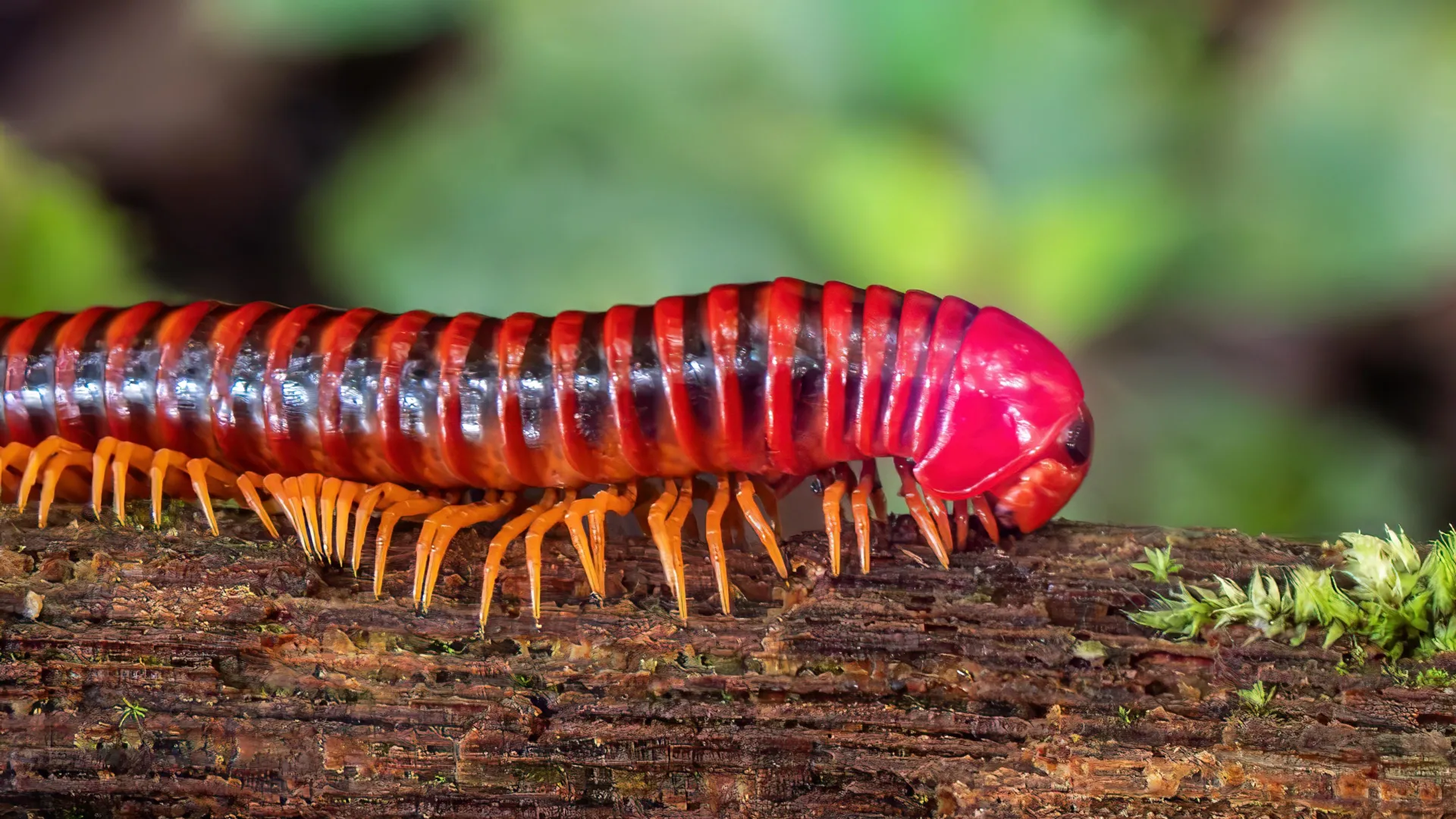
Long before the first fish hauled itself onto a muddy shore, the land already belonged to the millipedes. A sweeping new study has reconstructed the first complete evolutionary history of every living millipede order and concluded that these many-legged arthropods colonized dry land roughly 460 million years ago — beating backboned animals to the punch by more than 80 million years.
The research, published in the journal Current Biology and led by scientists at Virginia Tech, combined genetic data from living species with anatomical evidence preserved in fossils to build a detailed family tree spanning the entire group. "Millipedes beat vertebrates onto land by more than 80 million years," said Virginia Tech entomologist Paul Marek, the study's senior author, underscoring just how early these creatures became pioneers of terrestrial life.
To assemble the tree, the team analyzed hundreds of genes across 82 millipede species and folded in data from 29 fossils, allowing them to calibrate when the major lineages branched apart. The genomic timeline pushed the group's origins back further than the oldest known millipede fossils, suggesting the animals were scuttling across early landscapes well before they left a clear trace in the rock record.
A crucial breakthrough came from two of the most elusive and poorly understood groups, Siphoniulida and Siphonocryptida, whose genetic material had never before been sequenced. To get it, researchers traveled to the rainforest of Los Tuxtlas in Mexico and to Spain's Canary Islands to collect rare specimens, filling in long-standing gaps that had frustrated earlier attempts to map the millipede tree.
The picture that emerges is of an animal that thrived in a world utterly unlike our own. When the earliest millipedes spread across the continents, there were no trees, no leaves and no flowering plants — only primitive vegetation and decaying organic matter, which the detritus-feeding arthropods helped break down. In doing so, they played a quiet but foundational role in building the soils and ecosystems that later, larger life would depend on.
Beyond rewriting the timeline of terrestrial life, the researchers say a robust millipede family tree gives biologists a framework for understanding how the group diversified into the more than 12,000 species known today, and for predicting where still-undescribed species might be found. It also offers a sturdier scaffold for interpreting the patchy fossil record, since knowing how the living lineages relate helps scientists place ambiguous ancient specimens with greater confidence.
For a creature often overlooked beneath logs and leaf litter, the study is a reminder that some of evolution's most consequential trailblazers were also among its smallest — and that the unglamorous work of recycling dead plant matter helped set the stage for the forests, animals and ecosystems that followed.
Originally reported by ScienceDaily.