Crystals in a Swedish Borehole Recorded Microbes Making Methane 378 Million Years Ago
They Did It Again 1.8 Million Years Ago.
A 1.4-mile core through the roots of an ancient mountain range holds a chemical logbook of life switching on and off underground.

The deepest ecosystem on Earth does not fossilize. It leaves receipts instead.
An international team led by researchers at Linnaeus University in Sweden has reconstructed hundreds of millions of years of underground microbial activity by reading the minerals that grew in cracks in solid rock. Their material came from the COSC-2 drill core, taken west of Östersund in central Sweden, which runs more than 2,300 meters — about 1.4 miles — down through several layers of bedrock laid down at different points in Earth's history. The results are published in the journal Communications Earth & Environment.
What the team measured is carbon. The calcite filling those fractures carries exceptionally high carbon isotope values, a signature of microbial methanogenesis: microbes producing methane preferentially consume the lighter carbon isotopes and leave the heavier ones behind, enriching whatever mineral crystallizes next. "These are some of the clearest mineral-scale fingerprints of deep microbial methane production that we've seen," said Henrik Drake, a professor at Linnaeus University and the study's senior researcher. "They show that microbial communities have left a chemical archive of their activity deep in the crust."
Then the team dated the archive. Using high-precision uranium-lead dating on the crystals, they found the methane-making did not happen once. It happened in bursts, in distinct episodes stretching from roughly 378 million years ago to as recently as 1.8 million years ago. "This tells us that the deep biosphere is not static," said Femke van Dam, a Linnaeus researcher and the paper's lead author. "Instead, it responds to geological processes over vast timescales, turning on and off as conditions shift."
The geology around those episodes is dramatic. The borehole cuts through rock that was once part of the Caledonian mountain belt, a range that ran across Scandinavia and has since been ground down to its roots. The fractures that hosted the microbes were buried, heated, uplifted, and exhumed over that span, and the communities living in them kept coming back. "Our findings demonstrate remarkable resilience," Drake said. "These microorganisms have survived tectonic upheaval, burial, uplift and changing temperatures. They have repeatedly colonized deep habitats and reactivated as conditions became favorable."
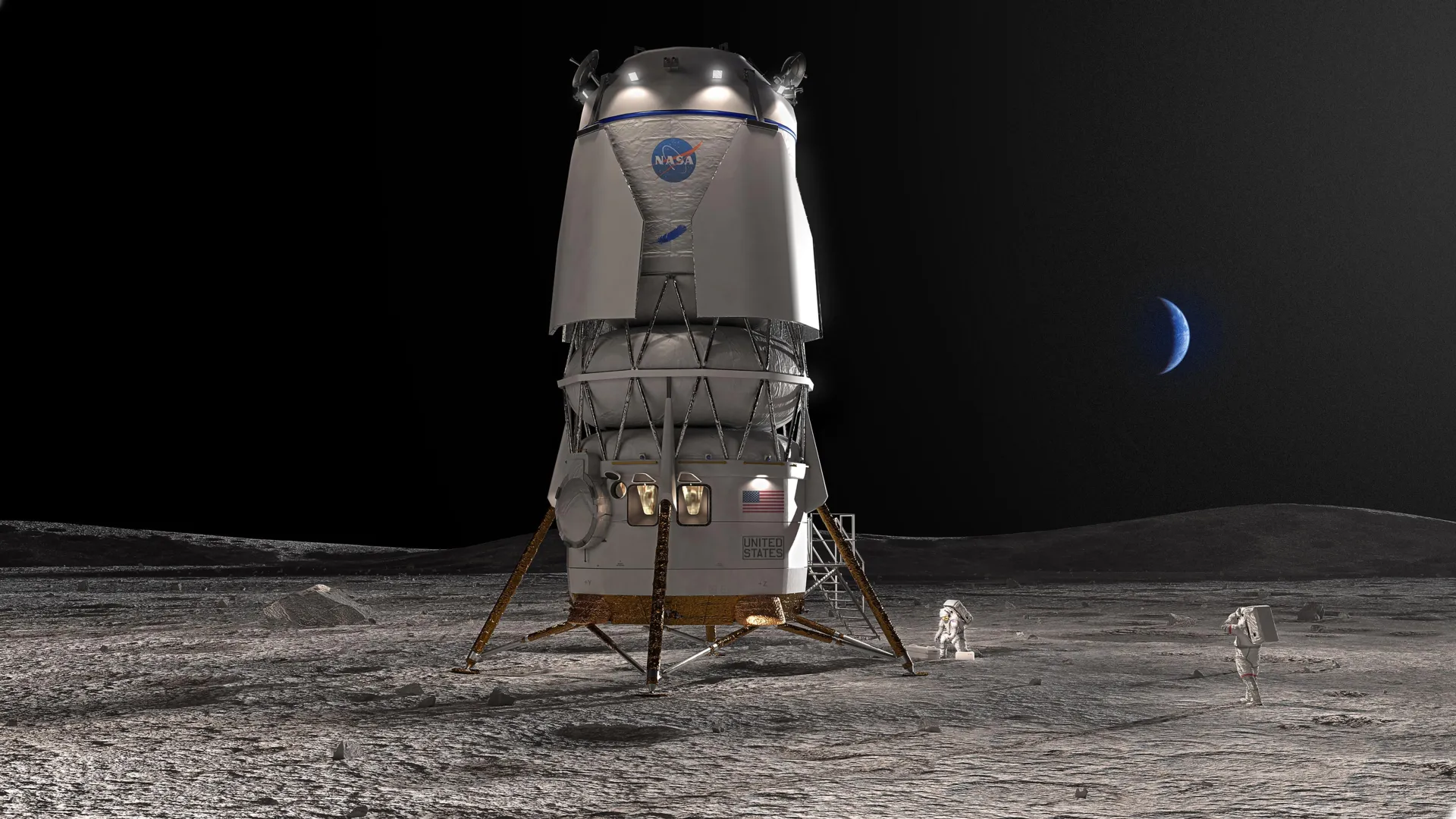
That matters beyond Sweden. The deep continental subsurface is one of the least explored habitats on the planet, and it is the closest analogue anyone has for where life might persist on a world with no habitable surface — Mars, for instance, where any surviving biology is generally assumed to be underground. A method that can date individual pulses of microbial metabolism from crystals in a drill core gives astrobiologists something they have not had: a way to ask not just whether deep life existed, but when it was awake.
"Life can endure far longer, and under more dynamic conditions, than we often assume," van Dam said.