Sweden's Election Is a Dead Heat at 49.3% to 49.2% With 70% Counted. The Far-Right Sweden Democrats Lost Ground for the First Time Since Entering Parliament.
Magdalena Andersson's four-party opposition holds a hair-thin lead over Prime Minister Ulf Kristersson's right-wing bloc. In 2022 an exit poll showed the same thing, and the right won.
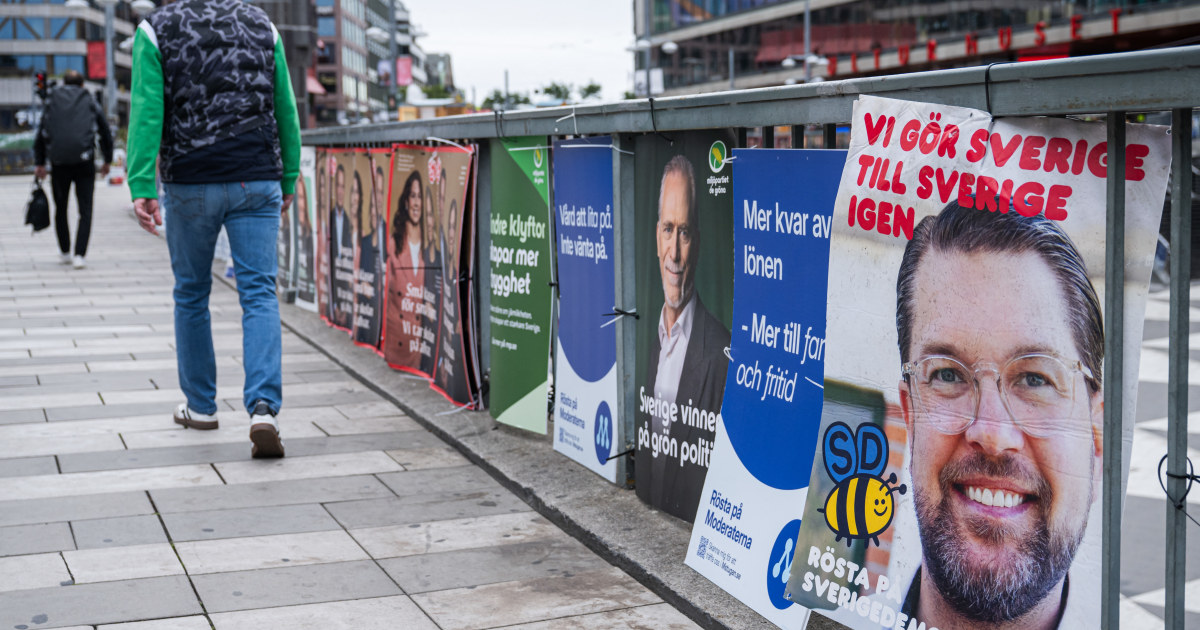
Sweden's parliamentary election was too close to call late Sunday night, with the center-left opposition and the governing right-wing bloc separated by a fraction of a percentage point as the count passed 70% of districts. The one clear result of the evening was that the anti-immigration Sweden Democrats, whom Prime Minister Ulf Kristersson had promised to bring into the cabinet for the first time, lost support for the first time since the party entered parliament in 2010.
With roughly seven in ten districts reporting, the four opposition parties backing Social Democratic leader Magdalena Andersson for prime minister stood at about 49.3% of the vote, against about 49.2% for Kristersson's alliance of the Moderates, Sweden Democrats, Christian Democrats and Liberals. An exit poll released when polls closed at 8 p.m. had given Andersson's side 51.3%, but that lead shrank steadily as real ballots were tallied.
The Social Democrats remained Sweden's largest party at about 27.8%, down from 30.3% in 2022 and on course for the party's weakest result in modern times. Kristersson's Moderates were at 19.8%, and the Sweden Democrats at 17.7%, down from 20.5% four years ago. On the left, the Left Party had 8.1%, the Centre Party 7.2% and the Greens 6.2%. The Christian Democrats were at 6.3%, and the Liberals, whose survival above the 4% threshold for seats was seen as decisive for the right, were at 5.4%.
"Of course it's a bit of a disappointment that we are not the second-biggest party anymore in these polls," Sweden Democrat lawmaker Julia Kronlid said as the numbers came in. The party, led by Jimmie Åkesson, spent four years propping up Kristersson's minority government from outside and had been promised ministerial posts if the bloc won again.
Sweden's 349-seat Riksdag is allocated proportionally, so the bloc that finishes ahead in raw votes usually, but not always, ends up with the majority. In 2022, an exit poll also showed Andersson ahead on election night, and Kristersson's side won 176 seats to 173 once the late count came in. Sweden's election authority will continue counting postal and overseas ballots in the coming days before certifying the result.
The campaign turned on healthcare waiting times, the cost of living and rising unemployment. Andersson, who served as Sweden's first female prime minister from 2021 to 2022, promised higher taxes on banks and top earners, shorter hospital queues and better school results. "We've had four years of rising unemployment, with a salary that pays for less and less," she told voters. Kristersson pointed to a sharp fall in asylum applications and a decline in gang shootings, and said he wanted to "make Sweden great again."
Even a narrow Andersson win would not guarantee her a government. Her would-be partners disagree on immigration, nuclear power and a proposed tax on billionaires, and the Centre Party has refused to sit in a cabinet that includes the Left Party. The right, by contrast, agreed before the vote to form a four-party government led by Kristersson if it came out ahead, which is why a swing of a few thousand votes in the final count could decide whether a party with roots in Sweden's neo-Nazi movement takes its first seats at the cabinet table.
Originally reported by NBC News / Reuters.