A Protein That Predates Blood Circulation Decides Whether Immunotherapy Works — but Only the Kind Made Inside the Tumor
Nagoya University researchers found that complement C3 produced by cells within a tumor blocks immune-suppressing cells from getting in. Lung cancer patients with high local C3 responded to treatment about half the time. Those with low levels: none did.
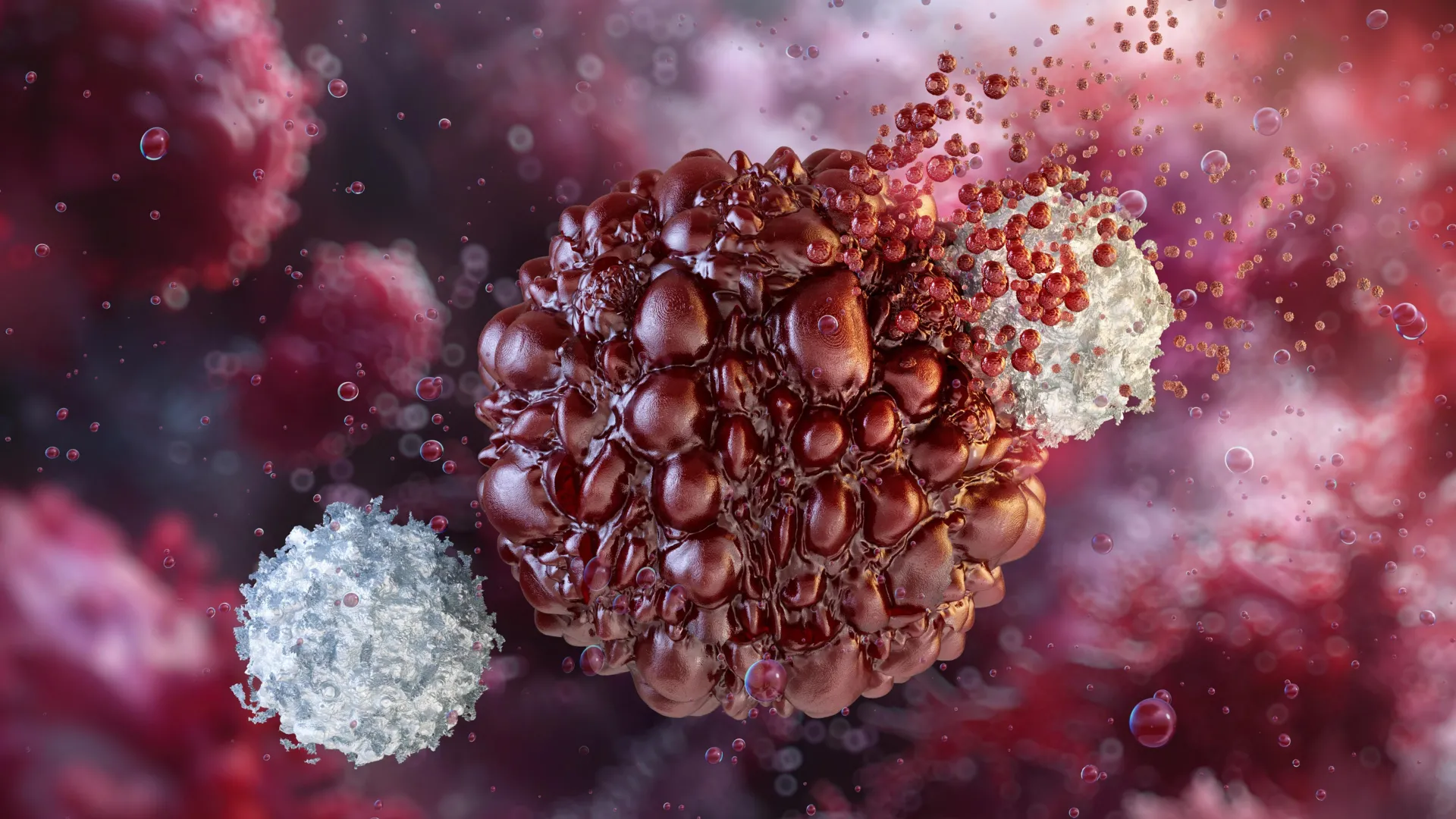
Researchers at Nagoya University have identified why some cancers resist immunotherapy and others do not, and the answer turns on a protein so ancient it predates the circulatory system that normally carries it.
The protein is complement C3, a central component of the complement system — an arm of innate immunity that evolved hundreds of millions of years before vertebrates developed blood vessels. Most C3 in the body is made by the liver and circulates in the bloodstream. The Nagoya team, publishing in Nature Communications, found that the circulating supply is essentially irrelevant to how well immunotherapy works. What matters is the small amount produced locally, inside the tumor itself.
The distinction turned out to be sharp. In mouse experiments, the researchers cut liver-produced C3 by 90 percent, dramatically reducing the amount in circulation. Response to anti-PD-1 therapy was unaffected. They then blocked cancer-associated fibroblasts — structural cells embedded within the tumor — from producing C3. Circulating C3 fell by only 9 percent, but the effectiveness of the treatment dropped substantially.
The mechanism runs through a fragment. When C3 is produced in the tumor and broken down, it yields a piece called iC3b, which engages a receptor called CR3 on myeloid cells. Myeloid-derived suppressor cells are among the most effective tools a tumor has for shutting down an immune attack: they infiltrate the tumor microenvironment and actively suppress the T cells that checkpoint inhibitors like anti-PD-1 antibodies are designed to unleash. The iC3b–CR3 interaction keeps those suppressor cells from getting in. Fewer suppressor cells means the T cells that the drug reactivates actually have room to work.
The human data tracked the mouse data closely. In lung cancer samples, patients whose tissue surrounding the cancer cells contained high levels of C3 had better outcomes and longer survival. Roughly 50 percent of patients with high local C3 responded to treatment. Among patients with lower levels, the response rate was zero.
That gap points at two clinical applications, and they are different in kind. The first is prediction: measuring C3 in tumor tissue could identify in advance which patients are likely to benefit from checkpoint blockade — a persistent problem in oncology, where these drugs are transformative for a minority of patients and useless for the rest, and where the current biomarkers are imperfect. The second is intervention. The team tested a drug designed to mimic the way C3 blocks myeloid cells from entering the tumor, and found it allowed immunotherapy to work against tumors that had previously resisted it.
That second result is the more consequential one, because intrinsic resistance to checkpoint inhibitors is the central limitation of the entire drug class. If the resistance is driven by myeloid infiltration, and myeloid infiltration can be blocked pharmacologically at the CR3 receptor, then resistant tumors become a target rather than a dead end.
The work remains preclinical on the therapeutic side; the patient data is observational, drawn from existing lung cancer samples rather than a trial designed around C3. The researchers are now investigating how to raise intratumoral C3 levels and when in a treatment course the intervention would need to be timed.