Engineered Antibody Injected Into One Tumor Eliminated Cancer Bodywide
Rockefeller University's redesigned CD40 therapy achieved complete remission in two of 12 patients with metastatic cancer

A redesigned immunotherapy drug injected directly into a single tumor triggered the disappearance of cancer throughout the body in two patients with metastatic disease, according to results from a phase 1 clinical trial published in Cancer Cell. The findings represent a potentially significant advance in a class of drugs that has underperformed for more than two decades.
The therapy, called 2141-V11, is an engineered CD40 agonist antibody developed by Jeffrey V. Ravetch and colleagues at Rockefeller University. CD40 is a receptor on immune cells that, when activated, can unleash a powerful anti-tumor response. Previous CD40 drugs delivered intravenously showed only modest efficacy and caused severe side effects including liver damage, dangerous drops in platelet counts, and widespread inflammation — even at low doses. Ravetch's team made two critical changes: they re-engineered the antibody to be roughly ten times more potent at stimulating immune activity, and they switched to injecting it directly into tumors rather than infusing it into the bloodstream. The result was strong immune activation with only mild toxicity.
Among the 12 patients enrolled in the trial — who had various metastatic cancers including melanoma, renal cell carcinoma, and breast cancer — six experienced tumor shrinkage throughout their bodies, and two achieved complete remission. Crucially, even tumors that were never injected with the drug disappeared. In one case, a melanoma patient with dozens of metastatic tumors on her leg and foot received injections only in a single thigh tumor; all other tumors subsequently vanished. A breast cancer patient with tumors in her skin, liver, and lung saw all lesions disappear after only the skin tumor was injected. "This effect — where you inject locally but see a systemic response — that's not something seen very often in any clinical treatment," Ravetch said.
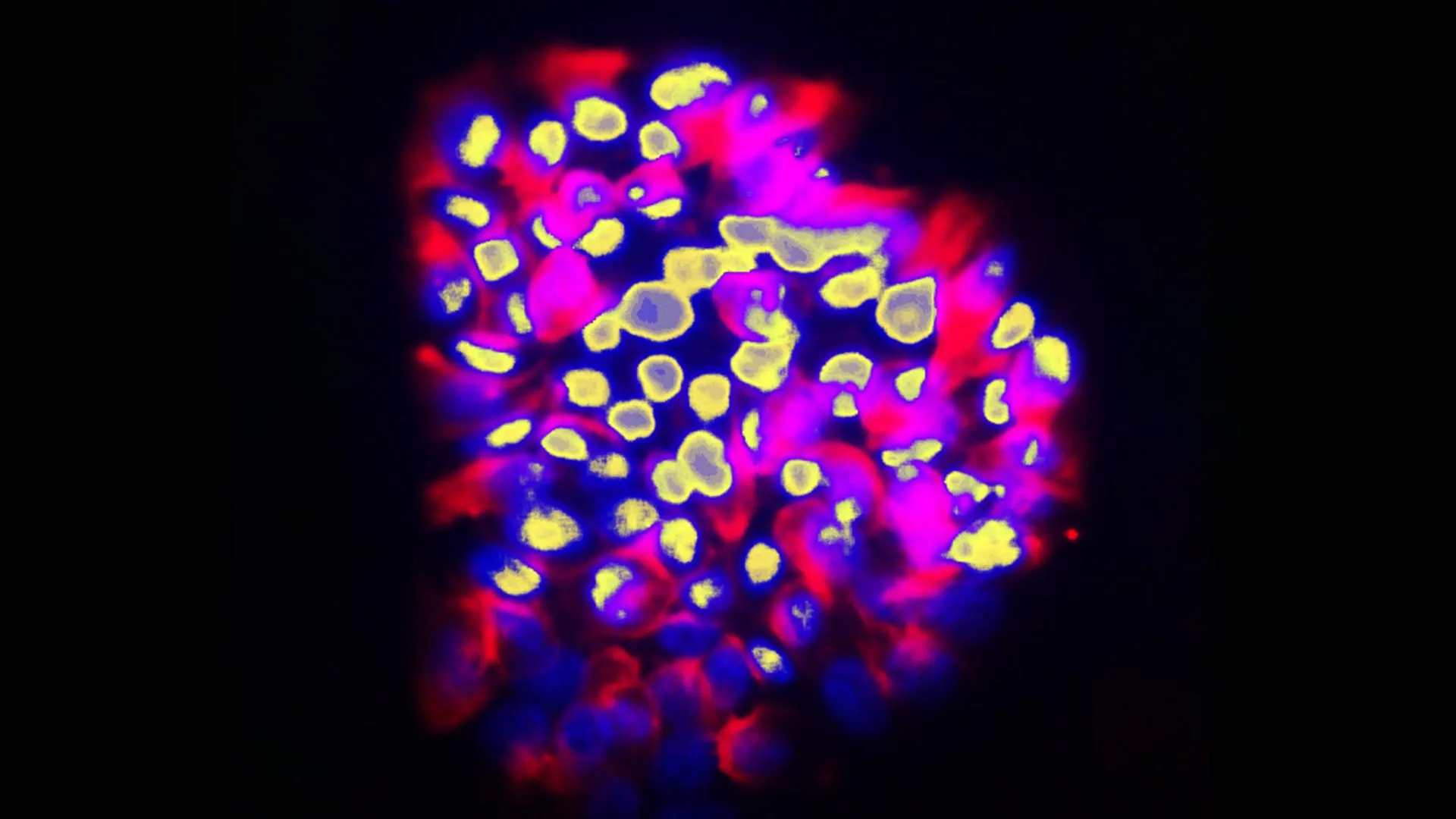
Biopsies revealed that treated tumors became densely populated with immune cells — dendritic cells, T cells, and mature B cells — that organized into structures resembling lymph nodes, known as tertiary lymphoid structures. These formations, which are associated with stronger immunotherapy responses, also appeared in tumors that were not directly injected. First author Juan Osorio, a medical oncologist at Memorial Sloan Kettering Cancer Center, described the transformation: "The drug creates an immune microenvironment within the tumor, and essentially replaces the tumor with these tertiary lymphoid structures."
The promising results have already spawned larger studies. Phase 1 and phase 2 trials involving nearly 200 patients are now underway at Memorial Sloan Kettering and Duke University, testing the therapy against bladder cancer, prostate cancer, and glioblastoma. Researchers noted that the two patients who achieved complete remission both entered the trial with high T-cell clonality — a potential biomarker that could help predict who will respond. With immunotherapy generally benefiting only 25 to 30 percent of cancer patients, identifying such predictors remains one of the field's central challenges.