A Molecule Called pghi-4 Brought Vancomycin Back From the Dead Against a Drug-Resistant Superbug
Cold Spring Harbor researchers did not build a new antibiotic. They built a compound that disables the enzyme bacteria use to shrug the old one off — and the old one started killing again.
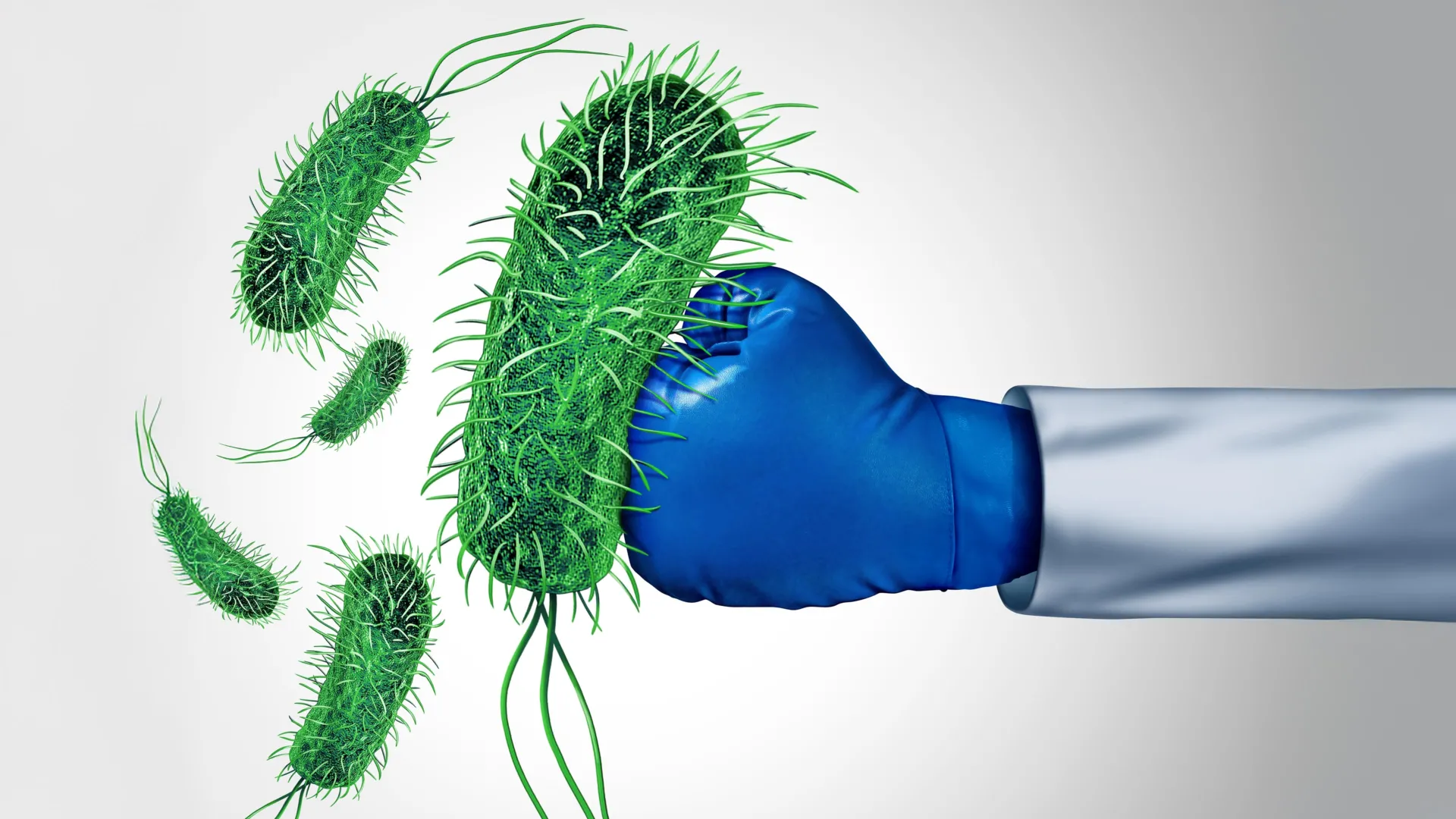
Scientists at Cold Spring Harbor Laboratory have restored the killing power of vancomycin against a bacterium that had learned to ignore it — not by inventing a replacement drug, but by pairing the old antibiotic with a small molecule that shuts down the bacterium's defense. The work, published in Nature Communications, offers a route around one of the hardest problems in medicine: the pipeline of genuinely new antibiotics has nearly run dry, while resistance keeps spreading.
The target was vancomycin-resistant Enterococcus faecium, a gut bacterium that causes bloodstream and surgical-site infections and sits near the top of the World Health Organization's priority pathogen list. Vancomycin has been a drug of last resort for serious Gram-positive infections since the 1950s. E. faecium neutralizes it by remodeling the peptidoglycan mesh that forms its cell wall — the very structure vancomycin binds to. Change the binding site and the drug simply has nothing to grab.
The team, led by Professor John Moses at Cold Spring Harbor with Professor Howard Hang at Scripps Research, went after the enzyme that does the remodeling: secreted antigen A, or SagA. Rather than screening compounds one at a time, they used diversity-oriented clicking, or DOC, a rapid chemistry technique developed in the Moses lab that snaps molecular fragments together into large libraries fast. From that approach they built and tested more than 150 different compounds.
One of them, designated pghi-4, worked. When combined with vancomycin and applied to drug-resistant E. faecium, the antibiotic regained its ability to kill the bacteria. The compound does nothing on its own — it is not an antibiotic. It is what pharmacologists call a potentiator or resistance breaker, a molecule whose only job is to disable the escape mechanism so the real drug lands. The researchers confirmed the target both genetically, by knocking out the peptidoglycan-remodeling machinery, and pharmacologically, with the compound.
That strategy has a proven precedent. Clavulanic acid, paired with amoxicillin, works exactly this way: it does not kill bacteria but blocks the beta-lactamase enzyme that would otherwise destroy the penicillin, and the combination — sold as Augmentin — has been in clinical use for four decades. What makes the SagA result notable is that it extends the logic to a different resistance mechanism in a different class of pathogen, and does so against an organism with very few remaining treatment options.
Lead authors on the paper include Kyong T. Fam, Pavan Kumar Chodisetti, Zifei Wang and Joshua A. Homer. The work was funded by the National Institutes of Health, the National Cancer Institute, the Australian Research Council, the New York State Biodefense Commercialization Fund, the F.M. Kirby Foundation and the Starr Foundation. The results are in cell culture, not patients, and pghi-4 has years of toxicology and pharmacokinetics ahead of it before anyone would put it in a human — but it points at a large, mostly unmined category of drugs whose value lies entirely in making the antibiotics we already have work again.