U.S. Troops and DEA Help Ecuador Arrest More Than 30 in Raid on Jalisco Cartel Cell
About 50 Southern Command personnel joined 320 Ecuadoran police in dawn raids across several cities against a group tied to Mexico's CJNG, Ecuador's interior minister said.
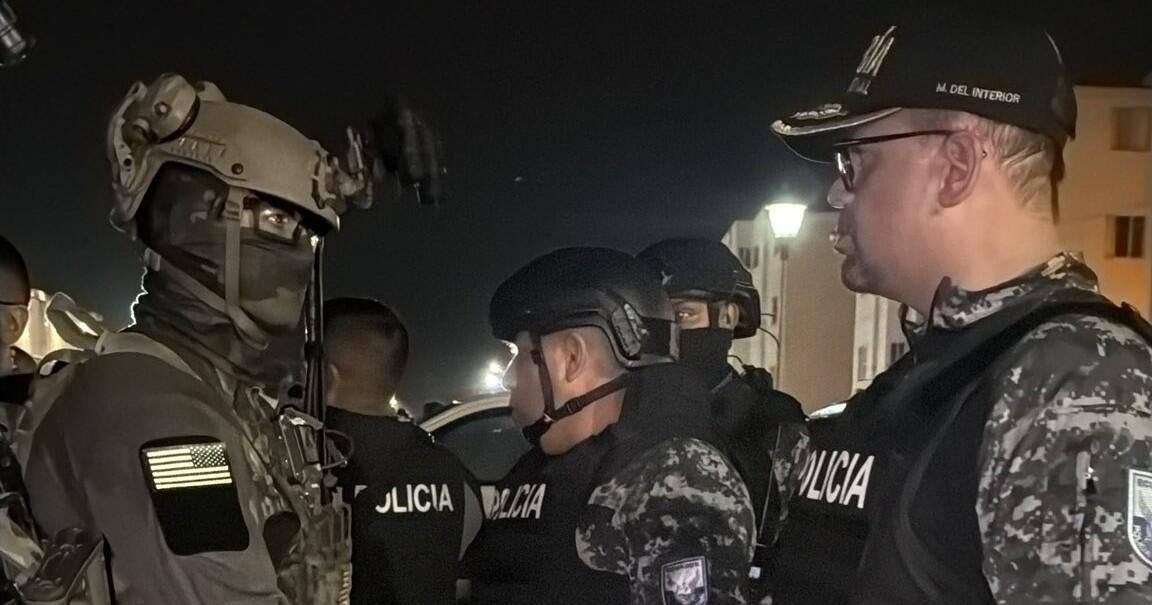
U.S. troops and Drug Enforcement Administration agents helped Ecuadoran police dismantle a local branch of Mexico's Jalisco New Generation Cartel early Thursday, arresting more than 30 people, Ecuador's interior minister said.
The operation "was conducted jointly with U.S. troops and the Drug Enforcement Administration (DEA)," Interior Minister John Reimberg wrote on X. He said more than 30 Ecuadorans were detained for allegedly belonging to a group with a "direct connection to the CJNG," the Spanish initials by which the Mexican cartel is widely known. Reimberg said about 320 Ecuadoran police officers and 50 uniformed personnel from U.S. Southern Command took part in raids across several cities, and he released photos and videos of officers breaking into buildings and taking suspects into custody.
According to Reimberg, the group moved cocaine from Colombia, the world's largest producer, to international markets through ports in southwestern Ecuador. The country sits between Colombia and Peru, the two biggest cocaine producers, and its Pacific ports have become major export points for the drug.
Ecuador, a close U.S. ally under right-wing President Daniel Noboa, has eagerly joined President Trump's campaign against organized crime in Latin America. Earlier this year, American commandos joined Ecuadoran troops in a mission against a suspected criminal hub along the country's coast run by what officials called a narco-terrorist organization. In August, U.S. and Ecuadoran forces boarded a floating refueling platform used by drug boats, removed everyone aboard and then sank it from the air. The U.S. military's wider campaign in the region has also included dozens of lethal strikes on suspected drug boats in the Caribbean and Pacific.
Human rights groups have raised alarms about Ecuador's military offensive against gangs, documenting what they describe as excessive use of force, torture and forced disappearances. Noboa brushed off that criticism in his speech to the United Nations General Assembly on Wednesday. "We receive plenty of criticism regarding the fight against organized crime and very little concern about the number of victims we are seeing from organized crime," he said.
Ecuador has gone from one of South America's safest countries to a cocaine trafficking hub in only a few years, plagued by gangs tied to Mexican and Colombian cartels. Violence has not let up since authorities recaptured Adolfo Macías, leader of the Los Choneros gang and the country's most notorious drug lord, in June 2025, more than a year after he escaped from a maximum-security prison. Ecuador extradited Macías to the United States in July 2025, where he faces drug trafficking and firearms charges.